Squeaky floor repair and wooden floor gap filling stop creaks at the source and return your floor to a firm, quiet, comfortable surface. If every step signals a noise, movement somewhere in the floor system is to blame.
This blog shows the causes and how we can fix them!
What causes a squeaky floor?
There are many potential causes that can create squeak, including:
- Loose fixings, nails lift and boards move against joists.
- Gaps between boards, seasonal shrinkage opens joints, and edges rub.
- Subfloor flex, uneven joists or tired chipboard bends underfoot.
- Tongue and groove wear, the joint moves inside the profile.
- Underlay failure on floated floors, boards flex and squeal.
How do we locate the noise quickly?
- Walk the room slowly, mark creak points with tape.
- Check direction, across the board or along it, this guides the method.
- Watch for visible board movement at joints or skirting.
- For carpeted areas, listen for clicks when pivoting on one foot.
Quick specification note
If a floor is floated, screws into joists will not help. The cure is correct expansion, sound underlay, and re-seating the locking joints.
Repair options that actually silence floors
The goal is simple: remove flex, remove friction, then refinish for a clean result.
Stabilise fixings and structure
- Replace loose nails with trim-head screws set below the surface.
- Add adhesive at squeak points between subfloor and joist.
- Introduce discreet blocking where edges lack support.
Wooden floor gap filling that lasts
- Resin and dust mix: colour-matched after sanding for narrow joints.
- Flexible filler: for micro-movement zones near heat sources or bays.
- Timber slivers: for wider, heritage gaps that need a traditional look.
Surface renewal and protection
- Dust-controlled sanding to level edges and remove old finish.
- High quality lacquer or oil, chosen for traffic and sheen preference.
- Optional stain for an even tone across repaired areas.
Do methods change by floor type?
Yes, the method must match the construction.
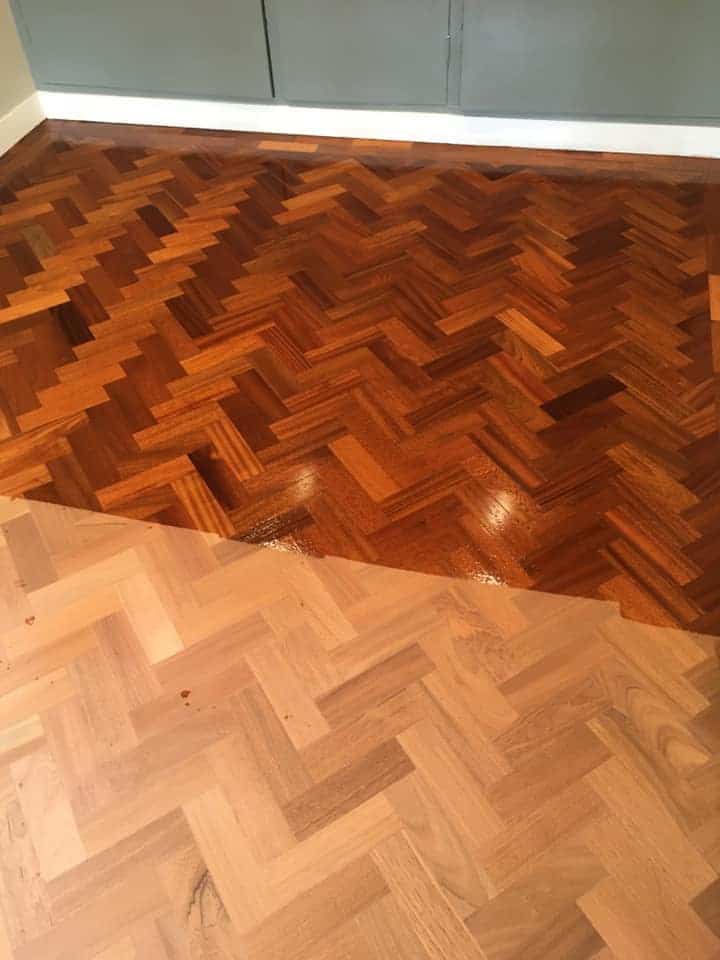
- Parquet: re-bed loose blocks, remedy hollows in the bed, sand with pattern-safe sequences.
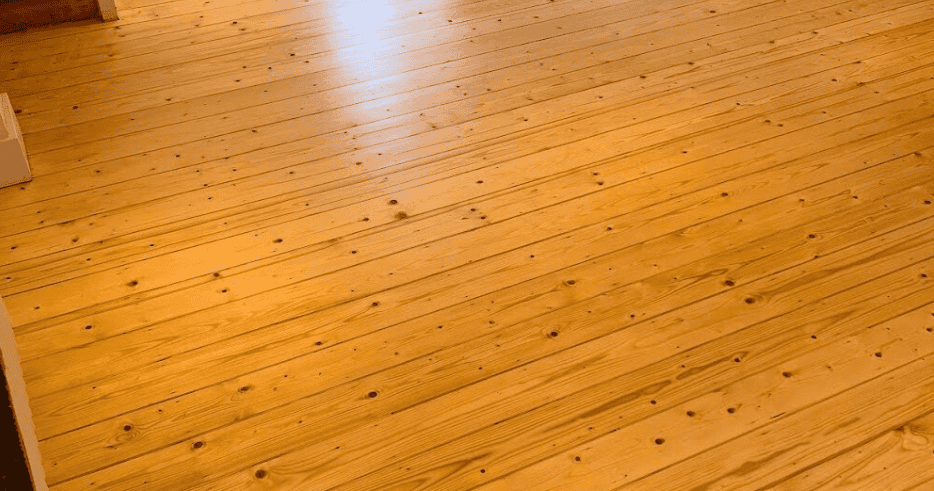
- Hardwood strip: screw and plug as required, fill, then refinish.
- Engineered glued-down: inject elastomeric adhesive under local hollows, use flexible fillers.
- Laminate floated: renew underlay, reset expansion, re-lock planks, no sanding.
Issues and best-fit solutions
| Issue | Likely Cause | Best Fix | Ideal For |
| Creak along a joist line | Nail lift or loose fixing | Replace with trim-head screws, add adhesive at joist contact | Strip hardwood, engineered over joists |
| Random chirp at board edges | Open joints, board rub | Wooden floor gap filling with resin and dust, then sand and seal | Pine, oak boards after sanding |
| Hollow tap in a small area | Local subfloor void or debond | Inject structural adhesive, weight as it cures | Engineered glued-down, parquet panels |
| Repeating squeak near heat | Micro-movement from expansion | Flexible filler, confirm expansion gaps, check radiator pipe clearances | Bay windows, radiator lines |
| Whole room flex | Underlay failure on floated floor | Replace underlay, reset expansion, re-seat locks | Laminate, floated engineered boards |
Takeaway: match the fix to the construction, then protect the surface for long-term quiet.
When should you act?
Short answer: as soon as you notice repeat creaks.
Early intervention prevents enlarged gaps, split tongues, and finish wear. It is also the most cost-effective point to make improvements, since sanding and finishing can be combined with repairs.
How Sussex Floor Restoration works
You get diagnosis, repair, and a clean, refined finish.
- Survey and plan: confirm causes, specify discrete access only where needed.
- Stabilise and fill: targeted refastening, correct adhesives, tailored wooden floor gap filling.
- Sand and finish: dust-controlled sanding, then a durable finish that suits your space.
- Aftercare: simple maintenance steps that preserve the result.
Why choose us for squeaky floor repair
Specialist methods, tidy workmanship, results that last.
- Experience across parquet, hardwood, engineered, and laminate.
- Careful, minimal access that respects period and modern floors.
- Dust-controlled machinery for a cleaner home environment.
- Clear communication, practical scheduling, consistent quality.
Ready to silence your floors and refresh the finish?
Choose expert squeaky floor repair paired with precise wooden floor gap filling from Sussex Floor Restoration. See how we work, step by step, then book your visit (or call the team on 01444 810505).
Did you enjoy this blog? You should read our recent post, Hardwood Floor Repair: Expert Solutions for Every Type of Flooring.
FAQs: Squeaky Floor Repair and Wooden Floor Gap Filling (2025)
1) What causes floor squeaks and how is squeaky floor repair done?
Most squeaks come from movement at fixings, board edges, or the subfloor. Squeaky floor repair secures loose areas with screws or adhesive, then removes friction by stabilising the joint and finishing the surface.
2) Will wooden floor gap filling stop creaks completely?
Often yes. If the noise is board-to-board chatter, wooden floor gap filling removes the contact that creates sound. Where fixings or subfloor flex are involved, we combine refastening with gap filling for a full cure.
3) Can you fix squeaks in parquet, engineered, and laminate floors?
Yes. Parquet is re-bedded and levelled, engineered floors are injected or re-bonded, and laminate floors are corrected by replacing failed underlay and resetting expansion gaps. The method depends on the floor construction.
4) Do you need to sand after gap filling and repairs?
For timber boards and parquet, light sanding blends fillers and achieves a smooth finish before sealing. Laminate floors are not sanded, they are reassembled and levelled instead.
5) How long does a typical squeaky floor repair take in 2025?
Most rooms take 1 to 2 days, including targeted refastening, wooden floor gap filling, sanding where needed, and curing of finishes. Larger areas or subfloor issues may extend the schedule slightly.
6) Is the process dusty or disruptive?
We use dust-controlled sanding and targeted access, so disruption is minimal. Furniture is protected, work zones are contained, and spaces are left clean at the end of each day.
7) How can I prevent squeaks returning after repair?
Maintain stable humidity, use felt pads on heavy furniture, avoid wet mopping, and follow simple aftercare. Early attention to small gaps or movement prevents larger issues later.
8) Will repairs be visible after finishing?
Fillers are colour matched or timber slivers are used for wider joints, then sanded and sealed. Once finished, repairs blend with the surrounding boards and are hard to spot.
9) Do you repair subfloor problems that cause squeaks?
Yes. We stabilise loose decking, add blocking where edges lack support, and re-bond hollow areas on glued-down floors. Fixing the cause prevents recurring noise.
10) When should I choose replacement rather than repair?
Choose replacement only when boards are structurally failed or moisture damaged across large areas. Most squeaks are solved with targeted repair and wooden floor gap filling, which is faster and more cost effective.