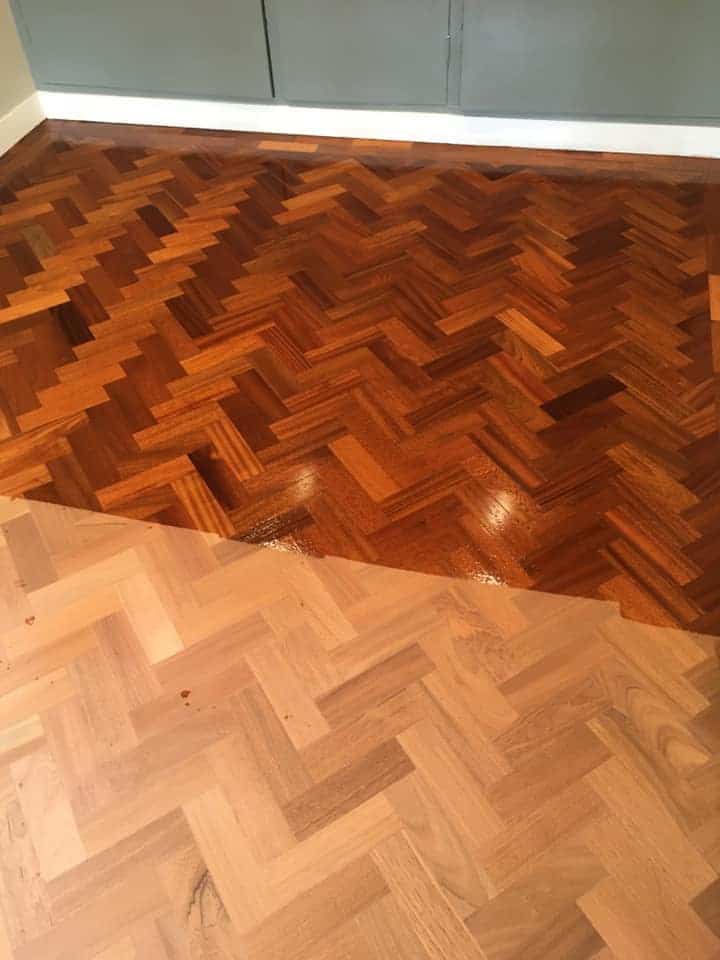
TL;DR – What You’ll Learn
- Parquet flooring can be restored to like-new condition with sanding, repairs, and modern finishes.
- Restoration typically costs vary depending on layout and damage.
- Sussex Floor Restoration uses a precision-led process to preserve patterns and restore historic charm.
Is Parquet Flooring Worth Restoring in 2025?
Parquet flooring restoration is ideal for homeowners and designers who want to bring classic floors back to life. In 2025, the process is faster, cleaner, and more precise than ever, usually taking 2–5 days depending on layout and condition. Costs vary, but it’s often more affordable than full replacement and retains original charm.
Key Questions Answered Quickly
How long does parquet flooring restoration take in 2025?
Most parquet flooring projects take between 2–5 days.
- Smaller rooms: 2–3 days
- Complex layouts: 4–5 days
- Drying times may add 1–2 days for certain finishes
What does parquet restoration cost today?
Prices can start from as low as £25m² but this very much depends on size, damage, layout, and finish.
- Basic sanding/refinish: from £25/m²
- Repairs/replacement blocks: adds cost
- Premium finishes: can increase end price
Which parquet designs are most worth restoring?
All parquet designs can be restored if the blocks are structurally sound.
- Herringbone: highly restorable and timeless
- Chevron: requires extra alignment care
- Versailles or mosaic: typically higher-value floors, worth preserving
Is it better to restore or replace parquet flooring?
Restoration is almost always the better option if the blocks are intact.
- Keeps historic character
- More sustainable and cost-effective
- Avoids complex subfloor work required for full replacement
Which finishes work best for parquet in 2025?
Today’s eco-friendly hardwax oils and lacquers offer durability with easy maintenance:
Finish Type |
Pros |
Best For |
| Hardwax Oil | Natural look, breathable | Residential use |
| Lacquer (Matt) | Durable, low sheen | High-traffic areas |
| Satin Polyurethane | Easy cleaning, mid-gloss | Commercial settings |
The Process Step by Step
Step 1: Full assessment – We check for loose blocks, damage, subfloor issues.
Step 2: Block repairs – We resecure or replace damaged parquet sections.
Step 3: Sanding – Using dust-free systems, we sand across and along the pattern.
Step 4: Gap filling – Resin mixed with fine dust fills natural gaps.
Step 5: Fine sanding – Polishing to a smooth, consistent surface.
Step 6: Finish application – Oil, lacquer or hybrid finishes applied in layers.
Step 7: Final check – Quality check and aftercare advice provided.
Finishes, Techniques & Choices That Matter
- Original vs. new blocks – Always match species and grain when replacing
- Dust-free sanding – Vital for clean results and health safety
- Resin fillers – Create seamless finishes in patterned floors
- Stain options – Light tints or natural tone preservation
- Finish layering – Up to 3 coats, cured for long-lasting protection
What to Do Next
If your parquet flooring looks tired or patchy, don’t assume it needs replacing. Whether you’re in a period home or commercial space, our restoration process revives colour, pattern, and stability without starting over.
Ready to bring your parquet flooring back to life? Call Sussex Floor Restoration on 01444 810505 or visit our parquet restoration page.
If you enjoyed this read, you should take a look at our blog, The Timeless Appeal and Restoration of Herringbone Parquet Flooring.
FAQs
What’s the best finish for parquet flooring in homes?
Hardwax oils are popular in 2025 because they enhance the natural grain while being easy to maintain and refinish in future.
Can I restore parquet if some blocks are missing?
Yes, missing or damaged blocks can be replaced with matching timber. We blend repairs carefully to preserve the pattern and flow.
Is parquet restoration dusty?
Modern sanding is dust-free thanks to advanced extraction. Minimal mess, no odour, and cleaner indoor air.
Can I stain parquet a different colour?
Yes, parquet can be stained darker or lighter after sanding. We offer a range of tints compatible with both oil and lacquer finishes.
How long before I can walk on restored parquet?
Drying times depend on the finish. Oil finishes can often be walked on within 24 hours; lacquer may take 2–3 days to fully cure.
Updated September 2025