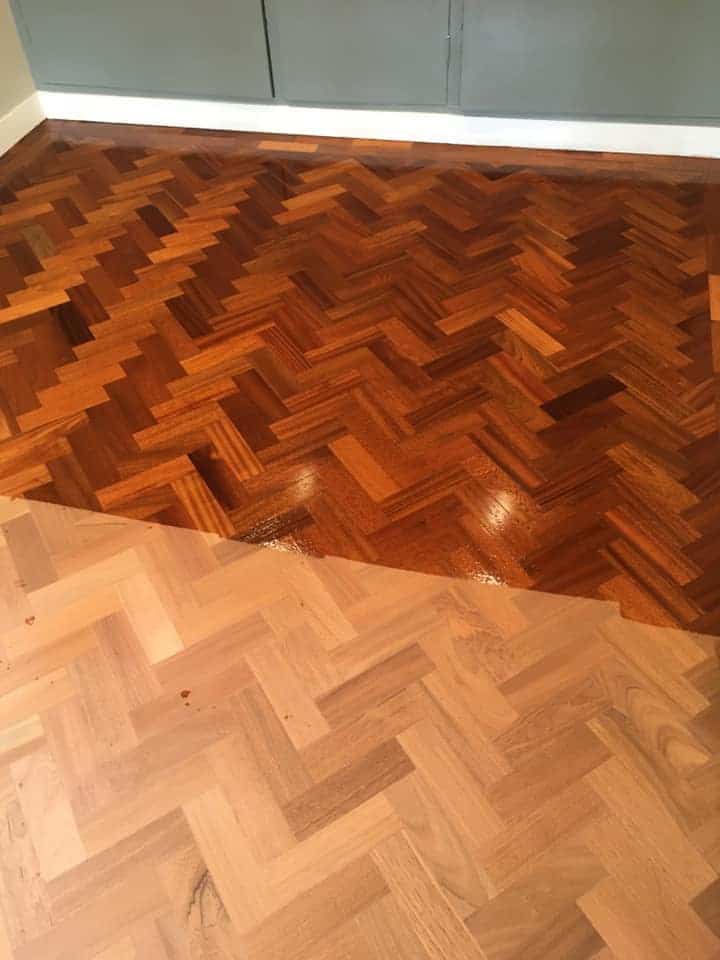
A faded wood floor can make a room feel tired even when the floor itself still has years of life left in it. Sunlight, foot traffic, furniture, old finishes and everyday wear can all change how wooden flooring looks over time, but fading does not always mean the floor needs replacing. In many cases, the right restoration process can bring back depth, colour and character while protecting the timber for the long term.
Quick Summary
A faded wood floor is usually caused by UV exposure, worn finishes, surface dirt, uneven furniture coverage or general wear and tear. The best way to revive it depends on how deep the fading goes. Some floors only need cleaning and refinishing, while others need sanding, repairs, staining and a new protective finish. We always assess the condition of the floor first, then recommend the most suitable route.
Why Does a Wood Floor Fade?
Wood is a natural material, so it changes as it is exposed to light, air, moisture and use. The most common cause of fading is sunlight. Areas near windows, patio doors and bright rooms often become lighter or warmer in tone than the rest of the floor.
Furniture can also create patchy colour differences. When rugs, sofas or tables sit in the same place for years, they protect parts of the floor from sunlight and foot traffic. Then, when the room is rearranged, the floor suddenly looks uneven.
There are also everyday causes. Shoes, pets, chairs, cleaning products and general footfall slowly wear away the top layer of protection. Once that finish starts to thin, the timber underneath becomes more exposed. This is when a floor can start to look grey, dry, dull or washed out.
Can You Fully Restore a Faded Wood Floor?
In many (if not most) cases, yes. The important thing is understanding whether the fading is sitting in the old finish or whether it has actually affected the timber itself.
If the surface finish has dulled, then cleaning, light abrasion and refinishing may be enough. If the fading is deeper, a light sand or full sand may be needed to remove the damaged surface and create an even base again.
The type of floor matters too. Solid wood floors usually allow for more sanding over their lifetime because they have more usable timber. Engineered floors can often be restored too, but it depends on the thickness of the top layer. This is why we always inspect the floor properly before recommending any work.
How to Revive Wood Floors Without Guesswork
Knowing how to revive wood floors properly starts with not rushing into the finish. Applying oil, stain or lacquer over a tired surface might improve it very briefly, but it will not solve uneven fading, worn patches or ingrained marks.
Our process is more measured:
- We inspect the floor, the wood type and the existing finish.
- We check for scratches, stains, gaps, loose boards and uneven colour.
- We decide whether the floor needs cleaning, sanding, repairs or refinishing.
- We prepare the surface properly before applying new protection.
- We help choose stains and finishes that suit the room, the wood and the way the floor is used.
That preparation is what makes the difference. A faded floor does not just need colour adding back in. It needs the surface restored so the new finish can bond properly and look consistent.
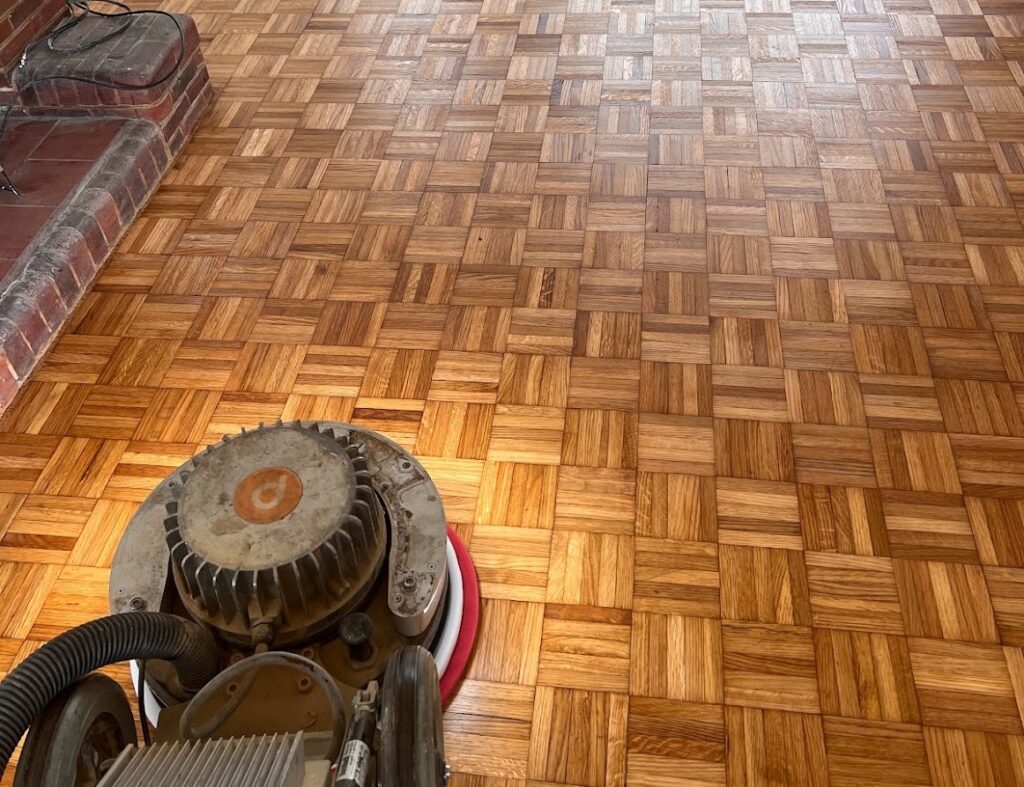
What Happens During Wood Floor Restoration?
Wood floor restoration is not the same for every floor. Some floors need a gentle approach because they are old, delicate or only lightly worn. Others need more involved sanding because the finish has completely broken down.
Common Signs Your Floor Needs Proper Restoration
You may need more than a quick clean if you can see:
- Pale or sun-bleached patches near windows
- Darker areas where furniture or rugs have been moved
- Dull walkways through busy rooms
- Grey or dry-looking timber
- Scratches that catch the light
- Old stains and finishes wearing away unevenly
- Deep scratches, dents or marks in the surface
Why Surface Preparation Matters
The finish is only as good as the surface underneath it. If the floor is patchy before it is treated, it will usually stay patchy afterwards. Sanding, cleaning and careful preparation help create a more even base, so the final finish looks intentional rather than like a quick cover-up.
Choosing the Right Finish For a Faded Floor
Once the floor has been prepared, the finish decides how it looks and performs. This is where experience matters because the best option depends on the wood, the room and how much use the floor gets.
| Finish Option | Best For | What to Expect |
| Natural oil | Bringing out grain and warmth | A softer, natural look that can be maintained over time |
| Lacquer | Busy homes and commercial areas | A durable protective layer with different sheen options |
| Stain and finish | Adjusting colour more noticeably | A more controlled colour change before final protection |
| Clear finish | Keeping the timber close to its natural tone | A clean, refreshed look without heavy colour change |
A faded floor does not always need to be made darker. Sometimes the best result is simply restoring balance, removing dullness and protecting the timber so it feels like part of the room again.
Is Sanding Always Needed?
Not always. If the fading is mainly in the finish and the floor is otherwise in good condition, a lighter restoration may be enough. However, if there are deep scratches, heavy wear and tear, old discolouration or uneven patches across the room, sanding is often the most reliable way to reset the floor.
The key is not to over-sand unnecessarily. We aim to remove what needs to be removed while preserving as much of the floor as possible. That is especially important with older boards and engineered wooden flooring, where the available wear layer needs to be respected.
Why a Faded Floor Should Not be Ignored For Too Long
A faded floor is not just a cosmetic issue. Once the finish has worn thin, the timber becomes more vulnerable to moisture, dirt and staining. Busy walkways can start to deteriorate more quickly, and small marks can become harder to remove later.
Restoring the floor at the right point protects the timber, improves the look of the room and can prevent more costly repair work further down the line. It also gives you a chance to rethink the finish, whether you want something natural, practical, warmer, lighter or more suitable for family life or commercial use.
Bring the Colour and Character Back Into Your Floor
A faded wood floor often has far more potential than people realise. The boards may look tired on the surface, but underneath the old finish there can be beautiful timber, natural grain and a much cleaner colour waiting to come back through.
We restore wood floors by looking at the whole picture: the condition of the timber, the existing finish, the level of wear, the room itself and the result you want to achieve. Whether your floor just needs a light sand, a deeper restoration process, careful staining or a fresh protective finish, we can help bring it back to life properly.
If your wooden flooring has started to look pale, patchy or flat, it does not necessarily need replacing. It may just need the right restoration.
If you liked this, you may also like: Hardwood Floor Repair: Expert Solutions for Every Type of Flooring
Frequently Asked Questions About Faded Wood Floors
Why Has My Wood Floor Faded?
A wood floor usually fades because of sunlight, UV exposure, worn finishes, furniture coverage, rugs, foot traffic and general wear and tear. The fading may only affect the old surface finish, or it may have reached the timber itself.
Can a Faded Wood Floor be Restored?
Yes, many faded wood floors can be restored. The right method depends on how deep the fading is, the type of flooring, the remaining top layer and the condition of the existing finish.
How Do You Revive Wood Floors That Look Dull and Pale?
The best way to revive wood floors is to assess the surface first, then clean, sand, repair, stain or refinish as needed. Applying a new product straight over a tired surface rarely gives a proper long-term result.
Does Sunlight Permanently Damage Wooden Flooring?
Sunlight can cause lasting colour changes in wooden flooring, especially near windows and patio doors. However, professional sanding and refinishing can often even out the colour and restore a much fresher appearance.
Why Does My Floor Look Patchy After Moving Furniture?
A floor can look patchy after moving furniture because covered areas have been protected from sunlight and foot traffic. The exposed parts of the floor may have faded or worn more quickly, leaving different tones across the room.
Do I Need to Sand a Faded Wood Floor?
Not always. Some faded floors only need cleaning, light abrasion and refinishing. If the fading is uneven, the finish has worn away, or there are deep scratches and stains, sanding is often the better option.
Can You Restore a Faded Engineered Wood Floor?
Many engineered wood floors can be restored, but it depends on the thickness of the top layer. A professional inspection is important because engineered flooring cannot usually be sanded as many times as solid wood floors.
What Finish is Best For a Faded Wood Floor?
The best finish depends on the look and use of the room. Oil can create a natural, warm appearance, while lacquer gives a durable protective surface. Stains and finishes can also be used if the floor needs a more noticeable colour adjustment.
How Long Does Wood Floor Restoration Last?
A restored wood floor can last for many years when the right finish is used and the floor is cared for properly. Longevity depends on foot traffic, cleaning habits, furniture protection, pets and how well the finish suits the room.
Is it Better to Restore or Replace a Faded Wood Floor?
Restoration is often better if the floor is structurally sound and has enough usable timber left. Replacing may only be necessary if the boards are badly damaged, too thin to sand, unstable or beyond practical repair.