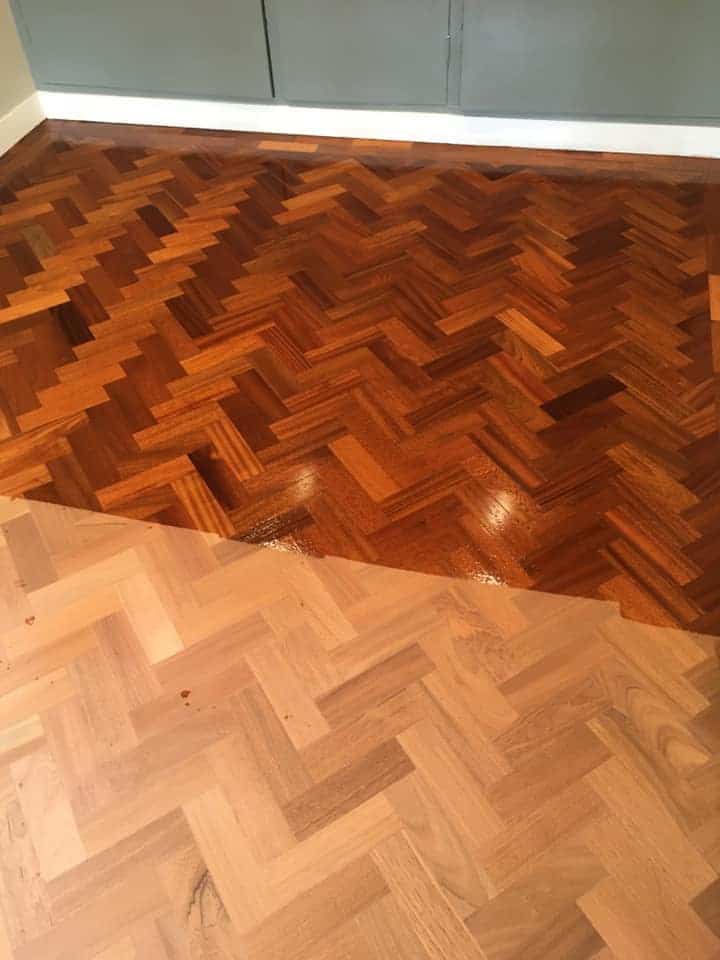
Choosing between oiled vs lacquered wood flooring affects how your floor looks, feels, wears and is maintained. Both are excellent wood floor finishes, but they behave differently once everyday life gets involved. At Sussex Floor Restoration, we see this restoring real wood flooring in homes and commercial spaces.
Quick Summary
Oiled floors look natural, show more of the natural grain and allow easier local maintenance. Lacquered floors create a harder surface coating, which is often easier to clean and can suit busy rooms well. The right choice depends on the timber, the level of wear and tear, the look you want, and how much maintenance you are comfortable with.
What Is the Difference Between Oiled and Lacquered Wood Flooring?
Ultimately, it really comes down to the level of protection you’re after.
An oiled finish uses natural oils or oil-based products to penetrate the surface of the wood. It soaks into the timber, helping enhance the natural colour, texture and movement of the boards. This is why oiled floors often feel warmer and more organic underfoot.
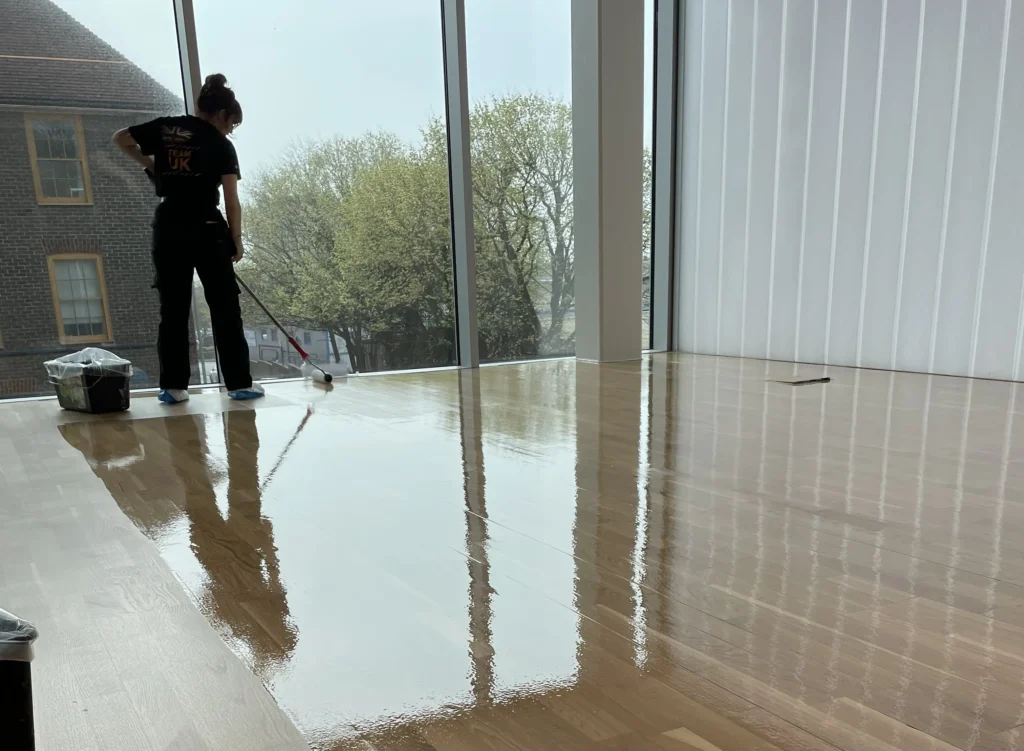
A lacquered finish sits on the surface of the floor and forms a sealed barrier over the timber. Modern lacquers can be matt, satin or more reflective, so they do not have to look shiny or plastic. A good lacquer can still look subtle, but it gives a smoother, more sealed feel.
How Each Finish Sits on the Timber
Oiled floors become part of the timber surface. Lacquered floors protect from above. That changes how the floor responds to scratches, cleaning, moisture, traffic and future restoration.
Why This Matters During Restoration
When we restore wood floors, we are not just making them look good on day one. We are thinking about how the finish will perform in the space long term.
Oiled vs Lacquered Wood Flooring at a Glance
| Feature | Oiled Wood Flooring | Lacquered Wood Flooring |
| Appearance | Natural, textured and close to the timber | More sealed, consistent and protected |
| Maintenance | Needs periodic care and re-oiling | Easier routine cleaning |
| Scratch repairs | Often easier to treat locally | May need broader sanding or recoating |
| Best suited to | Character floors and natural finishes | Busy rooms and high traffic areas |
When Is an Oiled Finish the Better Choice?
An oiled finish is a strong option when you want the floor to feel natural rather than heavily coated. It works especially well on older boards, parquet and character timber where the grain is part of the appeal.
We often recommend oil when the client wants a softer, more natural look and understands that some ongoing care is part of the deal. Oiled floors need the right maintenance products. Strong household cleaners, steam mops and harsh detergents are not ideal, because they can strip or dull the finish.
An oiled finish may be the better choice if:
- You want the timber to look and feel as natural as possible
- You prefer a matt, understated appearance
- You like the idea of spot maintenance in worn areas
- Your floor has character, age or a strong grain pattern
- You are happy to follow a simple aftercare routine
When Is a Lacquered Finish the Better Choice?
A lacquered finish is often the more practical option when the floor needs a strong, sealed surface. It can be ideal for high traffic areas because the lacquer acts as a protective layer over the timber.
Many homeowners choose lacquer because they want easier day-to-day cleaning and a more consistent surface. Kitchens, hallways, dining rooms and family spaces can all benefit from the added protection, especially where muddy shoes, pets and spills are part of normal life.
The trade-off is repairability. If a lacquered floor is badly scratched, deeper wear often needs professional sanding and refinishing rather than a quick local touch-up.
How We Help You Choose the Right Wood Floor Finish
The best finish is not always the one that sounds best on paper. We look at the room, timber, current condition, expected wear and the look you want. With engineered wood floors, we also check the thickness of the real wood top layer, because not every engineered floor can take the same sanding.
Our process usually considers:
- How much traffic the floor receives each day
- Whether the floor is solid wood or engineered wood
- How deep the existing damage, staining or wear goes
- Whether you want a natural colour or a more sealed look
- How much maintenance you realistically want to do
Our Take on Oiled vs Lacquered Wood Flooring
There is no single winner in the oiled vs lacquered wood flooring debate. Oil is brilliant when you want warmth, texture, natural grain and easier local maintenance. Lacquer is brilliant when you want a sealed, durable surface that is simple to clean and well suited to regular use.
We sand, restore, stain and finish wood floors using the approach that makes sense for the timber and the space. Whether you want to revive original boards or give a busy room a more practical finish, we will help you choose the option that gives the floor the best long-term result.
If you liked this, you will also like: Wood Floor Adhesive for Parquet Floor Repairs
Frequently Asked Questions About Oiled vs Lacquered Wood Flooring
Is oiled or lacquered wood flooring better?
Neither is automatically better. Oiled wood flooring is usually best if you want a natural look, visible grain and easier local maintenance. Lacquered wood flooring is usually better if you want a sealed surface that is simple to clean and more resistant to everyday wear.
What is the main difference between oiled and lacquered wood flooring?
The main difference is how the finish protects the timber. Oil soaks into the wood and enhances the natural grain, while lacquer sits on top of the wood and creates a protective surface layer.
Is oiled wood flooring harder to maintain?
Oiled wood flooring needs more ongoing care than lacquered flooring, but it is not difficult if you use the right products. It may need periodic cleaning, refreshing or re-oiling, especially in busy areas.
Is lacquered wood flooring good for high traffic areas?
Yes, lacquered wood flooring is often ideal for high traffic areas because the finish forms a sealed protective layer over the timber. This can make it easier to clean and more resistant to general wear and tear.
Can scratched oiled wood flooring be repaired?
Yes, light scratches on oiled wood flooring can often be treated locally because the finish works into the timber rather than sitting as one sealed coating. Deeper damage may still need sanding and professional refinishing.
Can scratched lacquered wood flooring be repaired?
Scratched lacquered wood flooring can be repaired, but visible damage often needs more than a small touch-up. If the lacquer layer is broken or worn through, the floor may need sanding and re-lacquering for an even finish.
Does oiled wood flooring look more natural than lacquered flooring?
Yes, oiled wood flooring usually gives a more natural appearance because it highlights the timber grain, texture and natural colour. Lacquered floors can still look subtle, especially with matt finishes, but they usually feel more sealed.
Which wood floor finish is easiest to clean?
Lacquered wood flooring is usually the easiest to clean day to day because the surface is sealed. Oiled flooring can still be cleaned easily, but it needs suitable wood floor cleaning products rather than harsh household cleaners.
Can engineered wood floors be oiled or lacquered?
Yes, engineered wood floors can be finished with oil or lacquer, depending on the product and the thickness of the real wood top layer. Before sanding or refinishing, it is important to check how much usable timber is available.
How do I choose between oiled and lacquered wood flooring?
Choose based on how you use the room, how natural you want the floor to look, and how much maintenance you are happy to do. We usually recommend oil for a more natural, characterful finish and lacquer for a sealed, practical surface in busy homes or commercial spaces.