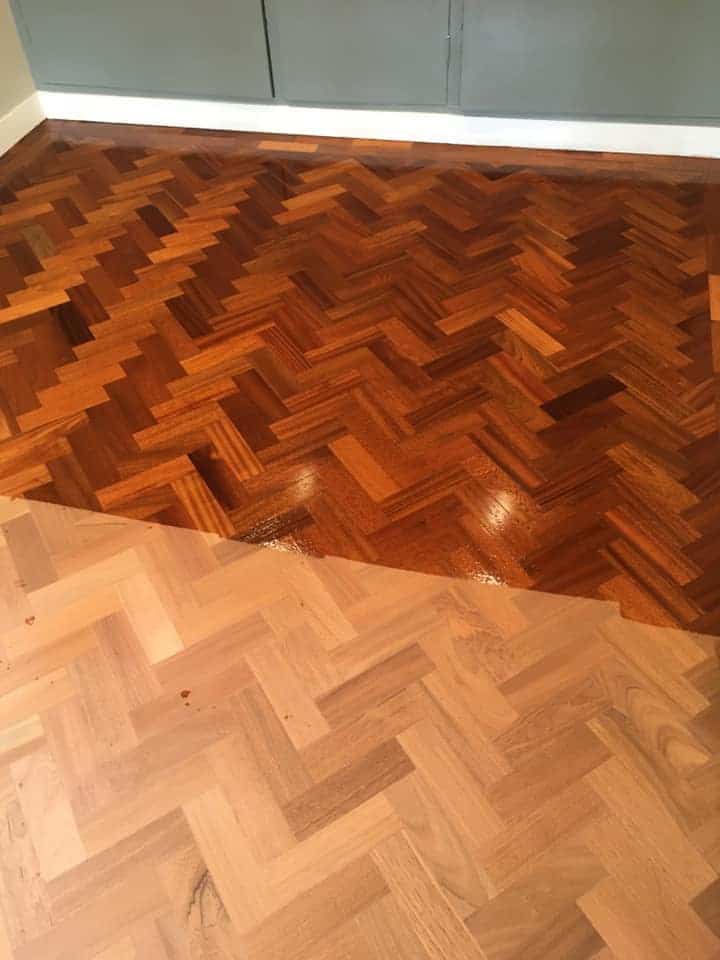
Stone floor sealing is one of the most important parts of stone floor restoration, but it is also one of the easiest things to get wrong. A good seal helps protect natural stone floors from everyday dirt, moisture and staining, but only when the stone surface has been cleaned, prepared and treated properly first.
At Sussex Floor Restoration, we see a lot of floors where the issue is not that the floor was never sealed. The issue is that the floor was sealed too quickly, sealed with the wrong product, or sealed while dirt and stains were still sitting in the stone or grout lines.
Quick Summary
Stone floor sealing protects natural stone floors from stains, moisture and everyday wear, but it is not just a case of putting a product over the top. The stone type, cleaning method, drying time, pH levels and condition of the grout all matter. A proper restoration process prepares the floor first, so the sealer protects the stone rather than trapping dirt underneath it.
Why Stone Floor Sealing Matters
Natural stone is beautiful because it has variation, texture and depth. That is also why it needs proper care. Many types of stone are porous, meaning they can absorb spills, cleaning residues and surface grime if they are left unprotected.
A stone sealer helps reduce that absorption. It gives the floor a better level of resistance against dirt and stains, making the floor easier to maintain day to day.
However, sealing is not a magic fix. It does not make a floor bulletproof, waterproof or maintenance-free. It simply gives the stone a protective barrier or impregnating layer, depending on the product used and the stone type.
This is why stone floor restoration and sealing should always be treated as one joined-up process, not two separate jobs.
What Happens if a Stone Floor is Sealed Without Proper Cleaning?
This is one of the biggest mistakes we come across.
If a stone floor is sealed before it has been properly cleaned, the sealant can trap dirt, old cleaning residue, grease or staining inside the surface. Instead of protecting the floor, the sealer can lock in the very problem you wanted to remove.
The same applies to grout lines. Grout is often more absorbent than the stone itself, so it can hold onto dirt, moisture and residue. If those grout lines are not cleaned properly before sealing, they can still look dark, patchy or tired afterwards.
Signs a Floor May Have Been Sealed Too Soon
You may notice:
- Cloudy or patchy areas across the stone surface
- Grout lines that still look dirty after cleaning
- Dark marks that seem to sit under the finish
- A sticky or uneven feel underfoot
- Sealer peeling, flaking or wearing unevenly
Why This Matters Before Resealing
Once dirt is trapped under a sealer, it is usually harder to correct. The old coating may need to be stripped or mechanically cleaned before the floor can be restored properly. That is why the preparation stage matters so much.
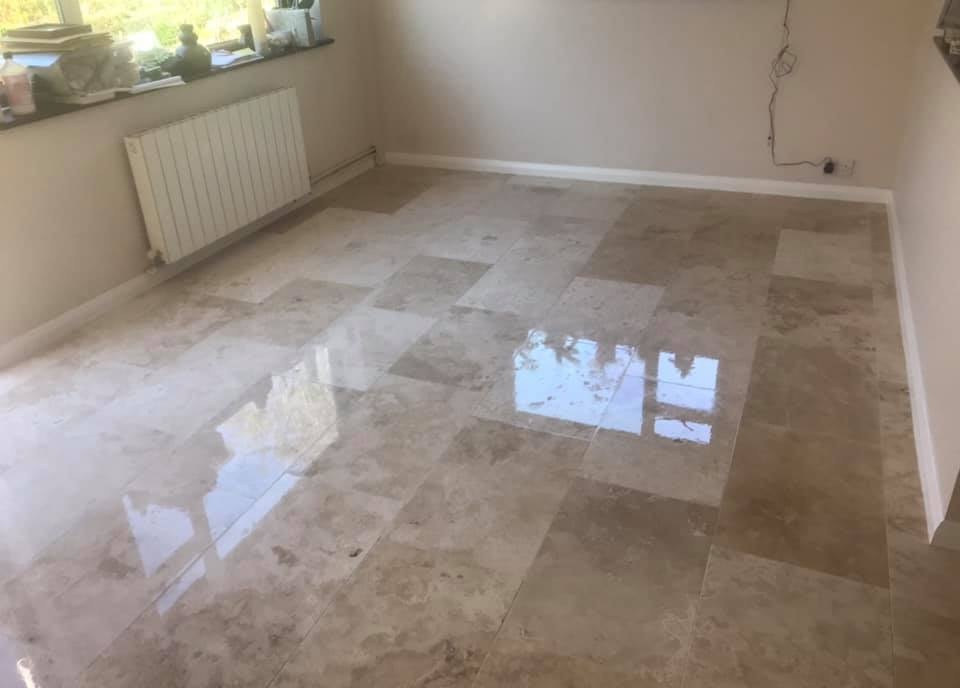
The Role of pH Levels in Stone Floor Cleaning
The pH level of the cleaning products used before sealing is very important. Natural stone should usually be maintained with neutral or stone-safe cleaners, especially once sealed. The Natural Stone Institute recommends neutral cleaners or stone soaps for routine cleaning, and warns that overly concentrated cleaning products can leave film or streaking if not used correctly.
During restoration, professional alkaline cleaners may sometimes be used to break down grease, waxes or ingrained grime. The important point is that the floor must then be properly rinsed, neutralised where needed and allowed to dry before any stone sealer is applied.
This is especially important with limestone travertine, marble and other acid-sensitive stone. Acidic cleaners can etch the surface and leave dull marks, while poorly rinsed alkaline residue can affect how the sealer bonds.
Different Stone Types Need Different Sealers
There is no single sealer that is right for every floor. The correct choice depends on the stone type, the finish, the room and how the floor is used.
| Stone Type | Common Sealing Consideration |
| Limestone | Usually benefits from breathable protection and careful pH-safe cleaning |
| Travertine | Often needs attention to holes, grout lines and surface porosity |
| Slate | May need colour-enhancing or natural-look sealers depending on the finish |
| Marble | Needs careful preparation because it can stain and etch easily |
| Sandstone | Often more porous and may require deeper protection |
Some floors suit an impregnating sealer that sits within the stone. Others may need a surface finish, depending on the desired look and practical requirement. The aim is always the same: high quality protection that works with the floor, not against it.
Our Stone Floor Sealing Process
Every floor is different, but a proper restoration process usually follows a clear order.
- We assess the stone type, existing finish and overall condition.
- We clean the stone surface and grout lines using appropriate products and machinery.
- We deal with residues, staining and old coatings where possible.
- We rinse and prepare the floor so cleaning chemistry is not left behind.
- We allow the floor to dry properly before sealing.
- We apply the right stone sealer for the floor and finish required.
- We explain aftercare so the protection lasts as long as possible.
The drying stage is not something to rush. If moisture is still sitting in the stone, sealing too early can create hazing, patchiness or poor absorption.
How to Look After a Sealed Stone Floor
Once your floor has been sealed, the right aftercare makes a huge difference. You do not need to overcomplicate it, but you do need to avoid harsh cleaning habits.
Use a pH-neutral cleaner designed for natural stone. Avoid vinegar, bleach, strong degreasers and generic floor cleaners unless they are clearly suitable for sealed stone. Clean up spills quickly, especially oils, wine, coffee and acidic liquids. Keep entrance mats clean so grit is not dragged across the floor.
A sealed floor will still need maintenance over time, especially in kitchens, hallways, bathrooms and commercial spaces. The busier the floor, the more regularly it should be checked.
Why Professional Stone Floor Restoration Services Make a Difference
Stone floor sealing looks simple from the outside, but the detail is in the preparation. The wrong product, wrong cleaner or wrong timing can leave a floor looking worse rather than better.
We approach stone floor restoration by looking at the whole floor, not just the surface shine. That means understanding the stone, cleaning it properly, giving the grout lines the attention they need and choosing a sealer that fits the room and the way the floor is used.
Good sealing should make a stone floor easier to live with while keeping its natural character intact. Done properly, it protects the floor without making it look artificial.
If your stone floor looks dull, patchy, stained or hard to keep clean, sealing may be part of the answer. The real answer starts with proper preparation.
If you liked this, you may also like: How To Restore Stone Floors | Stone Floor Restoration Explained For 2026
Frequently Asked Questions About Stone Floor Sealing
What is stone floor sealing?
Stone floor sealing is the process of applying a protective treatment to natural stone floors to help reduce staining, moisture absorption and surface dirt. It does not make the floor completely stain-proof, but it makes the stone easier to maintain and helps protect the finish after cleaning or restoration.
Do natural stone floors need sealing?
Most natural stone floors benefit from sealing because many stone types are porous. Limestone, travertine, slate, marble and sandstone can all absorb liquids and dirt if left untreated. The right stone sealer depends on the stone type, finish and how the floor is used.
How often should stone floors be sealed?
There is no fixed rule because it depends on the stone, the sealer used, foot traffic, cleaning products and room conditions. Busy kitchens, hallways and commercial areas usually need checking more often than lighter-use rooms. If spills soak in quickly or the floor becomes harder to clean, resealing may be needed.
Can you seal a stone floor without cleaning it first?
No, a stone floor should always be properly cleaned before sealing. If dirt, stains, grease or cleaning residue are left on the stone surface, the sealer can trap them underneath. This can leave the floor looking patchy, cloudy or permanently dirty.
Why do grout lines still look dirty after sealing?
Grout lines can hold onto dirt, moisture and residue more than the stone itself. If they are not cleaned properly before sealing, the sealer can lock in that discolouration. Proper stone floor restoration should include cleaning the grout lines before any sealer is applied.
What happens if the wrong cleaner is used on natural stone?
The wrong cleaner can damage the stone surface or affect how well the sealer works. Acidic cleaners can etch sensitive stones such as limestone, travertine and marble. Strong alkaline products can also leave residue if they are not rinsed and neutralised properly before sealing.
Is stone floor sealing the same as stone floor restoration?
No, but they often work together. Stone floor restoration is the wider process of cleaning, repairing, resurfacing or improving the floor. Stone floor sealing is usually the final protection stage once the surface and grout lines have been properly prepared.
What is the best sealer for limestone and travertine floors?
The best sealer for limestone and travertine depends on the finish, porosity and room use. These stones often need breathable, high quality protection that helps reduce staining without trapping moisture. A professional assessment is the safest way to choose the right product.
Can stone floor sealing stop all stains?
No stone sealer can stop every stain completely. A good sealer gives you more protection and more time to clean up spills before they soak in, but oils, acidic liquids and strong dyes can still mark the surface if left too long. Aftercare still matters.
How do I know if my stone floor needs restoration services?
Your stone floor may need restoration services if it looks dull, patchy, stained, difficult to clean or uneven in colour. Dirty grout lines, worn sealer, cloudy patches and ingrained marks are also common signs that the floor needs more than a standard mop and clean.