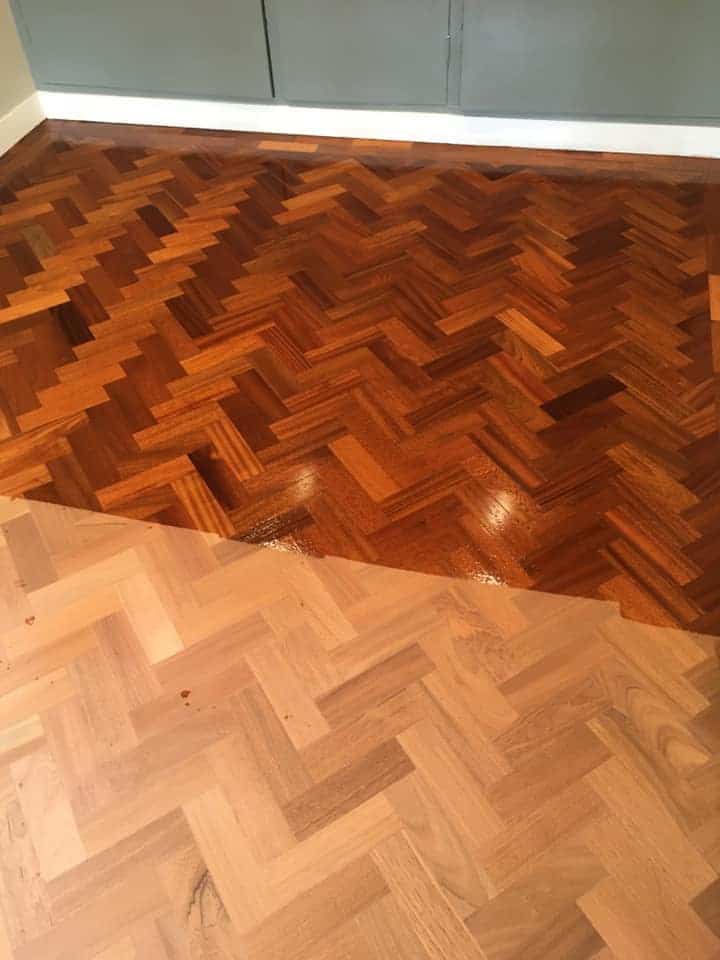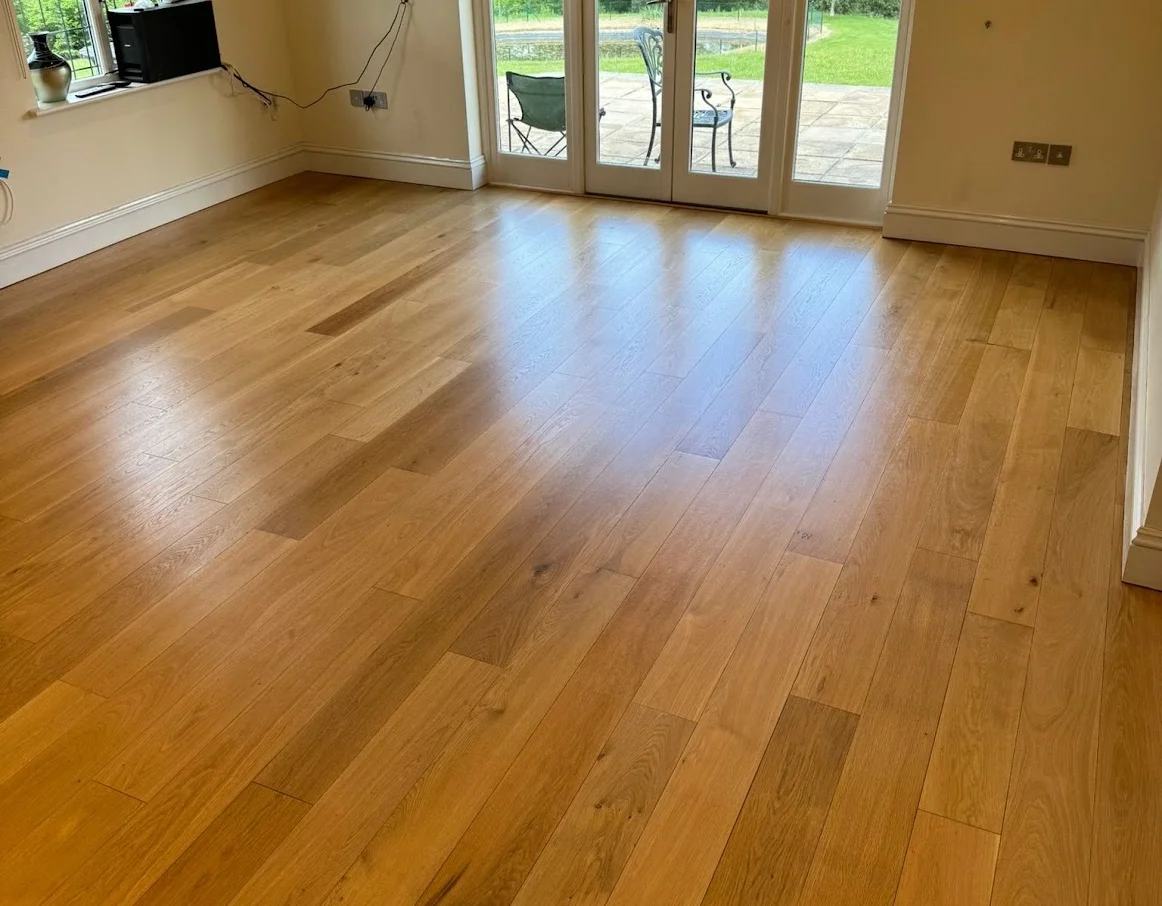
Professional floor sanding is about more than running a machine over wooden flooring and applying a new finish. The quality of the result comes from understanding the floor, preparing it correctly, using suitable equipment and giving proper attention to the detailed areas that larger machines cannot reach.
At Sussex Floor Restoration, we work across homes, commercial properties and larger refurbishment projects. Whether you are arranging work for your own property or need floor sanding professionals as part of another project, the aim is the same: a properly restored floor and a straightforward service from start to finish.
Quick Summary
A professional floor sanding service should consider the whole floor, including its condition, timber type, previous finish and how the space is used. Careful preparation, effective dust extraction and detailed finishing can all make a significant difference to the result. The best approach is not simply to remove the existing surface, but to restore the complete floor with a finish that suits both the timber and the room.
What Makes Professional Floor Sanding Different?
Floor sanding can look straightforward, but there is a substantial difference between removing an old coating and properly carrying out a wood floor sanding service.
Taking too little from the surface can leave scratches, staining or previous coatings behind. Taking too much can unnecessarily remove timber or leave an uneven result.
A professional approach considers:
- The type and condition of the wooden flooring
- Previous coatings and treatments
- Areas of heavier wear
- Edges, corners and detailed sections
- The right sequence of abrasives
- The finish required at the end
This becomes particularly important with older floors, where years of wear and previous treatments can affect how the timber responds.
The Details Matter Just as Much as the Main Floor
Large sanding machines are designed for open areas, but a room rarely consists entirely of easy-to-reach flooring.
Edges, doorways, corners, stairs and decorative features often require smaller equipment or hand finishing. A floor can look excellent through the centre of a room, but inconsistent edges can quickly detract from the overall result.
Working With Different Types of Wooden Flooring
Solid hardwood flooring, engineered wood and traditional floorboards do not necessarily require exactly the same approach. Timber thickness, previous sanding and existing finishes all need to be considered before work begins.
A Process That Suits the Floor
As the general floor sanding process demonstrates, restoration usually involves preparation, several stages of sanding and a protective finish rather than one pass with a machine.
In broad terms, professional floor sanding involves:
- Assessing the floor and its existing condition.
- Removing old coatings using an appropriate sanding sequence.
- Refining edges and detailed areas.
- Preparing the completed surface for its new finish.
| Part of the Process | Why It Matters |
| Floor assessment | Helps determine the most suitable approach |
| Main sanding | Removes worn coatings and refines the surface |
| Edge and detail work | Keeps the finish consistent around the whole room |
| Dust extraction | Reduces dust escaping into surrounding areas |
| Final finishing | Protects the timber and creates the finished appearance |
Why Dust Free Floor Sanding Matters
Dust is understandably one of the biggest concerns surrounding wood floor sanding.
The Health and Safety Executive highlights that sanding timber with power tools can produce significant levels of wood dust and that effective controls are necessary.
Our sanding equipment uses extraction systems designed to capture the vast majority of dust at source, making the process significantly cleaner than traditional sanding.
It is useful in homes, but also when flooring restoration forms part of a commercial or refurbishment project where surrounding rooms, finished surfaces or other work need to be considered.
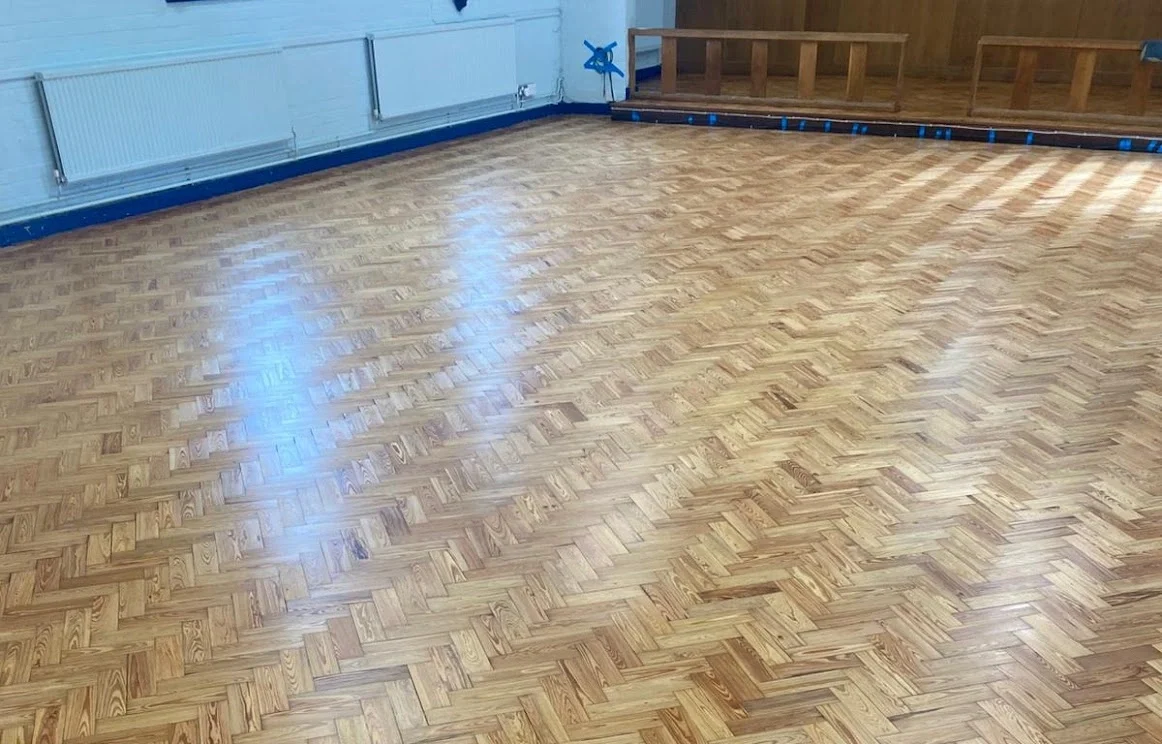
Older Wooden Flooring Can Still Have Plenty to Give
A tired appearance does not automatically mean wooden flooring has reached the end of its useful life.
Old coatings can become scratched, dull or discoloured, while heavily used sections may appear completely different from areas previously covered by furniture or rugs.
Historic England also advises against automatically stripping out old timber floors in older properties, noting that historic timber can often be retained and cared for rather than simply discarded.
A complete flooring restoration can reveal the character of the timber again and create a much more consistent appearance across the room.
Choosing a Finish That Suits the Space
Once sanding has exposed the timber, the chosen finish has a major influence on how the floor looks and performs.
You might want a lighter natural appearance, additional warmth or something that complements the wider interior. How the space is used matters too. A busy hallway or commercial environment naturally places different demands on a floor than a lightly used room.
This is another area where experience counts. The objective should be a finish that works across the entire floor rather than simply looking appealing on a small sample.
Professional Floor Sanding From Sussex Floor Restoration
Whether the project is a family home, commercial property or part of a wider refurbishment, professional floor sanding should leave you with more than a superficially improved floor.
At Sussex Floor Restoration, we combine specialist sanding equipment, detailed finishing, effective dust extraction and experience across a wide range of wooden flooring.
If you liked this, you may also like: Need a Floor Sanding Contractor Who Won’t Make Your Project Harder?
Frequently Asked Questions About Professional Floor Sanding
What does professional floor sanding involve?
Professional floor sanding usually involves assessing the floor, removing old coatings, sanding through progressively finer abrasives and refining edges and detailed areas before applying a suitable finish. The exact process depends on the timber, condition of the floor and the result you want to achieve.
How do I know if my wooden floor can be sanded?
Many solid wood floors and some engineered wooden floors can be sanded, but this depends on their thickness, previous sanding and overall condition. A professional assessment is the best way to establish whether the floor is suitable before any work begins.
Is professional floor sanding dust free?
No sanding process is completely dust free, but modern extraction equipment can capture the vast majority of dust as it is produced. Sussex Floor Restoration uses systems designed to achieve around 98% dust-free sanding, which helps keep the surrounding property considerably cleaner.
How long does professional floor sanding take?
Timescales depend on the size of the area, condition of the floor, level of detail and the finish being applied. Smaller rooms may be completed relatively quickly, while larger commercial spaces or more detailed flooring restoration projects naturally take longer.
Can hardwood flooring be sanded and refinished?
Yes, hardwood flooring is commonly suitable for sanding and refinishing, provided there is enough usable timber remaining. Professional sanding can remove worn coatings, scratches and surface discolouration before a new protective finish is applied.
Can engineered wooden flooring be professionally sanded?
Some engineered wooden flooring can be sanded, but the wear layer needs to be thick enough to do so safely. Because engineered boards vary considerably, it is important to have the floor assessed before deciding on the sanding process.
How often should wooden flooring be sanded?
There is no fixed schedule because it depends on foot traffic, the finish used and how the floor has been maintained. Sanding is normally considered when the existing finish has become heavily worn, scratched, discoloured or difficult to improve through normal cleaning and maintenance.
Do I need to empty the room before floor sanding?
In most cases, furniture and movable items should be removed so the complete floor can be accessed. Your floor sanding professionals should explain any preparation requirements beforehand so you know exactly what needs to be moved before work begins.
What finish can be applied after floor sanding?
There are various floor finishes available, with different appearances, durability levels and maintenance requirements. The right choice depends on the type of wooden flooring, how the room is used and whether you want a natural, warmer or more contemporary look.
Can professional floor sanding be used on commercial projects?
Yes. Professional floor sanding is suitable for many commercial properties, including offices, hospitality venues, halls and other heavily used spaces. For larger projects, scheduling, dust control and clear communication become particularly important when the flooring work needs to coordinate with other stages of a refurbishment.