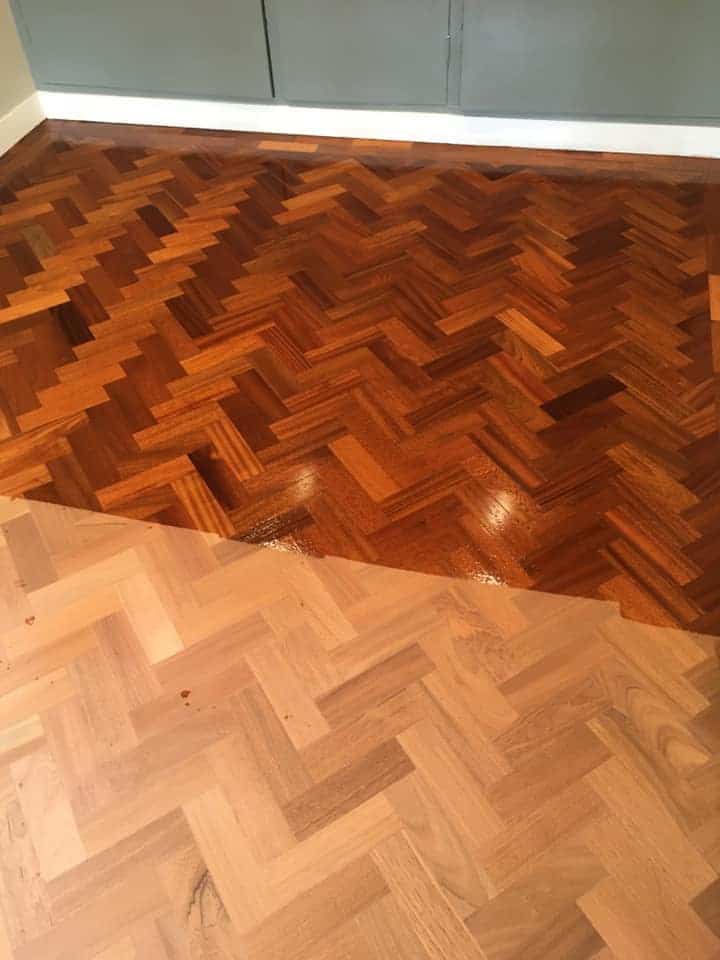
Years of worn finish, scratches and discolouration can hide a surprising amount of detail in a parquet floor. Restoring it means removing that wear evenly while keeping the individual blocks level and avoiding sanding marks across the different grain directions.
At Sussex Floor Restoration, we restore the parquet as a complete floor. We check the existing parquet blocks, lift and re-seat loose blocks where necessary, sand the full area and apply a finish suited to the timber and the room.
Quick Summary
Knowing how to restore parquet wood floors starts with the pattern. Herringbone or basket weave floors contain blocks running in different directions, so the sanding process needs controlled passes across the pattern rather than following one continuous grain. Once the floor is stable, we remove the worn coating, work through the right abrasives, refine edges and corners, then apply oil or lacquer.
Why Sanding Parquet Flooring Is Different
Parquet is made from individual pieces of timber arranged into a geometric pattern. That changes the way it needs to be sanded.
With straight floorboards, the grain generally runs in one direction. On parquet, neighbouring blocks can run at right angles to one another, so following every individual grain with a large machine is impossible.
For many layouts, the main passes are made diagonally across the pattern, followed by a pass from the opposite diagonal. This helps work evenly across changing grain directions and reduces the risk of hollowing or “dish-out”. The exact approach depends on the floor and equipment. The NWFA Sand & Finish guidance covers parquet separately from strip and plank flooring for the same reason.
How to Restore Parquet Wood Floors Step by Step
Before a machine touches the timber, we want the floor stable and the restoration plan clear.
- Inspect the complete floor. We check the finish, wear and tear, movement, previous coatings and condition of the parquet blocks.
- Re-seat loose blocks where required. Existing blocks can be carefully lifted, the area prepared and the original blocks placed back securely.
- Choose the starting abrasive. A heavily coated or uneven floor may require us to start with coarse grit. A floor in better condition may need something less aggressive.
- Make the main sanding passes. Belt sanders or other professional machines are controlled across the parquet pattern in the direction suited to that layout.
- Move through the grits. Medium grit removes the deeper scratch pattern from the first cut, followed by a fine grit to refine the timber.
- Work the edges and details. Corners, thresholds and fixed features need smaller machines and hand work so they match the main floor.
- Finish the floor. Once the timber is consistently prepared, we apply the selected oil or lacquer.
You can see the wider sequence on our floor restoration process page.
Do You Need a Drum Sander for Parquet?
A drum sander is often associated with floor sanding, but machine choice is only part of the job. Sanding parquet flooring properly means matching the equipment, abrasive, pressure and direction to the floor.
Modern belt sanders, edge sanders and multi-disc finishing machines can all have a role. Our Parkett Profi training with Pallmann covers machine selection, correct grit progression and dust management within professional wood floor restoration.
Why the Final Sanding Stages Matter
Coarse sanding handles the heavier removal. Each following abrasive then removes the scratch pattern left by the previous stage. Skipping too far between grits can leave marks that show once the finish is applied.
That is why the move through medium grit and fine grit matters, along with careful work around edges and detailed areas.
What Happens After Sanding a Parquet Floor?
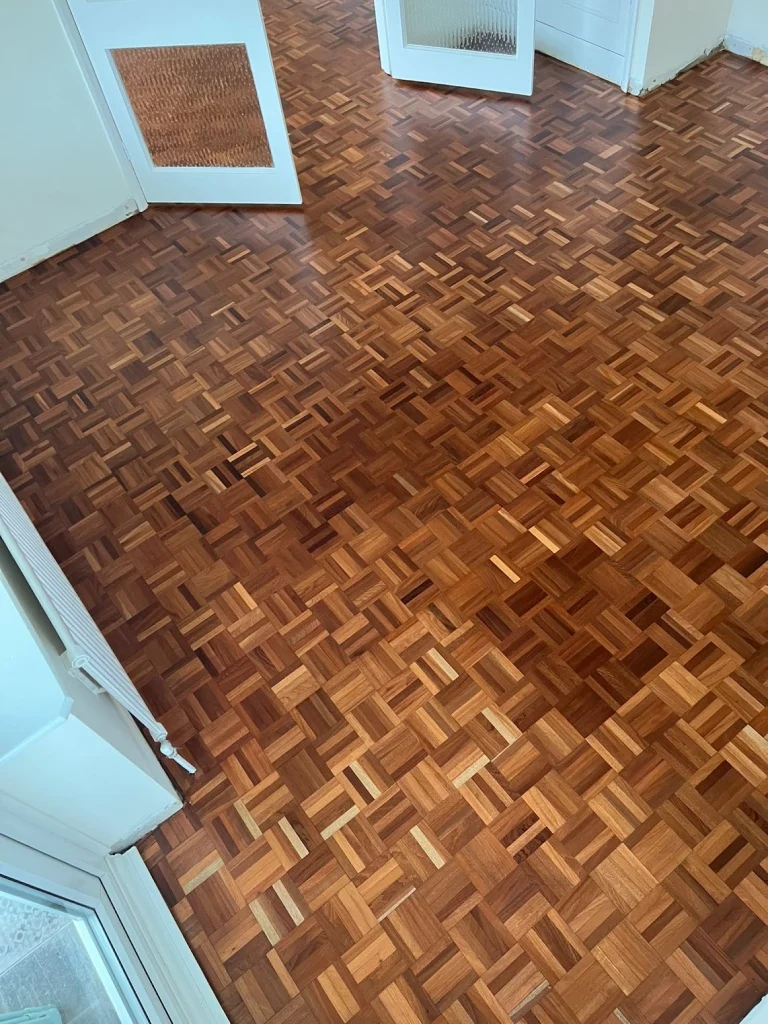
Once sanding a parquet floor is complete, the clean timber shows its natural colour and grain more clearly. We then choose a finish based on appearance, traffic and maintenance.
Common choices include:
- Oil for a natural appearance that shows the grain clearly.
- Lacquer for a hard-wearing protective surface.
- Different sheen levels, from matt to more reflective finishes.
- Staining and finishing where a change of tone is wanted.
Our parquet flooring restoration service uses a 98% dust-free sanding process, with extraction connected to the equipment throughout the job.
| Stage | What We Are Looking For |
| Inspection | Stable blocks and a clear view of the floor |
| Initial sanding | Old finish and heavier wear removed evenly |
| Medium sanding | Coarser sanding marks reduced |
| Fine sanding | A consistent surface ready for coating |
| Finishing | Even protection and the chosen appearance |
Is Restoring Parquet Flooring Worth It?
A worn surface can make a sound parquet floor look far worse than it is. Removing old coating, scratches and uneven colour can reveal much more definition in the original pattern.
Restoring parquet flooring means working with the floor already in place. We keep the existing layout, secure original loose blocks where required, sand the complete area and finish it consistently. With herringbone or basket weave patterns, that consistency matters because uneven sanding is easy to spot across the room.
If you are considering parquet floor restoration, we can survey the floor and explain what we recommend before work begins.
If you liked this, you may also like: The Timeless Appeal and Restoration of Herringbone Parquet Flooring.
Frequently Asked Questions About How To Restore Parquet Wood Floors
Most solid parquet floors can be restored if there is enough usable timber left above the tongue and groove or fixing system. We always inspect the floor first so we can judge how much sanding is appropriate.
That changing grain direction is exactly why sanding parquet flooring needs more control than ordinary boards. We work across the pattern in carefully chosen directions and refine the surface through several sanding stages.
Yes, existing loose blocks can often be carefully lifted and re-seated before the main sanding process begins. The aim is to make sure the floor is stable before we start working across the whole area.
Many surface scratches and signs of wear and tear can be removed during parquet floor restoration. Very deep marks depend on how far they penetrate into the timber, so we assess those before sanding.
No. We are restoring the parquet blocks already in place, so patterns such as herringbone or basket weave remain exactly where they are. Sanding simply removes the worn surface and old finish.
Our professional sanding equipment uses extraction throughout the process, making our floor sanding around 98% dust-free. There can still be a small amount of fine dust, particularly around detailed areas, but it is very different from traditional uncontrolled sanding.
No. Starting with coarse grit is only necessary when the condition of the floor calls for it, such as a heavy old coating or significant surface wear. Using an abrasive that is more aggressive than necessary can remove more timber than the job requires.
Both can work very well, but they give the floor a different look and feel. Oil tends to emphasise the timber grain, while lacquer creates a protective coating over the surface, so we can talk you through the most suitable option for the room.
It depends on the size of the room, the condition of the parquet and the finish being applied. We normally arrive between 8:30 and 9:00 and finish each working day at around 3:00 to 3:30, and we will explain the likely schedule before starting.
If the existing parquet is sound, restoring it can retain the original timber, pattern and character rather than covering or removing it. A properly restored parquet floor can look dramatically different once years of worn finish and discolouration have been taken back.