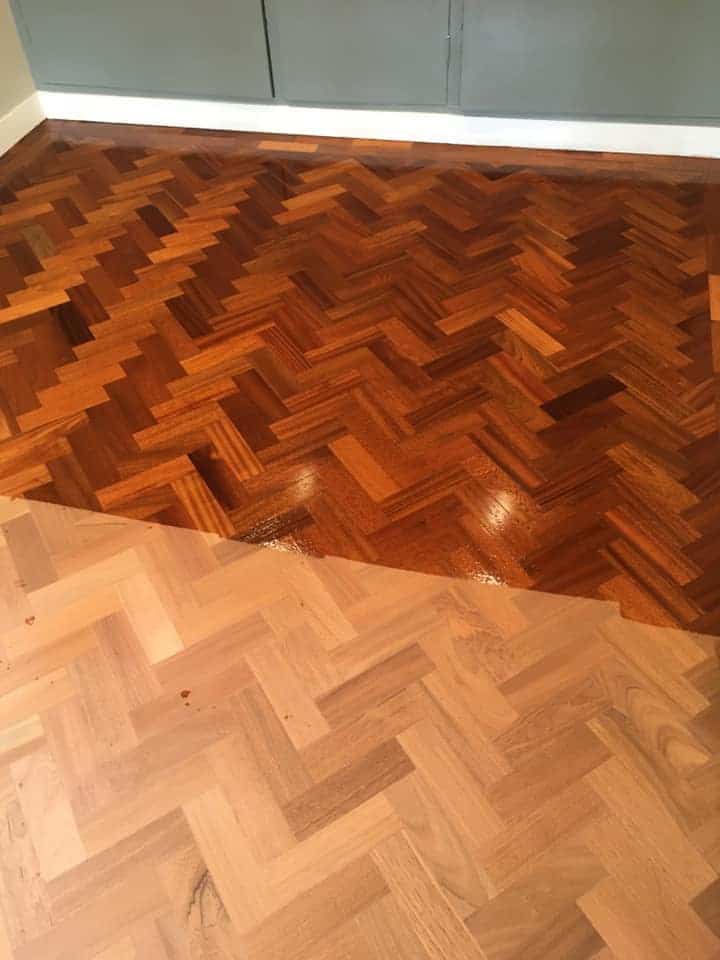
A tired wooden floor can change the feel of an entire room. Scratches become more obvious, the finish loses its depth and heavier foot traffic leaves visible wear. The good news is that many wood floors still have plenty of life left in them.
As local floor sanding experts based in Burgess Hill, we restore floors across Sussex and nearby areas. We assess the timber, its condition, the previous finish and how the space is used before deciding what it needs.
Quick Summary
Professional floor sanding involves assessing the floor, working carefully around edges and detailed areas, using the right sanding sequence and applying a finish suited to the room. With the right approach, an old wooden floor can often be restored rather than replaced, while our extraction equipment keeps the process around 98% dust-free.
What Do Local Floor Sanding Experts Actually Do?
Wood floor sanding removes worn surface material, old coatings and many scratches built up through years of use. The timber can then be prepared for a fresh oil, lacquer or another suitable finish.
Our floor restoration service covers the whole process rather than treating sanding as an isolated job. A typical restoration may involve:
- Assessing the type and condition of the floor
- Removing the old finish evenly
- Sanding edges and areas the main machine cannot reach
- Carrying out finer sanding to prepare the timber
- Applying the chosen finish across the whole area
- Explaining how to look after the floor afterwards
Solid and engineered wood flooring also differ, which is another reason we assess the floor before starting.
Different Wood Floors Need Different Treatment
A pine floorboard, oak engineered floor and parquet floor cannot be approached in exactly the same way. Grain direction, floor thickness, previous treatments and the pattern of the timber can all affect how we sand it.
Parquet is a good example. Because the blocks run in different directions, the sanding process needs more care than a straightforward run of boards. We cover this in our guide to professional parquet floor sanding.
This is also where choosing an experienced wood floor restoration company matters. The aim is not to remove as much timber as possible. It is to remove what is needed, work evenly across the floor and leave the surface ready for its new finish.
Timber Development UK notes that timber durability varies, especially in heavier-use areas. Their flooring guidance gives a useful overview of hardwood, softwood and engineered options:
| Floor type | What we consider | Main aim |
| Traditional floorboards | Age, wear and previous coatings | Keep the character while improving the finish |
| Parquet floor | Pattern and block condition | Restore definition without flattening the pattern |
| Engineered wood | Wear-layer depth | Sand safely without removing unnecessary material |
| High-traffic floor | Wear paths and durability | Choose a finish suited to heavier use |
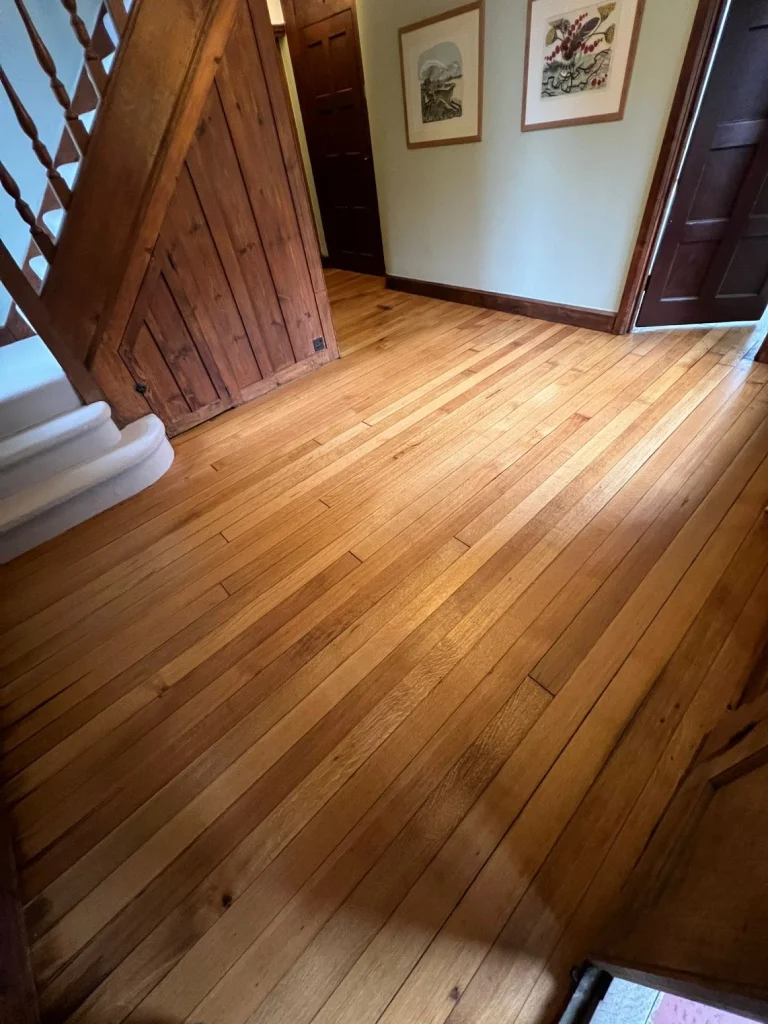
Our Professional Floor Sanding Process
A high-quality floor sanding service starts with understanding the floor in front of us. Before sanding begins, we look at its condition, discuss the finish you want and plan the work around the type of timber and the room itself.
From First Look to Final Finish
The process usually follows a straightforward order:
- We inspect the floor and discuss the finish you want.
- We prepare the full area and deal with restoration work required as part of the job.
- We sand progressively, including edges and detailed areas.
- We complete the finer preparation needed for an even surface.
- We apply the selected oil or lacquer and explain the aftercare.
Keeping Dust and Disruption Down
Floor sanding naturally produces dust where material is being removed, so good extraction makes a real difference. Our equipment collects dust as we work and allows us to provide a process that is around 98% dust-free.
That makes the work easier to manage in homes, offices, schools and commercial spaces.
The Finish Matters Too
Sanding creates the surface, but the finish protects it once people start walking over it again. A busy hallway has different demands from a bedroom, while commercial areas may need to cope with much heavier foot traffic.
That is why we talk through oil and lacquer options rather than treating the finish as an afterthought.
Looking for Local Floor Sanding Experts?
If your wooden floor is scratched, faded or simply looking tired, professional floor sanding can breathe new life into it without stripping away the character that makes it worth keeping.
As a wood floor restoration company, our job is to give you clear advice, restore the whole area properly and leave you with a floor that suits the way the room is used. Customer satisfaction comes down to the details: careful preparation, a finish that works for the space and a floor that still looks good once normal life resumes.
If you are looking for local floor sanding experts around Sussex, call Sussex Floor Restoration on 01444 810505 or email info@sussexfloorrestoration.co.uk.
If you liked this, you may also like: Restore Your Parquet Floor with Professional Floor Sanding
Frequently Asked Questions About Local Floor Sanding Experts
Most solid wood floors can be sanded several times over their lifetime, while engineered floors depend on the thickness of the real wood wear layer. We can assess the floor before work starts and let you know what is realistic.
Our sanding process is around 98% dust-free thanks to professional extraction equipment. There will always be a small amount of fine dust involved in restoration work, but modern machinery keeps disruption far lower than many people expect.
Yes. Parquet needs more care because the blocks run in different directions, so the sanding technique has to account for the pattern rather than treating it like standard floorboards.
It depends on the size and condition of the floor, along with the finish being applied afterwards. Smaller rooms can often be completed fairly quickly, while larger or heavily worn areas naturally take longer.
Ideally, yes. We need clear access to the whole floor so it can be restored evenly rather than trying to work around furniture and leaving untreated areas behind.
Both can work very well, but they give a different look and require different maintenance. We can talk you through the options based on the room, expected foot traffic and the finish you prefer.
Many scratches disappear during sanding, but very deep marks that have penetrated well into the timber may still leave some evidence behind. The aim is to improve the floor significantly without removing more wood than necessary.
Yes, and the final finish is particularly important in areas with heavier foot traffic. Offices, schools and other commercial spaces may benefit from finishes selected specifically for durability and easier ongoing maintenance.
That depends on the finish used and how quickly it cures. We will tell you exactly when the floor can handle light foot traffic and when furniture can safely be moved back into the room.
Hiring a machine gives you the equipment, but not necessarily the experience needed to deal with edges, parquet patterns, engineered timber, old finishes or uneven areas. Professional floor sanding also includes the finer preparation and finishing work that has a major impact on the final result.