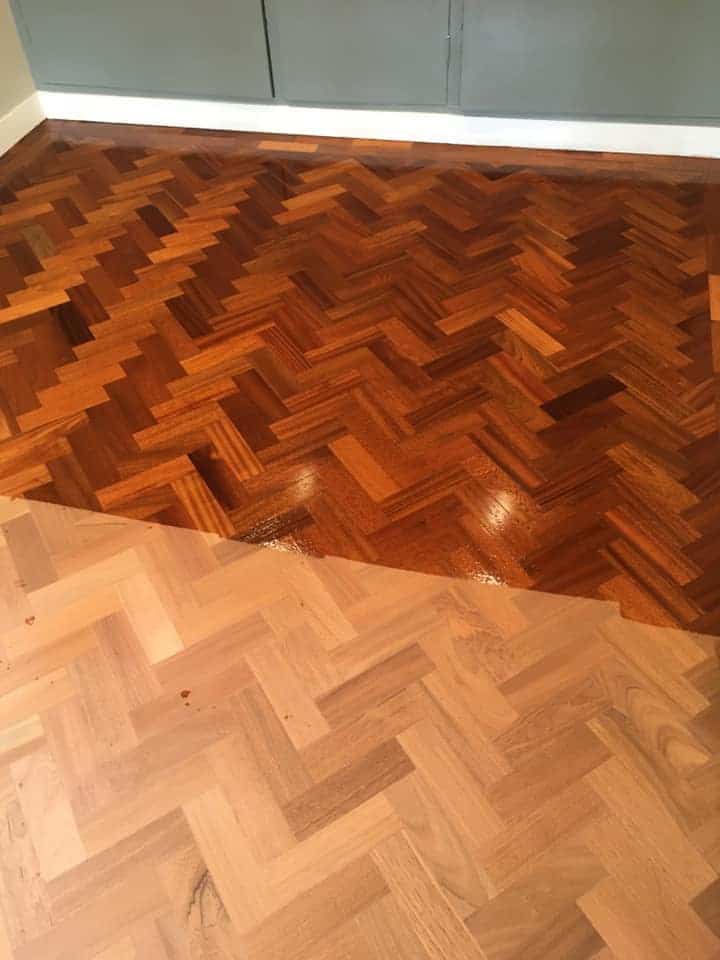
When restoring a parquet floor, one of the most important materials we use is wood floor adhesive, but not in the way most people think. It’s not just about sticking something down. It’s about stabilising your entire floor, preventing future movement, and preserving the original pattern and character of your timber.
At Sussex Floor Restoration, we don’t just fix what’s on the surface. We investigate what’s happening underneath, and wood floor adhesive often plays a critical role in restoring both structure and longevity.
Summary: How We Use Wood Floor Adhesive to Restore Parquet Floors
This blog explains how our team uses professional-grade wood floor adhesive to restore parquet floors, especially when blocks are loose, hollow, or lifting. You’ll learn when glue is essential, how it supports restoration work, and why it’s part of a much bigger process designed to preserve your original floor design and extend the life of your wooden floor.
Why Adhesive Matters in Parquet Restoration
A parquet wood flooring system is held together by precision, not just in the pattern, but in how each individual block is bonded to the subfloor. Over time, heat, humidity, foot traffic and historic damp can cause adhesive failure. When that happens, we see:
- Lifting or rocking blocks
- Hollow-sounding sections
- Loose corners or edge creep
- Entire panels detaching from the subfloor
These issues aren’t cosmetic; they can make your floor unsafe, and they only get worse if ignored.
The Science Behind Modern Wood Floor Adhesive
In 2025, we use advanced MS-polymer adhesives that remain flexible, breathable and moisture-resistant. Unlike older glues that go brittle or dry out, modern adhesives are designed to:
- Withstand subfloor movement
- Prevent cupping and hollow spots
- Cure safely on timber and concrete
- Support both restoration and new installation methods
These products are engineered to last, and our team knows exactly how to apply them in the right conditions.
Table: When and Why We Use Wood Floor Adhesive
What the Restoration Process Looks Like
Here’s how we typically restore a parquet floor using wood floor adhesive, depending on what we find during our initial assessment:
1. Inspect and Test
We tap-test the floor for hollows and movement, identify failed bonding areas, and test moisture in both subfloor and timber. This tells us whether adhesive alone will suffice or if blocks need lifting and re-laying.
2. Clean and Prep
Dust, debris and old adhesive must be removed. We use HEPA-extraction equipment and oscillating tools to create the perfect surface for rebonding, critical for long-term success.
3. Re-Bond Blocks or Inject Hollow Spots
For individual blocks, we lift, clean, and apply fresh adhesive. For hollow zones, we drill fine holes and inject adhesive beneath the floor, weighing it to cure flat.
4. Secure the Pattern
In herringbone and basketweave designs, even slight shifts ruin the geometry. We often pin key sections while the adhesive cures, keeping alignment sharp.
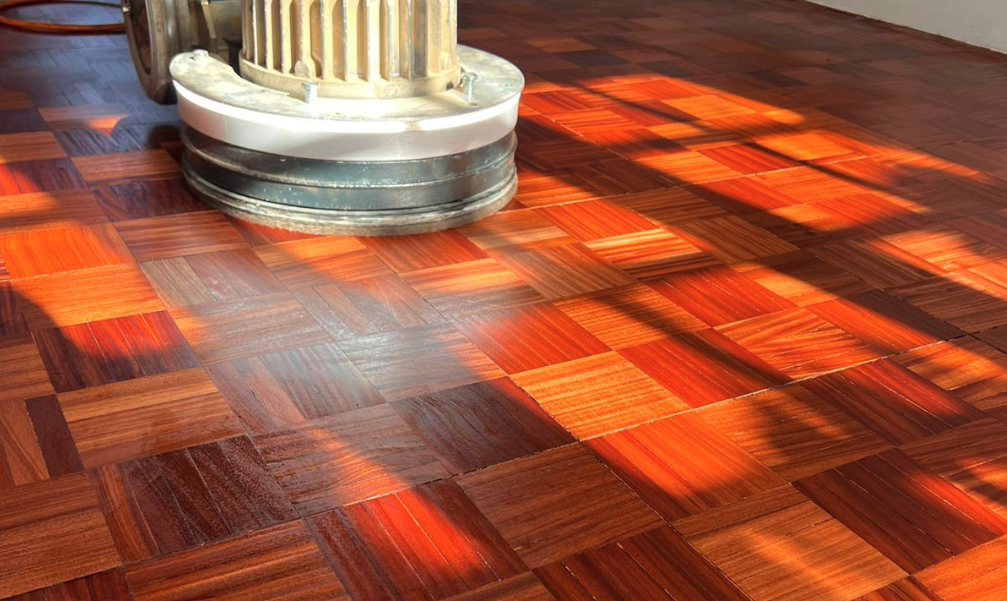
5. Sand, Fill and Seal
Once structurally sound, we continue with dust-free sanding, gap filling, and finish application. At this point, you’d never know the blocks had moved.
Why You Shouldn’t DIY This Process
Restoring a wooden floor with wood floor adhesive isn’t the same as “just glueing it back down.” We’re often called in after failed repairs where:
- Wrong glue was used (too rigid, too wet, or too fast-drying)
- Movement wasn’t addressed, so blocks popped up again
- Adhesive overflowed, causing staining on the timber surface
- Subfloor prep was skipped entirely
Modern adhesives are powerful, but only if used properly. Without professional training, moisture testing tools, and specialist application methods, the risk of long-term damage is high.
Why Sussex Floor Restoration?
- We specialise in traditional parquet floor repair
- Our team understands both aesthetic and structural demands
- We use premium adhesives matched to the exact environment
- Every floor gets a tailored approach, with no shortcuts
- We protect your layout, your subfloor, and your investment
Whether it’s a classic herringbone in a hallway or a neglected school gym, we know how to bring stability and beauty back to every parquet wood flooring system.
Let’s Restore Your Floor!
If your parquet blocks are shifting, cracking or sounding hollow, don’t wait for further damage. With the right wood floor adhesive, we can bring structure and strength back to your floor, without lifting everything up or starting over.
Visit our Floor Restoration Process page, or call us team on 01444 810505.
And, if you found this blog helpful, you may also like our recent article:Stone Restoration and How to Clean Stone Floors in 2025!
FAQs
When should wood floor adhesive be used on a parquet floor?
Wood floor adhesive should be used when parquet blocks are loose, hollow, or lifting. It securely re-bonds the timber to the subfloor, restoring structure without needing full replacement. It’s ideal for repairs in areas affected by movement or previous adhesive failure.
Can you inject adhesive under a loose parquet floor?
Yes, if the floor is structurally sound, specialist adhesives can be injected beneath loose or hollow parquet to stabilise it. This is a minimally invasive fix and helps avoid lifting large sections of the floor unnecessarily.
What type of adhesive is best for wood floor repairs in 2025?
MS-polymer or flexible resin adhesives are the top choice in 2025. They cure without shrinking, bond to varied surfaces, and resist moisture, making them perfect for restoring parquet floors in older or high-traffic environments.
Is it safe to use wood floor adhesive on heritage flooring?
Yes, when applied correctly, modern wood floor adhesives are safe for heritage or listed floors. They allow for discreet repairs without altering the original design, and the process is reversible if future conservation work is needed.
Can parquet flooring be restored without replacing the whole floor?
Absolutely. Most parquet floors can be restored with targeted adhesive repairs, sanding, gap filling, and refinishing. Replacement is only needed if blocks are missing, heavily damaged, or installed on a failed subfloor.
How long does wood floor adhesive take to cure?
Most modern wood floor adhesives cure within 12 to 24 hours, depending on the product and conditions. Full bond strength is typically reached after 48 hours. We always allow proper curing before sanding or finishing.
Will re-glueing parquet blocks affect the floor design?
Not if done professionally, re-glueing won’t impact the original floor design. Blocks are re-set with precision, preserving the layout, pattern and alignment of the parquet as originally intended.
Can you restore parquet floors with underfloor heating?
Yes, but care is required. We use specialist adhesives and techniques that account for temperature fluctuation and subfloor sensitivity. Testing and moisture control are essential before restoration begins.
What’s the difference between parquet adhesive and general wood glue?
Parquet adhesives are formulated for subfloor bonding; they stay flexible, resist moisture and cure slowly enough for precision work. Standard wood glue is too rigid and can fail over time on timber flooring.
How do I know if my parquet needs adhesive repairs?
Signs include creaking, rocking blocks, visible gaps or a hollow sound when tapped. These usually indicate adhesive failure. A professional inspection can confirm whether re-bonding with adhesive is the right solution.
Updated October 2025