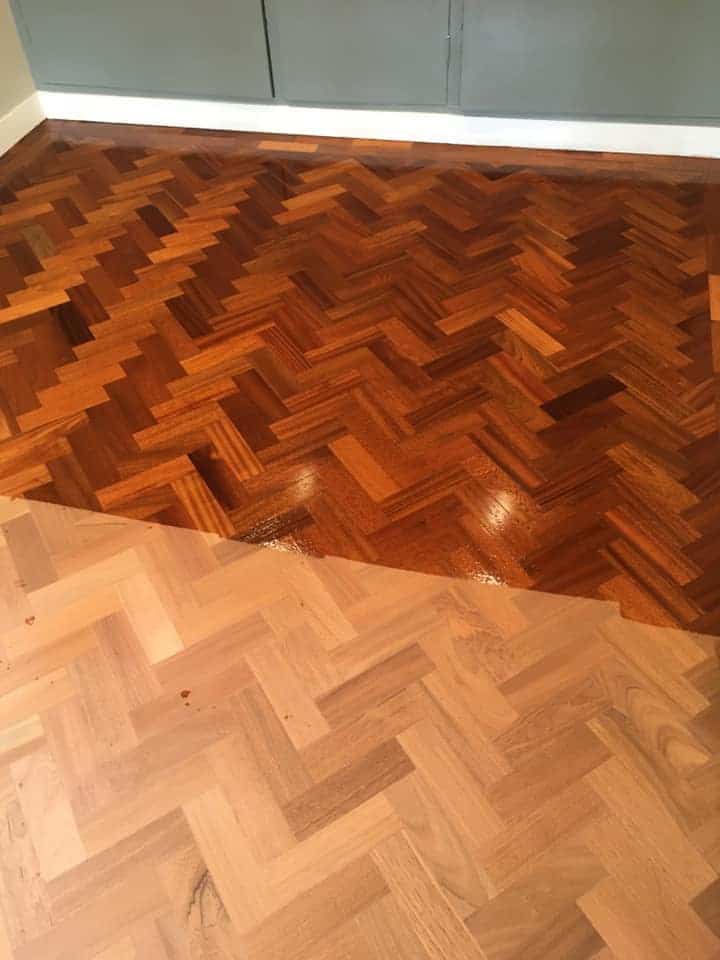
School flooring and floor restoration are best planned before the summer break arrives, not once the site is already empty. In our experience, schools get better results when they start in late spring, because there is enough time to assess wear, agree the scope, and book the work into a realistic holiday window.
Quick Summary
Summer is usually the best time to restore school floors because pupils are off site, access is easier, and finishes have a better chance to cure without daily foot traffic. If a hall, corridor or classroom floor is already looking tired by spring, it is worth arranging a survey early so the work can be planned properly.
Why Summer Makes Sense For School Flooring
For most schools, summer downtime gives the best chance of getting school flooring work done properly. There is less disruption, fewer access issues, and a better window to carry out sanding and finishing without constant use.
That matters more than people think. A floor can look only mildly worn in term time, but once furniture moves and the light changes, the real condition shows up. Traffic lanes, dull patches, tired parquet edges and old finish breakdown tend to stand out quickly. Floor restoration is easier to schedule well when there is enough room to do it properly.
Signs It Is Time To Think About Floor Restoration
We usually say it is time to act when the floor is no longer just “used”, but clearly losing both appearance and, importantly, protection.
Common signs include:
- worn finishes in heavy foot traffic areas
- patchy or flat-looking hall floors
- scratches, staining or ingrained dirt
- parquet that looks tired around the edges
- floors that are no longer easy to maintain because the finish has worn away
A lot of schools leave it until the floor looks seriously rough. The better approach is to catch it while restoration is still straightforward and cost effective.
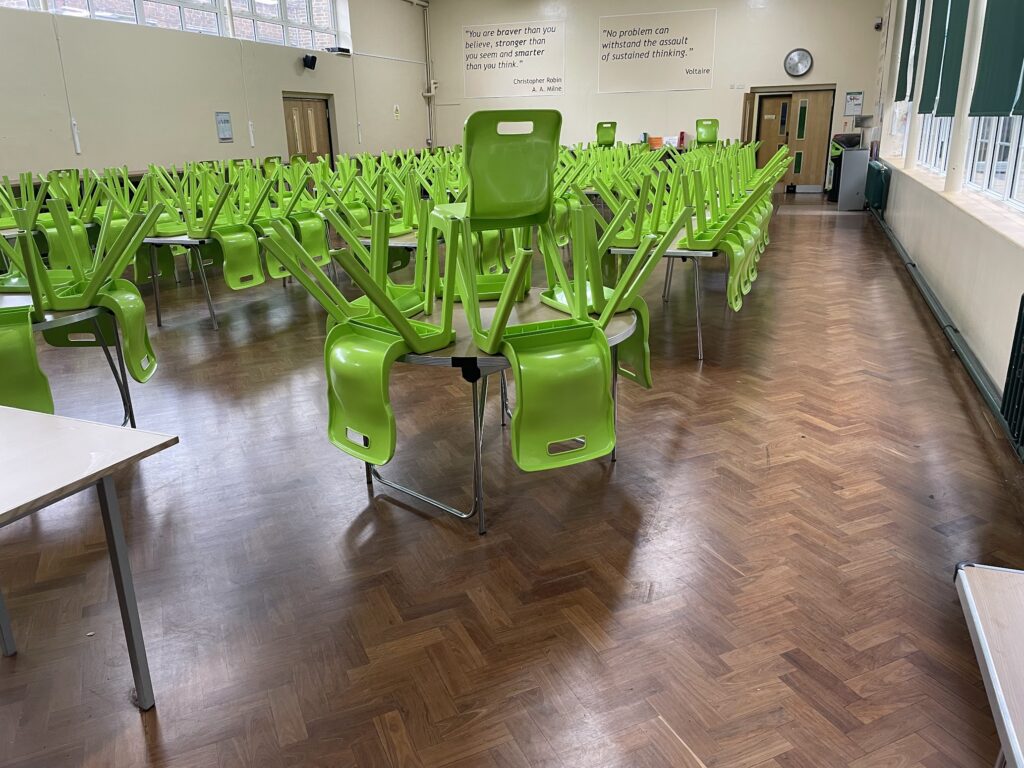
When Should Schools Actually Book The Work?
If you want the work done in the summer holidays, do not wait until the summer holidays to start asking about it.
Our Ideal Window For Surveys And Quotes
From our side, spring into early summer is usually the sweet spot. That gives us time to inspect the floor properly and recommend the right flooring solution for the space, whether that is sanding and refinishing a timber hall floor, restoring parquet, or improving a worn communal area.
What We Look At Before We Price
We do not guess from a couple of photos. We look at the floor type, the current finish, the amount of wear, any localised damage, and how the space is used day to day. A primary hall, a secondary school corridor and an assembly space all wear very differently.
That early survey helps schools budget sensibly and avoid last-minute surprises.
What Can Be Done During Summer Downtime?
Summer can be a very useful window for a wide range of restoration work, especially in learning environments where the floor has to look right but also stand up to long term use.
Depending on the floor, we may recommend:
- sanding back worn timber surfaces
- restoring parquet without losing its character
- applying a fresh protective finish that is high quality and practical to maintain
- refreshing line markings in halls or sports spaces where needed
Good floor restoration is not about doing everything possible. It is about doing the right amount of work at the right time so the floor looks better, lasts longer and keeps doing its job.
Why Planning Early Pays Off
Schools that plan ahead usually get a better outcome, thanks to timings being in their favour. There is more choice on dates, more time to phase work if needed, and more chance of having the floor ready well before staff and pupils return.
It also makes life easier for site teams and business managers. Access, furniture moving, cleaning schedules and reopening dates can all be handled with less pressure.
If your school flooring is starting to look tired, summer is often the most sensible time to deal with it. At Sussex Floor Restoration, we restore existing wood, parquet and stone floors in schools, halls and other busy spaces, with practical advice from the first survey through to the final finish.
If you found this interesting, you may also like: Floor Sanding Specialists – A Floor Renovation Company You Can Trust
Or, to find out more about our services and to discuss how we could help with your next flooring project, call us on 01444 810505.
Frequently Asked Questions About School Flooring Restoration
When is the best time to schedule school floor restoration?
The best time to schedule school floor restoration is usually during summer holidays or other planned downtime. That gives contractors enough access to complete sanding, repairs and sealing without disrupting lessons, staff movement or daily foot traffic.
How do you know when school flooring needs restoring?
School flooring usually needs restoring when the finish has worn away, scratches and dull patches are becoming obvious, or cleaning is no longer bringing the floor back properly. In our experience, halls, corridors and shared spaces often show the signs first because they take the most use.
Can school floor restoration be done during term time?
It can be done in some cases, but it is usually far easier during school holidays. Term-time work can be more complicated because of safeguarding, restricted access, noise, drying times and the need to keep spaces available for normal school use.
What types of school flooring can be restored?
Many existing wood and parquet floors can be restored, and some stone floors can too, depending on their condition. The best approach depends on the material, the amount of wear, and whether the surface has enough life left in it for sanding, repairs or resealing.
How long does floor restoration take in a school?
That depends on the size of the area, the type of floor and the work required. A smaller area may be completed quite quickly, while a larger school hall or multiple rooms will need more time for preparation, restoration and finishing. Drying and curing time also needs to be factored in.
Is restoring school flooring better than replacing it?
In many cases, yes. Floor restoration can be a more practical and cost-effective option when the existing floor is fundamentally sound. It keeps the original character of the space, reduces unnecessary replacement, and can deliver a high quality result that works well for the long term.
Does restored school flooring become easier to maintain?
Yes, a properly restored and sealed floor is usually much easier to maintain. Once the surface is protected again, routine cleaning is more effective, dirt is less likely to become ingrained, and the floor is better able to cope with ongoing foot traffic.
Which school areas usually need floor restoration first?
School halls, corridors, entrances, dining spaces and other communal areas usually need attention first because they deal with the highest levels of use. In some schools, older parquet areas and assembly spaces also show wear more quickly than less-used rooms.
Can parquet flooring in schools be restored?
Yes, parquet flooring in schools can often be restored if it is assessed properly and the blocks are in restorable condition. Sanding, repair work and refinishing can bring parquet back very effectively, especially where the floor has become dull, patchy or heavily marked over time.
How far in advance should a school plan floor restoration work?
It is best to start planning in spring if the aim is to complete the work during summer downtime. Early planning gives enough time for surveys, budgeting, scheduling and any practical arrangements, which makes the whole process smoother for the school.
Updated April 2026