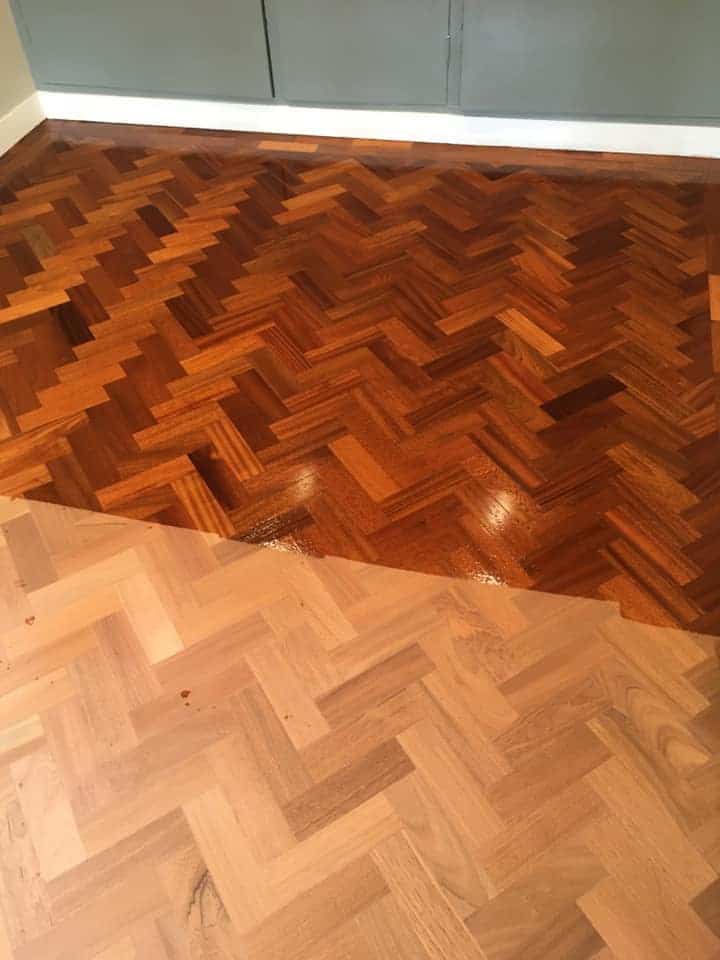
A wood gym floor needs the right hardwood floor restoration approach if it is going to stay safe, smart and hard-wearing under constant use.
Quick Summary
A gym floor takes a real beating from foot traffic, sports kit, moving heavy equipment and day-to-day cleaning. If the finish is wearing thin, the surface is looking dull or line markings are fading, restoration is usually the right next step. In most cases, that involves sanding, refinishing and making sure the floor is properly protected for the level of use it gets. At Sussex Floor Restoration, we help schools, sports halls and home gyms bring tired wooden flooring back into service with a finish that looks better and lasts longer.
Why A Wood Gym Floor Wears Out Faster Than People Expect
A sports floor has a much harder life than standard wooden flooring. Balls bounce, people pivot, trainers grind dirt into the surface and equipment gets rolled or dragged across it. In school gyms, school halls and multi-use spaces, the same floor may also deal with assemblies, events, chairs and moving furniture.
That constant wear and tear does not always mean the timber is beyond saving. More often, it means the protective finish has broken down and the surface is no longer doing its job properly. Once that happens, the floor can start to look flat, marked and patchy much sooner.
Signs Your Gym Floor May Need Restoration
There are a few clear signs that a restoration project is worth looking at:
- dull or uneven areas in busy traffic lanes
- scratches, scuffs or black heel marks that no longer clean off
- faded line markings or a tired overall appearance
- patches where the finish has worn away
- a floor that feels harder to keep clean week after week
In our experience, the right time to act is before minor wear becomes deeper damage. Leaving it too long can make the work more involved and can shorten the life of the existing floor.
What Hardwood Floor Restoration Usually Involves
For most gym and sports hall floors, hardwood floor restoration is about removing worn coatings, preparing the timber correctly and applying a finish that suits the space. Sussex Floor Restoration’s wider service is built around dust extraction, low-VOC finishing options and a clear step-by-step process from survey through to aftercare.
Our Typical Approach To A Gym Floor Restoration Project
- We assess the condition of the floor, the level of damage and how the space is used.
- We plan around access, downtime and any site-specific issues.
- We carry out the sanding work to remove tired finishes and surface marking.
- We apply the chosen finish and, where needed, refresh sports line marking.
- We give practical aftercare guidance so the floor stays in better shape for longer.
Why Preparation Matters Before The Sanding Starts
A good result is not just about the machines. It is also about what happens before the first pass of sanding begins. Access, room layout and the condition of the site all affect how smoothly the work goes.
Moving Heavy Equipment And Clearing The Space
One of the most overlooked parts of gym floor work is getting the space ready. Moving heavy equipment, benches, mats or stored items can slow the job down if it has not been planned for. The same goes for moving furniture in schools and multi-use halls. The clearer the floor area, the better the restoration process tends to run.
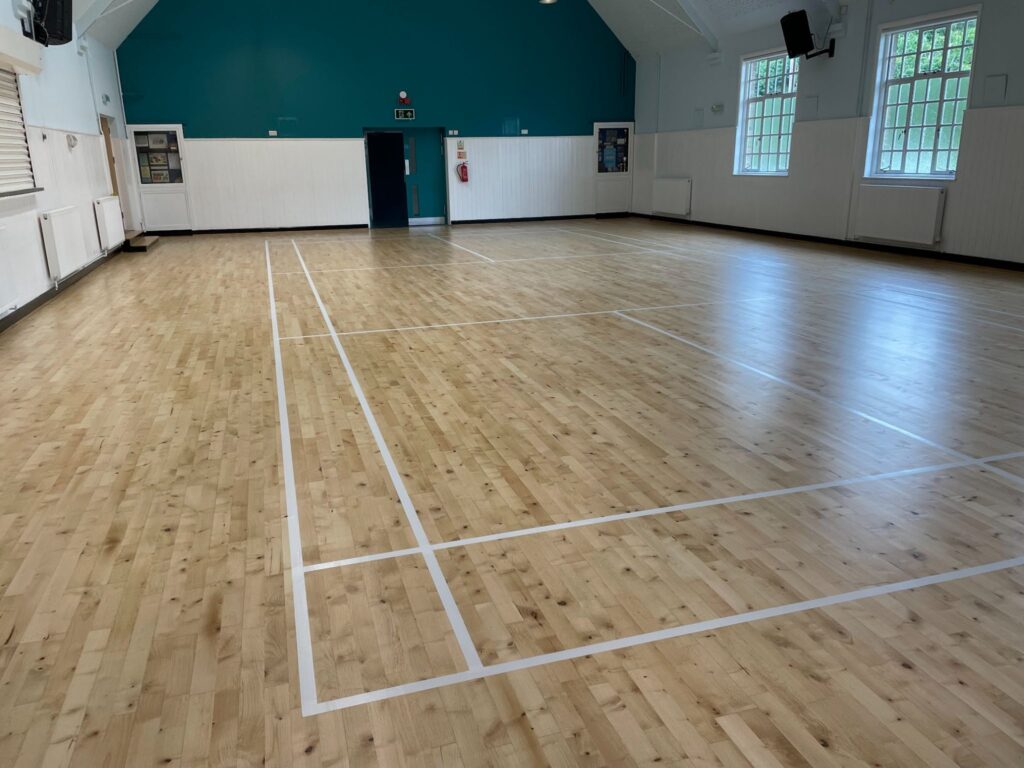
School Gyms, Home Gyms And Multi-Use Halls All Need Slightly Different Thinking
Not every wood gym floor is used in the same way. A home gym may suffer from weight equipment, rubber mats and concentrated point loading in one small area. School gyms and school halls usually see broader foot traffic, sports use, chairs, tables and regular layout changes.
That is why we never treat every wooden flooring job as if it is the same. The finish, the preparation and the recommended aftercare should all reflect how the room is actually used in real life.
| Space type | Common pressure on the floor | What we usually focus on |
| Home gyms | Equipment weight, mats, localised wear | Surface protection and targeted restoration |
| School gyms | Heavy foot traffic, sports use, frequent turnover | Durable finish and efficient scheduling |
| Multi-use halls | Sport, events, moving furniture, mixed use | Flexibility, finish choice and ongoing maintenance |
Why Professional Restoration Usually Beats Patching Over The Problem
Trying to clean harder, cover marks or work around worn areas rarely solves the underlying issue. If the protective layer has gone, the floor needs more than a quick tidy-up. Proper restoration brings the surface back evenly, improves the look of the space and helps protect the timber from further day-to-day damage.
At Sussex Floor Restoration, we work on wood floors across domestic, school and sports settings, with a service that includes dust-controlled sanding and detailed aftercare support.
If your gym floor is starting to look tired, now is usually the best time to deal with it before the wear becomes more stubborn and expensive to put right.
If you enjoyed this, you may also like Best Type of Commercial Gym Flooring
Or, to find out more about our services and to discuss how we could help with your next flooring project, call us on 01444 810505.
Frequently Asked Questions About Wood Gym Floor Restoration
How often should a wood gym floor be restored?
That depends on how heavily the floor is used, what it is used for and how well it has been maintained. A school or sports hall with constant foot traffic will usually need attention sooner than a lightly used home gym. In many cases, the finish starts to show signs of wear long before the timber itself is in serious trouble.
What are the signs that a wood gym floor needs restoration?
A dull appearance, worn traffic lanes, scratches that no longer clean away, patchy finish loss and faded markings are all common signs. If the floor is becoming harder to clean or is starting to look flat even after regular maintenance, it is usually time to assess it properly.
Does hardwood floor restoration always involve sanding?
Not always, but it often does. If the existing finish is badly worn or the surface has visible damage, sanding is usually the best way to create a clean, even base for refinishing. Lighter maintenance options can work in some cases, but only if the floor is still in decent condition.
Can a wood gym floor be restored instead of replaced?
Yes, in many cases it can. A lot of gym floors look worse than they really are because the top finish has taken the brunt of the wear and tear. If the timber underneath is still sound, restoration is often the more practical and cost-effective route.
Is hardwood floor restoration suitable for school gyms?
Yes. School gyms are one of the most common spaces for restoration work because they deal with constant use, sports activity, moving furniture and general day-to-day wear. A proper restoration can help the floor look better, perform better and last longer under regular use.
What about home gyms with heavy equipment?
Home gyms can absolutely benefit from restoration, but the approach may differ slightly. Floors in home gyms often suffer from concentrated pressure in one area, especially where weights, racks or machines are used regularly. That means the finish choice and aftercare advice need to reflect how the room is actually used.
How do moving heavy equipment and moving furniture affect the floor?
Both can cause scratches, dents and premature finish wear if they are not managed properly. In school gyms and multi-use halls, chairs, benches, tables and stored equipment can all contribute to damage over time. It is one of the reasons gym floors often wear in a more uneven way than standard wooden flooring.
How long does a wood gym floor restoration project usually take?
That varies depending on the size of the space, the condition of the floor and what work is involved. A smaller home gym will usually be more straightforward than a large school hall or sports space with markings and access considerations. The best approach is always to assess the floor properly before setting expectations.
Will restoring a wood gym floor make it easier to maintain?
Yes, in most cases it will. Once the old worn finish has been removed and replaced with a fresh protective coating, the floor is usually easier to clean and less likely to hold onto surface grime. Good restoration also helps create a more even finish across the whole space.
Why should a professional handle hardwood floor restoration?
Gym floors are not standard domestic floors. They deal with higher impact, more foot traffic and more demanding day-to-day use, so the restoration process needs to suit that environment. A professional can assess the condition properly, carry out the sanding and refinishing correctly, and recommend the right aftercare for the way the floor is used.
Updated April 2026