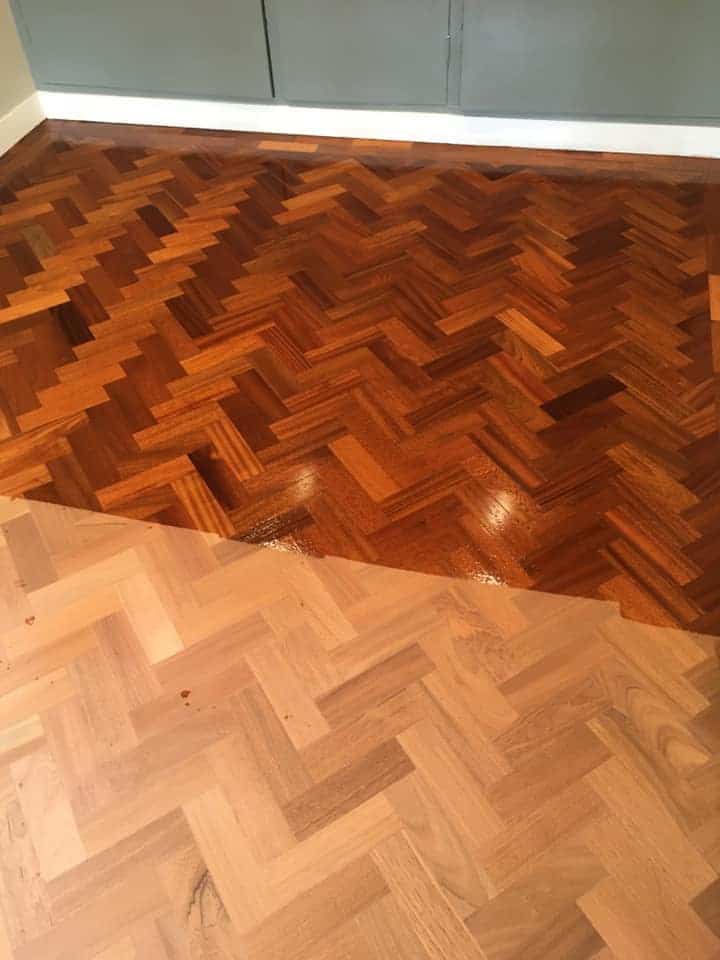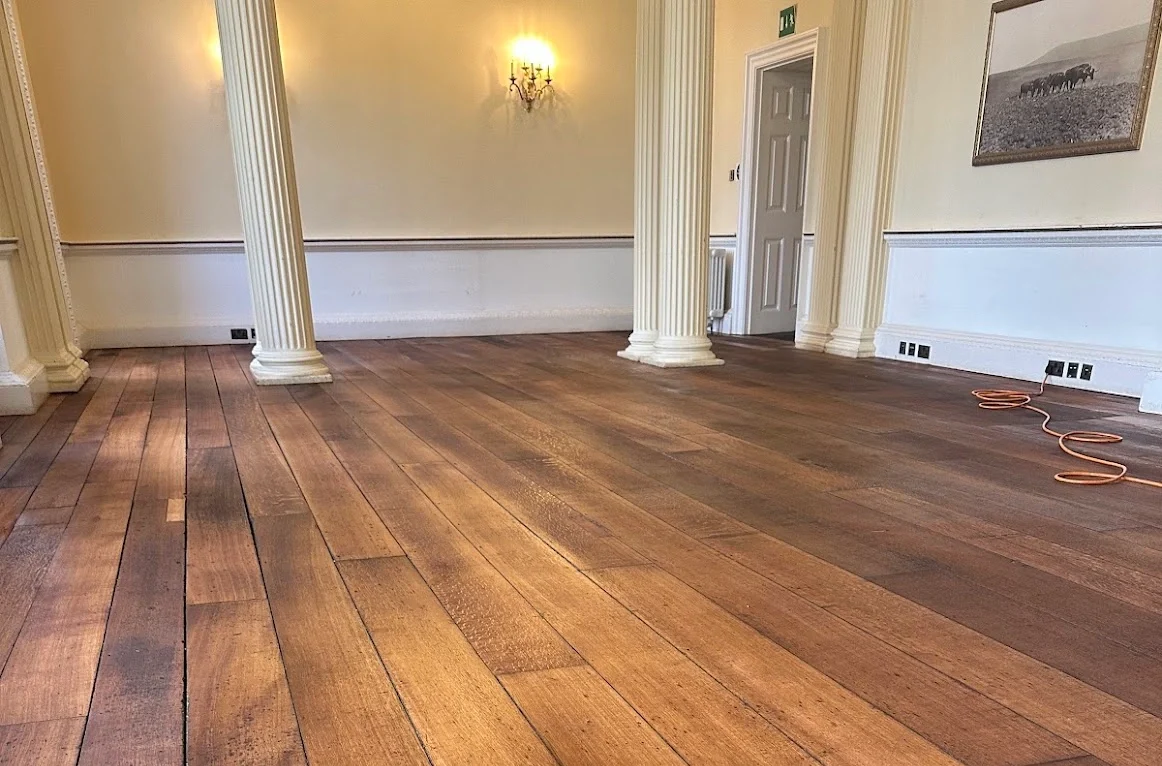
Restoring old wood floors is often less about making them look brand new and more about bringing back what made them worth keeping. In period properties, particularly Victorian and Edwardian homes, wooden floors can carry decades of worn coatings, scratches, staining and colour changes. Done properly, restoration removes the tired surface while keeping the warmth, grain and character that belongs in the room.
Quick Summary
Old wooden floors can often be transformed without stripping away their character. A good restoration process starts with understanding the existing timber, its condition and how the room is used, before controlled sanding, detailed edge work and a suitable floor finish. We treat period floors as a complete surface rather than making isolated areas look new beside older sections, helping the finished room feel consistent and natural.
Why Period Floors Deserve a Different Approach
An old wood floor is rarely perfectly uniform, and we do not think it should be. Colour variation and signs of age can contribute to the feel of a period property. The Society for the Protection of Ancient Buildings makes a similar point in its guidance on historic timber floorboards, noting that imperfections can form part of a floor’s historic interest.
That does not mean every mark has to stay. Deeply worn finishes, ingrained dirt and years of foot traffic can leave timber looking flat and neglected. The skill is in knowing what to remove without sanding away more of the floor than necessary.
| What We Often Find | What Restoration Can Achieve |
| Dull or discoloured finish | Reveal a cleaner, more consistent surface |
| Heavy wear in high traffic areas | Bring the whole floor back to an even appearance |
| Scratches and surface marks | Remove or substantially soften visible damage |
| Uneven old coatings | Create a better base for a new finish |
| Hidden grain and colour | Bring the timber’s natural character back into view |
What Happens When We Restore an Old Wood Floor?
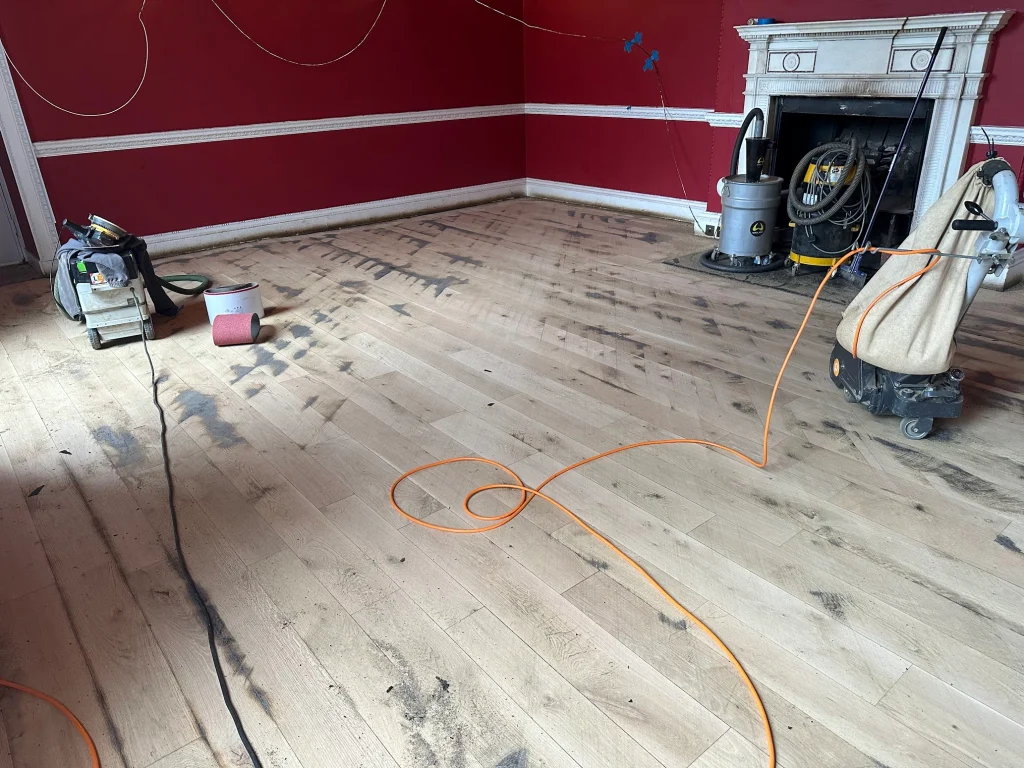
Our wood floor sanding service uses professional dust extraction equipment and is designed to be 98% dustless. On older floors, machinery is only part of the job. Edges, corners and awkward details often need closer attention.
The Restoration Process
We generally approach the work as a complete sequence:
- We survey the floor, identify the timber and assess wear, old finishes and any areas needing particular care.
- We sand progressively to remove the tired surface without taking away more timber than necessary.
- We work into edges and detailed sections so the appearance remains consistent.
- We prepare the full area for finishing rather than treating individual worn patches in isolation.
- We apply the chosen finish and explain how to maintain your floor afterwards.
Our wider floor restoration process also covers the initial survey, preparation advice and aftercare, so you know what is happening from start to finish.
Choosing the Right Floor Finish
The right finish depends on the timber, the look you want and how the room is used. A lightly used bedroom and a Victorian hallway serving the whole house do not have identical requirements.
For high traffic areas, durability matters, but appearance does too. We want the finish to complement the floor rather than make a period room feel overly glossy or disconnected from the property. The final choice affects colour depth, sheen and maintenance, so we treat it as part of the restoration rather than an afterthought.
Should You Sand a Period Floor Yourself?
You can hire sanding equipment, but old floors are not always forgiving. Uneven boards, edges, old coatings and delicate features can make DIY work harder than expected and the risk of damage higher, which is why professional restoration is highly recommended for floors where preserving character matters.
There is also the dust itself. A dust mask is not a substitute for controlling dust at source. The Health and Safety Executive’s guidance on cutting and sanding wood recommends extraction alongside suitable respiratory protection for sanding work.
Professional equipment and detailed hand work give us more control and a better foundation for a high quality finish.
Keeping Period Floors Looking Good
Once restored, maintenance does not need to become a major project. Historic England stresses the importance of ongoing maintenance in preserving older buildings, and the same principle makes sense for the surfaces within them.
For everyday care:
- keep grit and dirt from building up;
- use cleaning products suited to the chosen finish;
- deal with spills promptly;
- protect the floor beneath furniture;
- follow the aftercare guidance for the coating used.
Restoring Old Wood Floors with Sussex Floor Restoration
Restoring old wood floors can completely change a period room without erasing what made the floor appealing in the first place. Whether it is a Victorian hallway, an Edwardian reception room or an older hardwood floor that has simply seen decades of use, we approach the whole surface with the aim of creating a consistent, durable result.
If your period floors are looking tired, get in touch and we can take a look at what is underneath the wear.
📞 01444 810505
🌐 https://sussexfloorrestoration.co.uk/
If you liked this, you may also like: Case Study – Historic House
Frequently Asked Questions About Restoring Old Wood Floors
Can old wooden floors really be restored?
In many cases, yes. Old wooden floors can often be sanded back to remove worn finishes, scratches, staining and years of surface wear, revealing much more of the original timber underneath. The condition and thickness of the boards will determine what level of restoration is appropriate.
Is it worth restoring original floorboards in a period property?
Often, particularly where the flooring forms part of the character of the property. Victorian and Edwardian floors can have natural variation, grain and ageing that are difficult to reproduce with a modern replacement, so a careful restoration can retain that character while making the floor far more practical.
How do you restore Victorian wooden floors?
The process normally involves assessing the existing boards, sanding the complete floor progressively, dealing carefully with edges and detailed areas, then applying a suitable floor finish. With Victorian flooring, the aim should not necessarily be to make every board look identical, but to create a clean and consistent floor while retaining its natural age and character.
Can Edwardian floorboards be sanded?
Yes, provided the boards are in suitable condition and have enough usable timber remaining. Older floors may previously have been sanded or altered, so we assess the surface before deciding how heavily it should be worked.
Will sanding remove all marks from an old wood floor?
Sanding can remove or significantly reduce many scratches, stains and areas of surface wear, but very deep marks may remain to some extent. On period floors, a small amount of remaining variation is not necessarily a bad thing and can help retain the character of the original timber.
Should I restore the whole floor or just the worn areas?
We recommend restoring the complete floor or room rather than concentrating only on isolated patches. Sanding and refinishing one section can leave noticeable differences in colour, sheen and wear, whereas treating the whole area gives a much more consistent and longer-lasting result.
What is the best finish for an old wooden floor?
That depends on the type of timber, the appearance you want and how heavily the room is used. A busy hallway may need a different approach from a bedroom, so we consider durability, sheen, colour and maintenance before recommending a floor finish.
How long does a restored wooden floor last?
A high quality restoration can last for many years when the floor is maintained properly. How quickly it wears will depend on factors such as foot traffic, pets, furniture movement, cleaning habits and the type of finish used.
Is professional floor sanding very dusty?
Traditional sanding can create a significant amount of fine dust, but professional extraction systems make a substantial difference. At Sussex Floor Restoration, our professional sanding system is designed to be around 98% dustless, helping us keep disruption and airborne dust to a minimum.
How should I maintain a restored period floor?
Regularly remove loose grit and dirt, clean the floor using products suitable for its finish and deal with spills promptly. Furniture protection and sensible cleaning will also help high traffic areas wear more evenly and keep your restored floor looking good for longer.