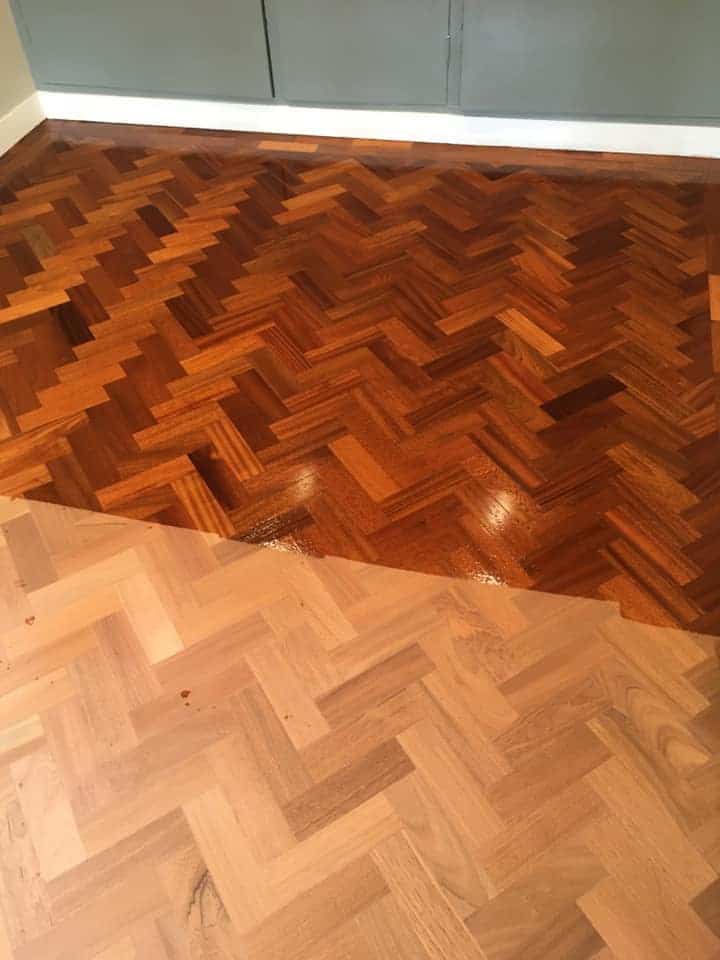
Wooden floors do not suddenly become dull overnight. It usually happens gradually, as years of foot traffic, cleaning, sunlight and everyday wear and tear take their toll on the finish.
If you are wondering how to restore dull wood floors, the good news is that tired-looking timber does not automatically mean the floor needs replacing. In many cases, the wood underneath is still in great condition and simply needs the right restoration process to bring it back to life.
At Sussex Floor Restoration, that is exactly what we do.
Quick Summary
When wood floors look dull, the problem is often with the protective finish rather than the timber itself. Depending on the condition of the floor, restoration could involve professional cleaning, light sanding, full floor sanding or a completely new finish. The key is assessing what has worn before deciding how much work the floor genuinely needs.
Why Do Wood Floors Look Dull?
Every wooden floor picks up signs of use over time. Even durable hardwood flooring relies on its surface finish to protect the timber underneath.
Shoes carry tiny amounts of grit, furniture moves, pets run across the surface and busy walkways receive far more use than the quieter edges of a room. Eventually, the finish starts to lose its original appearance.
Some of the most common causes include:
- Fine surface scratches
- Heavy foot traffic through particular areas
- A worn oil or lacquer
- Cleaning residue building up on the surface
- Sunlight changing the colour of exposed timber
- General ageing of the existing floor finish
This is why two parts of the same wooden floor can sometimes look completely different. The area beside a sofa may still look rich and even, while the route through a doorway has become flat and faded.
Does a Dull Floor Need Full Sanding?
Not necessarily. One of the first things we do is look at how far the wear has progressed. There is little point in carrying out full floor sanding if the existing finish is still largely intact and a lighter treatment would achieve the result.
| Floor Condition | Likely Approach | What We Look For |
| Slightly dull | Cleaning or maintenance | Finish still intact |
| Fine scratches | Light sanding and recoating | Surface wear only |
| Uneven or patchy finish | Full sanding and refinishing | Coating has worn significantly |
| Major colour change wanted | Sanding, staining and finishing | Timber suitable for refinishing |
Our wood floor restoration service covers everything from sanding through to oiling, lacquering and staining, so we can match the work to the condition of the floor.
How to Restore Dull Wood Floors Properly
There is no single treatment we use on every floor. We start with the timber and the condition it is currently in.
A typical restoration might involve:
- Inspecting the floor and identifying the existing finish.
- Checking scratches, worn areas, staining and overall condition.
- Deciding whether light sanding or full sanding is required.
- Sanding evenly across the whole area where necessary.
- Working carefully around edges, corners and finer details.
- Applying the chosen finish and allowing it to cure correctly.
Our professional sanding equipment uses effective dust extraction, allowing us to offer a process that is around 98% dust-free.
You can see more about what happens from the initial survey through to the final coat in our floor restoration process.
Choosing New Floor Finishes
Once the tired surface has been dealt with, the finish determines a large part of how the restored wood floor will look and perform.
We work with professional flooring systems from PALLMANN, covering oils, lacquers and specialist wood floor treatments. As PALLMANN Parkettprofi accredited technicians, we can recommend a finish based on the timber, the room and how much use the floor is likely to receive.
Oil, Lacquer or Stain?
Oil tends to emphasise the natural character of the timber and gives the surface a rich appearance. Lacquer forms a protective coating over the wood and can be selected in different sheen levels.
Staining and finishing gives us another option when you want to alter the overall tone of the floor. A lighter or darker colour can completely change how the room feels without changing the flooring itself.
As Pallman Parkettprofi accredited wood flooring experts we can advise on the sanding, finishing and ongoing maintenance of your wooden floors.
Can a Very Dull Floor Still Be Restored?
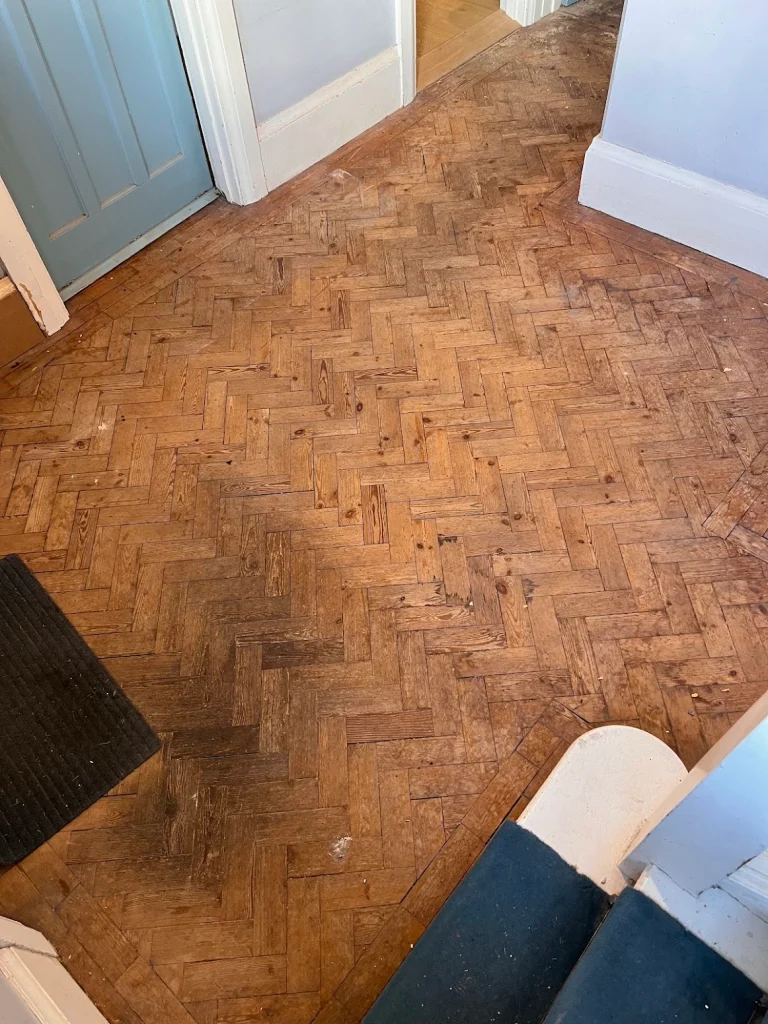
Quite often, yes. We regularly see wood floors that initially look as though they are beyond saving, only for the sanding process to reveal good-quality timber beneath years of wear.
Deep damage, movement or previous sanding can affect what is possible, which is why we prefer to inspect the floor before making promises about the final result.
If the timber is suitable, however, professional floor sanding can remove years of surface wear and create a clean base for a fresh finish.
Restoration also keeps the character that has developed within older boards, parquet floors and other original wooden flooring. Rather than starting again with something new, we can often work with what is already there.
If your wood floors look dull and you are unsure whether they need cleaning, light sanding or complete restoration, we can take a look and recommend the most sensible approach.
If you liked this, you may also like: our historic house floor restoration case study.
Frequently Asked Questions About How To Restore Dull Wood Floors
It is usually a gradual build-up of wear, fine scratches, cleaning residue and fading rather than one sudden problem. Busy walkways often lose their sheen first because they take more daily punishment.
Sometimes, yes. If the finish is still intact, a lighter maintenance treatment or light sanding may be enough. We assess the condition first so we are not recommending more work than the floor actually needs.
If the dullness sits on the surface and the finish is still even, cleaning may help. If you can see worn patches, scratches or areas where the coating has broken down, floor sanding is more likely to be needed.
It can make a dramatic difference, but the aim is not always to make an older floor look brand new. Good restoration keeps the natural character of the timber while removing the tired finish and heavier signs of wear.
Yes, staining and finishing can be used to alter the tone of the timber. We can discuss lighter, darker or more natural-looking options depending on the wood and the result you want.
Neither is automatically better. Oil tends to give a more natural appearance, while lacquer creates a protective surface coating. The right choice depends on the room, traffic levels and the finish you prefer.
Yes, provided the parquet is suitable for sanding and restoration. Parquet needs careful sanding because of the direction of the blocks, so it is worth using experienced flooring experts rather than treating it like standard floorboards.
Our sanding process is around 98% dust-free thanks to professional extraction equipment. There will always be a small amount of residual dust with this type of work, but it is far cleaner than traditional sanding methods.
That depends on the finish, foot traffic and how the floor is looked after afterwards. Good maintenance and sensible cleaning can help the finish last much longer before another full restoration is needed.
Very often, yes. If the timber itself is still sound, restoration can bring back the colour, grain and finish without losing the character of the existing floor.