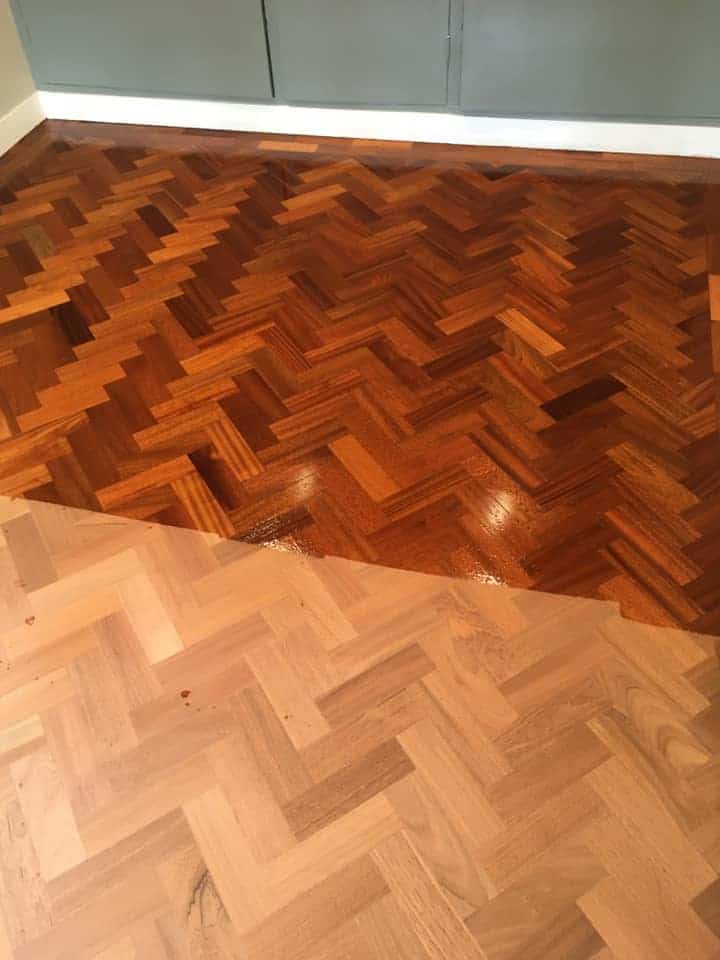
You have chosen the wall colours, found the furniture and started planning your renovation, but the wooden floor stain no longer looks quite right. Perhaps it looks too orange beside your new kitchen, or you would prefer a deeper colour in the living room.
A wooden floor stain can give suitable existing flooring a different appearance while keeping the timber you already have. At Sussex Floor Restoration, we help you understand what is achievable, from subtle changes in tone to a more noticeable transformation.
Summary:
Many wooden floors can change colour through careful sanding, staining and finishing. The result depends on the timber, its condition and the colouring system used. Going darker is generally more straightforward than achieving a much paler appearance. Assessing the floor and testing the proposed treatment helps establish a realistic colour before work begins.
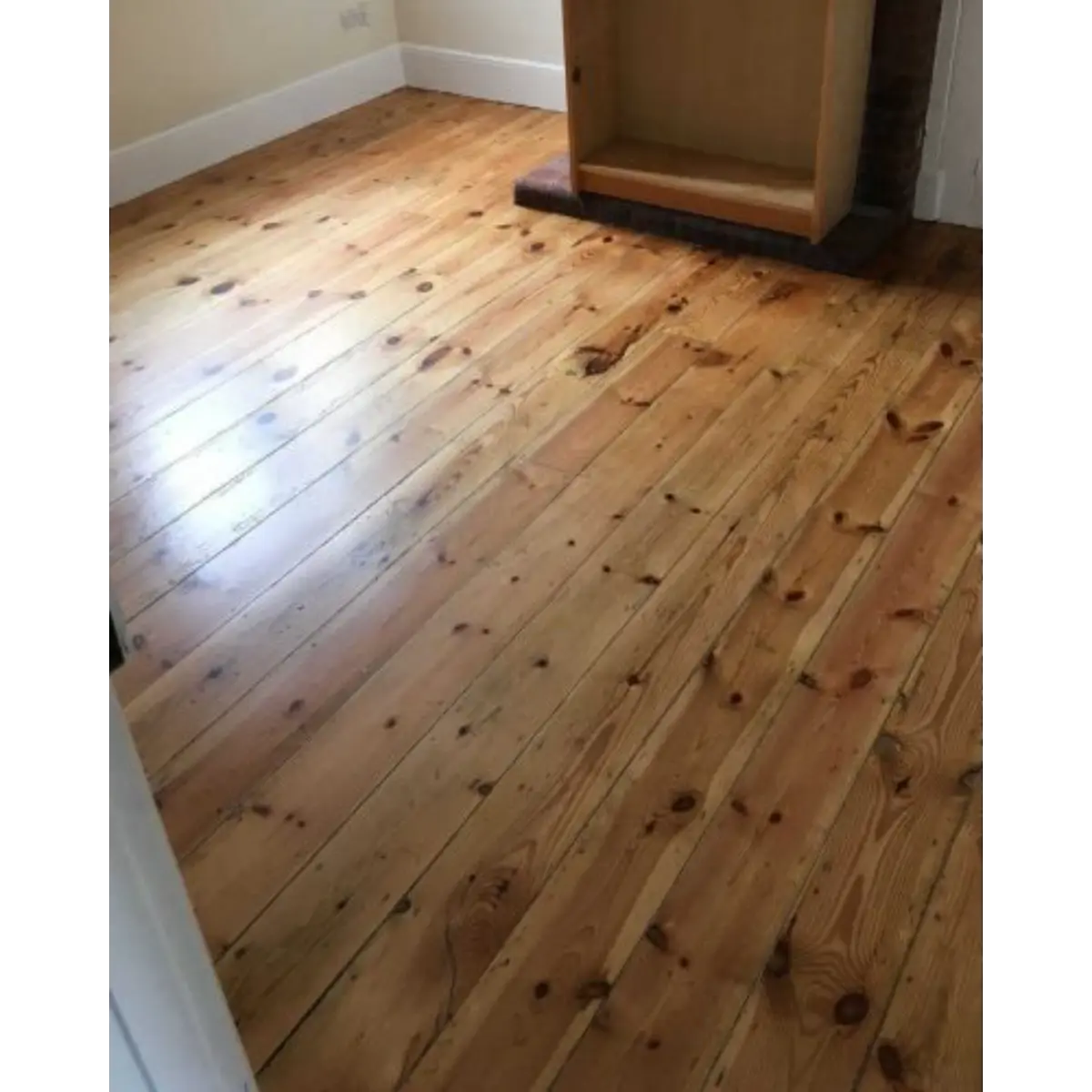
What Does Wooden Floor Stain Actually Change?
Wooden floor stain changes the colour of the timber while usually allowing its grain and natural variation to remain visible. It can introduce warmer brown tones, deepen a pale floor or help create a more muted appearance.
Unlike an opaque paint, a translucent stain works with the appearance of the wood underneath. Knots, grain patterns and differences between boards still influence the result.
Stain and protection also perform different jobs. A separate wood floor stain generally needs a compatible protective finish, while some coloured oils combine colour and protection within one system. Choosing the complete treatment matters as much as choosing the shade.
How Different Can Your Existing Floor Look?
A change in colour can make familiar floorboards feel at home in a completely different decorating scheme. A deeper brown might complement pale walls and traditional furniture, while a softer tone could work with a lighter, contemporary room.
However, a photograph or colour chart is only a starting point. Your floor has its own underlying colour, and the room’s lighting affects how you see the finished surface.
Before settling on a direction, consider:
- Whether you want to keep or soften the timber’s warm tones?
- How the floor will look beside fixed features such as kitchen cabinets.
- Whether adjoining rooms have flooring that needs to work with it.
- How much natural light the room receives.
The aim is to choose a colour that suits the whole space, rather than one that only looks appealing on a small screen.
Can a Light Wood Stain Make a Dark Floor Lighter?
This depends on why the floor looks dark in the first place.
An old coating may have darkened or developed an amber appearance over time. Removing that coating can reveal lighter timber underneath, creating a different starting point for the new finish.
Naturally dark wood is another matter. A conventional translucent light wood stain does not bleach away the timber’s underlying colour, so applying a pale shade will not necessarily produce a pale floor.
Some lighter looks are achieved using white-pigmented oils, primers or other specialist finishing systems. These give different effects from a traditional penetrating stain, and their suitability depends on the floor.
We would first assess the existing surface and discuss the appearance you want. That helps establish whether a lighter result is realistic and which approach is appropriate.
How Does Wood Floor Stain Look on Oak, Pine and Other Timber?
The same wood floor stain can look noticeably different on two types of timber. Natural colour, grain and the way the wood absorbs the treatment all influence the finished appearance.
| Timber | What influences the result? | What to consider |
| Oak | Its visible grain and underlying colour contribute to the shade. | A stain can emphasise grain, with natural variation remaining between boards. |
| Pine | Knots and differences in absorption can create stronger colour variation. | Careful preparation and testing are particularly important to assess possible patchiness. |
| Other hardwoods | Species vary in natural tone, density and response to colouring products. | A shade shown on oak may look very different on another timber. |
| Mixed or repaired flooring | Different boards may absorb colour differently. | Staining may bring tones closer together, but an identical appearance cannot be guaranteed. |
A light oak woodstain is a colour description, not a way to give pine the grain or structure of oak. Testing on the actual floor provides a more useful guide than the product name alone.
Why Professional Preparation Matters When Staining a Floor
Staining can make preparation faults more visible. Remaining patches of old finish can interfere with absorption, while sanding scratches may become more obvious once colour is applied.
An even result starts before the stain is opened. We need to assess the floor’s condition, check that it is suitable for sanding and prepare the surface consistently.
That includes the edges, corners and areas around doorways. If these are prepared differently from the centre of the room, the colour can highlight the difference. Manufacturer guidance also identifies sanding consistency as an important factor in stain absorption.
Our floor restoration process brings assessment, preparation and finishing together. For a colour change, each stage contributes to how balanced the finished floor looks.
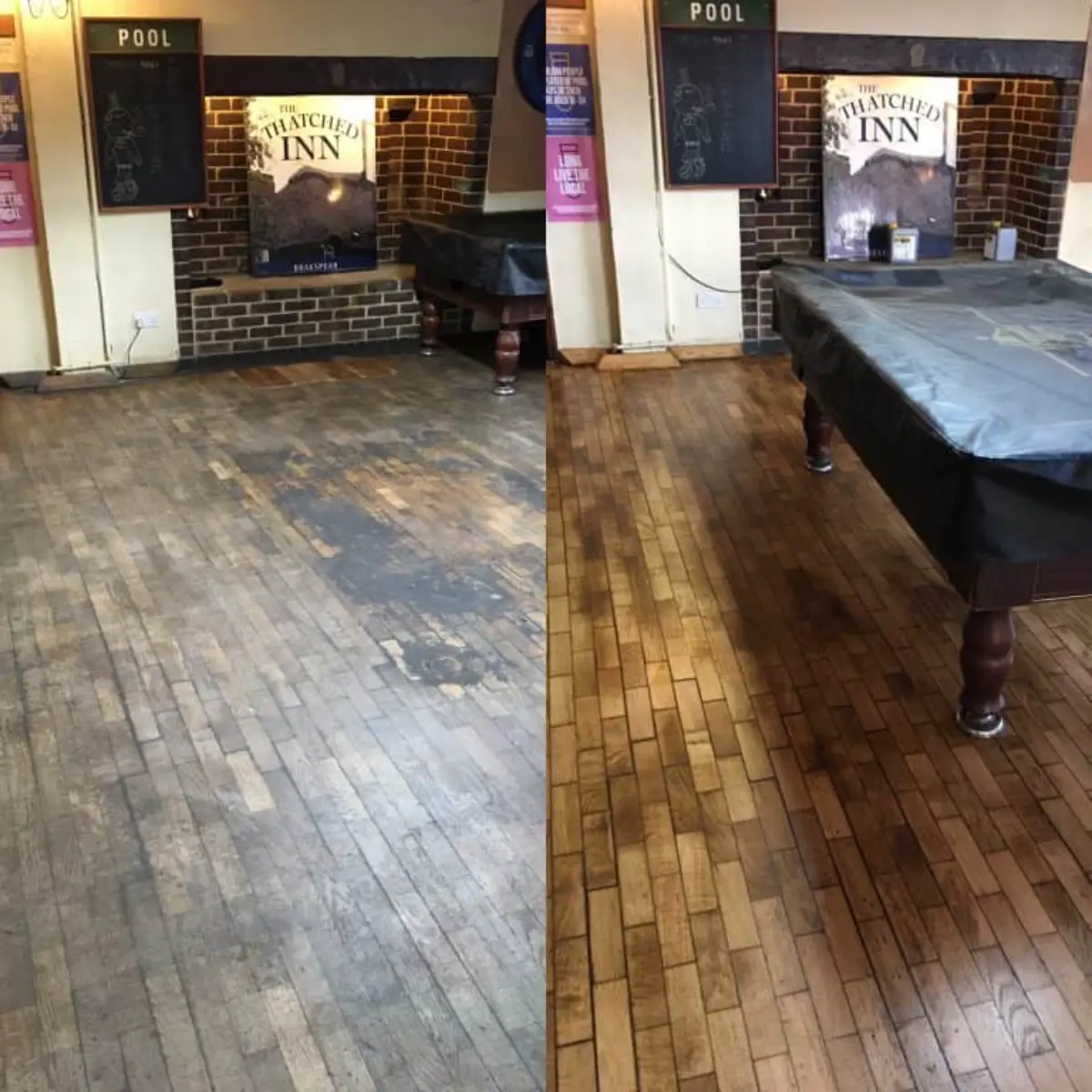
Choosing Your Wooden Floor Stain with Sussex Floor Restoration
The best starting point is a conversation about your floor and the room around it. Bring your decorating ideas, photographs or samples, and we can discuss what might work with the existing timber.
At Sussex Floor Restoration, we offer a range of stains and colours. We also carry out surveys and test patches to help establish the likely result.
Look Beyond the Colour Alone
The protective finish needs to suit how you use the room. A busy hallway has different demands from a spare bedroom, and the chosen coating can influence colour depth, sheen and future maintenance.
Where possible, assess a sample of the complete proposed system, including the finish. Look at it in daylight and under your usual evening lighting before making the final decision.
A wooden floor stain can offer a fresh direction for your home while preserving the flooring’s character. With realistic colour choices and careful preparation, a floor that feels out of place may become a feature you enjoy again.
To discuss changing the colour of your wooden floor, contact Sussex Floor Restoration.
Call: 01444 810505
Email: info@sussexfloorrestoration.co.uk
Website: sussexfloorrestoration.co.uk
If you liked this, you may also like: Restoring Old Wood Floors Without Losing Their Period Character.
Frequently Asked Questions About Wooden Floor Stain
Can you stain an existing wooden floor a different colour?
Yes, many existing wooden floors can be sanded, stained and refinished. The achievable colour depends on the timber, previous treatments and condition of the floor. An assessment helps establish the options before you choose a shade.
Does a wooden floor need sanding before staining?
For a conventional penetrating stain, an existing finished floor generally needs sanding back to clean, bare timber. Old coatings can prevent the stain from absorbing evenly. Other colouring systems may have different preparation requirements, so the process must suit the products being used.
Can a light wood stain make dark floorboards lighter?
Not necessarily. Removing a dark or amber coating may reveal lighter wood, but a translucent light stain will not remove the natural colour of dark timber. A paler appearance may require a different finishing system, subject to suitability.
Will a light oak woodstain look the same on pine and oak?
No. The underlying colour, grain and absorption differ between the two timbers. Pine may show more variation around knots and between different areas of the wood. A test patch helps show how the chosen shade will look on your floor.
Can engineered wood flooring be stained?
Some engineered floors can be sanded and stained if their real wood wear layer is thick enough and their construction and condition allow it. Previous sanding also matters. We would assess suitability before recommending a colour change.
Can you stain parquet flooring?
Suitable timber parquet can often be stained after preparation. Its blocks and changing grain directions require careful sanding, and natural colour differences may remain visible. The aim is a balanced result across the complete floor.
Will wood floor stain hide scratches or water marks?
Stain is not a repair treatment. Preparation may remove some surface scratches, but deeper damage or discolouration can remain. Colouring can also emphasise imperfections, so we assess marks before deciding how to proceed.
Does a stained wooden floor need a protective finish?
A separate stain normally needs a compatible protective coating suitable for floors. Some coloured oil systems provide both colour and protection, but their application requirements vary. We can explain the complete system proposed for your flooring.
How long before you can use a newly stained floor?
This depends on the stain, protective finish and drying conditions. Being ready for light foot traffic is different from being fully cured and ready for rugs, furniture or cleaning. We will explain the relevant timings for your chosen treatment.
How do you clean and maintain a stained wooden floor?
Follow the care instructions for the protective finish. Remove grit regularly, wipe up spills promptly and use a suitable floor cleaner without soaking the timber. Furniture protection and entrance mats can also help reduce everyday wear.