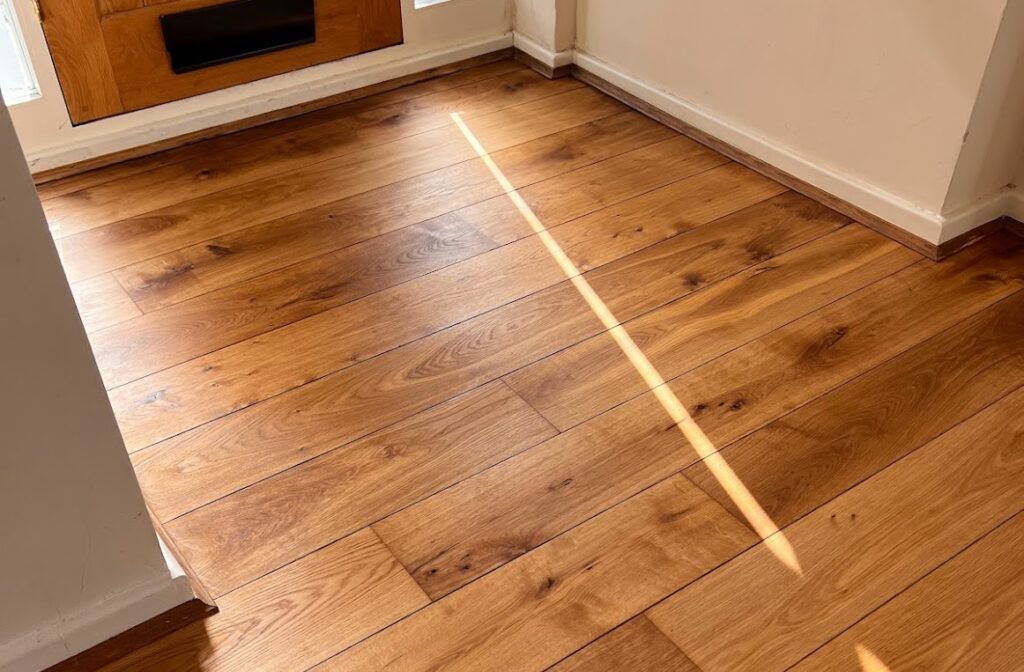
Wood Floor Sanding Maidstone For Homes, Halls and Hard-Working Spaces
Maidstone has a proper mix of properties, which is exactly why Wood Floor Sanding Maidstone needs a more considered approach than a standard sand-and-seal job. One week we might be looking at worn timber floors in a family home near Mote Park, the next it could be parquet in a period property, boards in a rental house close to the town centre, or a commercial floor that has dealt with years of customers, chairs, shoes and cleaning products.
Wooden floors in Maidstone often have a very particular kind of wear. They pick up daily family traffic, grit from garden paths and countryside walks, scuffs from busy entrances, fading from bright rooms, and marks from furniture being moved around over the years. In older homes, the timber itself can still be full of character, but the surface may have become dull, uneven or patchy.
That is where proper sanding and restoration comes in. We help homeowners, landlords and commercial clients bring tired wooden floors back to life with careful sanding, repairs where needed, and a finish that suits how the space is actually used.
Quick Summary
Wood floor sanding in Maidstone is ideal for timber floors that look scratched, flat, patchy or worn but still have life left in them. We restore floorboards, hardwood flooring and suitable parquet using professional sanding equipment, 98% dust-free methods and finishes chosen around the property. Maidstone homes and businesses often need restoration because of heavy hallway use, older timber, family wear, sunlight, rental turnover and commercial footfall.
Why Wooden Floors in Maidstone Need Their Own Approach
Maidstone is not one type of place, so its floors are not one type of floor. Around the town centre, you can find older homes, converted spaces, shops, offices and rental properties where timber has often been through several rounds of use, decoration and repair. Move out towards Bearsted, Loose, Allington, Barming, Penenden Heath or the villages around Maidstone and the picture changes again, with family homes, larger rooms, garden access and more everyday wear.
A hallway in a Maidstone family home can take a serious amount of abuse. Wet shoes, school bags, dogs, pushchairs, furniture, deliveries and general foot traffic all pass through the same narrow zones. Over time, the finish thins out, the grain becomes exposed, and the floor starts to look permanently tired.
In commercial settings, the wear is different. A timber floor in a shop, salon, studio, office or hospitality space has to cope with regular footfall, cleaning routines and furniture movement. The floor may still be structurally fine, but visually it can start dragging the whole space down.
We look at the property first, not just the floor. That helps us recommend the right restoration process rather than treating a Maidstone town house, a riverside apartment and a busy commercial space as if they all need the same finish.
What Wood Floor Sanding Can Actually Fix
Sanding is there to remove the tired surface layer of the timber and old finish. It can make a major difference when most of the damage is sitting on or near the top of the floor.
Wood floor sanding can help with:
- Scratched wooden floors
- Dull or grey-looking timber
- Old varnish or lacquer that has yellowed
- Worn walkways through entrances and hallways
- Patchy areas where rugs or furniture have protected part of the floor
- Light staining and surface marks
- Rough boards that no longer feel smooth underfoot
- Tired parquet that has lost definition
- General wear and tear from daily use
There are limits, and we will always be straight about them. Deep black stains, heavy pet damage, historic water marks, burns, previous over-sanding or badly damaged boards may still leave some trace. A good restoration should make the floor look better, healthier and more consistent, but it should also respect what the timber can realistically do.
The Maidstone Homes We Often Have in Mind
Maidstone has plenty of homes where restoration makes more sense than replacement. Older floorboards can be a strong feature in period properties. Parquet can give a room a sense of detail and quality. Solid wood flooring in a family home may simply need its surface reset after years of normal life.
Family Homes With Busy Hallways
In areas like Bearsted, Allington, Loose and Penenden Heath, a lot of wooden floor wear comes from normal family routines. Hallways, kitchens, dining rooms and living areas often carry the most visible damage because those are the spaces everyone uses without thinking.
The floor might look darker around the entrance, lighter where sunlight hits, or smoother in areas that have been walked over thousands of times. Sanding can even out much of this wear and give the room a cleaner, calmer feel again.
Period Properties and Older Floorboards
Older Maidstone properties can have boards that are full of charm, but they often come with old coatings, previous repairs, gaps, colour variation and marks from decades of use. That does not mean they are a lost cause.
The aim with older boards is usually not to make them look like brand-new timber. It is to make them look cared for, stable, clean and intentional.
When Character Should Stay Visible
Some marks are part of the floor’s history. We can reduce a lot of surface damage, but older boards often look best when their character is refined rather than erased. The right finish can make that character feel warm and deliberate, instead of tired and neglected.
Maidstone Floor Restoration by Property Type
Property or Space in Maidstone | Common Floor Problems | What We Would Usually Consider |
|---|---|---|
| Family homes | Hallway wear, pet scratches, dull living areas | Sanding with a durable lacquer or practical oil finish |
| Period houses | Old boards, gaps, uneven colour, previous repairs | Careful sanding, sympathetic finishing and honest expectations |
| Riverside apartments | Sun fading, furniture marks, surface scratches | Smoothing, colour balancing and a clean modern finish |
| Rental properties | Tenant wear, scuffs, patchy coatings, moving damage | Practical sanding and a hard-wearing finish for future use |
| Shops and salons | Entrance wear, customer footfall, cleaning marks | Commercial-minded finish with good durability |
| Offices and studios | Chair scuffs, worn paths, dull surface appearance | Sanding and refinishing to improve presentation |
| Schools and halls | Heavy use, dull coatings, tired timber surfaces | Planned restoration with robust finishing options |
| Parquet floors | Faded blocks, worn patterns, loose or dull areas | Specialist sanding and refinishing suited to the block layout |
Why Sanding Can Be Better Than Replacing
It is easy to assume a tired floor needs to come out, especially when the finish has gone flat or the colour looks uneven. In many cases, the floor underneath still has plenty to give.
Restoration can be the better choice when the floor is sound, the timber has enough depth and the main problems are cosmetic or surface-level. Keeping the existing floor also helps preserve the feel of the property, especially in older Maidstone homes where new flooring can sometimes look a bit too clean or disconnected from the building.
There is also less upheaval than full replacement. You are not choosing a new floor, removing the old one, dealing with disposal, changing thresholds and hoping the new material sits right with the rest of the room. Instead, we work with what is already there and bring it back to a finish that suits the space.
Our Wood Floor Sanding Process in Maidstone
We start by looking properly at the floor. That means checking the timber type, previous finish, board condition, movement, staining, damage, previous sanding and how the room is used. From there, we explain what can be achieved and what finish would be most sensible.
The sanding itself is carried out using professional equipment with strong dust extraction. Our process is 98% dust-free, which makes the job much cleaner than traditional sanding methods. It is still a trade job, so we will never pretend there is no disruption at all, but the equipment keeps the process far more controlled.
Once the floor has been sanded through the right stages, we prepare it for finishing. This could include staining, oiling or lacquering depending on the look you want and the level of protection the space needs.
The final finish matters as much as the sanding. A floor in a quiet sitting room does not need to perform in the same way as a floor in a hallway, rental property or commercial unit. We help you choose something that looks good and makes sense for daily life.
Choosing a Finish For a Maidstone Floor
The finish decides how the floor looks, feels and copes with use. Some people want a natural, low-sheen finish that keeps the timber soft and warm. Others need something more robust because the room is busy every day.
We can talk through options such as:
- Matt, satin or slightly richer finishes
- Lacquer for stronger surface protection
- Oil for a more natural appearance
- Stain to adjust or deepen the colour
- Finishes suitable for busy family homes
- More durable options for commercial spaces
- Aftercare products that protect the floor properly
This is where many DIY floor projects go wrong. The sanding might be acceptable, but the wrong finish can make the floor harder to maintain or less suitable for the room. We would rather help you choose the right system from the start.
Wood Floor Sanding For Maidstone Businesses
Maidstone has a strong mix of independent businesses, hospitality spaces, offices, clinics, salons and retail units. In those settings, the floor is part of how the space feels to customers and staff. A tired timber floor can make a room look older than it really is, while a freshly restored one can make the same space feel warmer, cleaner and more professional.
For commercial floors, we think carefully about downtime, durability, cleaning and the type of use the floor gets. A boutique shop does not have the same needs as a school hall. A salon does not have the same wear pattern as an office. A venue space may need something that can cope with chairs, tables and repeated footfall.
We can advise on the best route once we have seen the floor and understood the setting.
Is Your Floor Suitable For Sanding?
Most solid wood floors can be sanded if they have enough depth and are in stable condition. Many parquet floors can also be restored, although they need careful handling because the grain changes direction across the pattern. Engineered wood can sometimes be sanded, but it depends entirely on the thickness of the real wood top layer.
Before any work starts, we will check whether sanding is suitable. If the floor is too thin, too unstable or too damaged, we will tell you. If a lighter restoration or different approach would be better, we will explain that too.
Book Wood Floor Sanding in Maidstone
If your wooden floor in Maidstone is scratched, faded, dull, worn or uneven, it may not need replacing. With the right sanding and finish, it could become one of the best features in the property again.
We restore wooden floors for homeowners, landlords, schools, offices, shops, hospitality spaces and commercial clients across Maidstone and the surrounding areas. Whether you are dealing with original boards, parquet, hardwood flooring or a tired commercial floor, we can assess it properly and give honest advice.
To ask a question or arrange a survey, contact us using the details below.
Email: info@sussexfloorrestoration.co.uk
Phone: 01444 810505