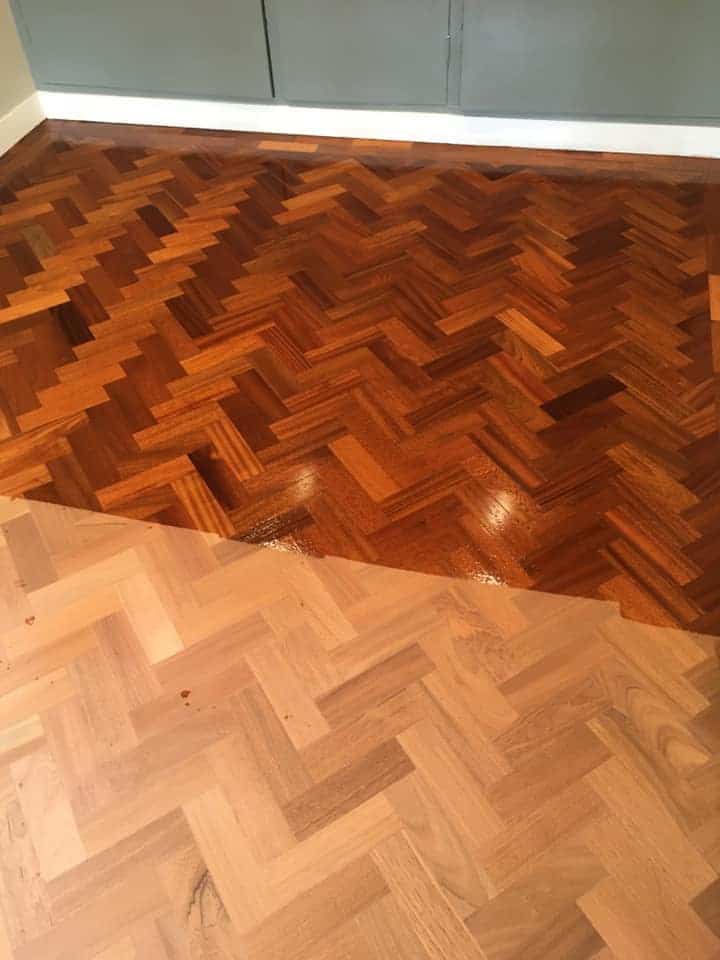
Hardwood floor refinishing and wood floor repair work best when they are planned together, because the finish only lasts if the floor underneath is stable. If your boards creak, flex, show deep scratches or have patchy colour, the fix is rarely “one quick coat”. The right approach is a structured repair process, then a finish that suits your floor and how you live.
Quick Answers for Hardwood Floor Refinishing and Wood Floor Repair
Hardwood floor refinishing means we remove the old finish, level the surface with a controlled grit sequence, then apply a protective system that matches your use and preferred sheen. Wood floor repair covers everything that would ruin the result if ignored, such as fixing loose boards, replacing damaged sections, tightening fixings and gap filling with wood filler where appropriate. Most floors can be sanded and refinished, but the type of wood, board thickness and existing damage decide the safest method.
What Makes Hardwood Floor Refinishing Worth Doing
Hardwood floors tend to wear in patterns, not evenly. Doorways, kitchen runs and the “walk line” past sofas often take the punishment, while the rest of the floor stays relatively calm. A professional refinish levels these high-wear lanes so the whole room looks consistent again.
Key takeaway: refinishing should reset the whole surface, not just disguise scratches and dents.
When Wood Floor Repair Comes Before Refinishing
If you refinish without repairs, the finish can fail early, even if the room looks great on day one. We look for movement and weak points first, because movement cracks filler, breaks seal edges and makes new coatings wear faster.
Typical problems we repair before sanding:
- Fixing loose boards that rock underfoot
- Re-securing boards with nails or screws where appropriate
- Replacing boards that have split through the grain
- Treating deep scratches where sanding alone will not level the damage
- Filling gaps and edge chips with wood filler to match the rest of the floor
Repair-First Workflow That Protects the Finish
Why We Start With A Floor “Map”
We plan the job like a floor design problem, not a sanding job. We identify where the wear is concentrated, where the subfloor moves and where previous coatings have built up. That map decides how aggressive we can be, and where we need more attention to detail.
How We Choose The Sanding Sequence
Most floors need two to three abrasive passes, moving from heavier grit sandpaper to finer grits. The goal is to remove the old finish evenly, flatten repairs so they blend into the rest of the floor, then refine the surface so it takes the new finish cleanly.
Where Repairs Fit Into The Refinishing Stages
Here’s how repair and refinishing overlap in practice…
- Secure and stabilise: fixing loose sections, correcting movement, replacing any failed boards.
- First sanding pass: level the floor to remove the old finish and expose true condition.
- Targeted repairs: address deeper scratches, chips and small voids (often revealed after sanding, but can be done even if you aren’t sanding).
- Fill and blend: apply wood filler where it suits the floor type and movement profile.
- Final sanding: run through finer grits to create an even, ready-to-coat surface.
- Applying the finish: build protection in coats, with correct drying windows.
Key takeaway: repairs are not a separate job, they are part of making the finish last.
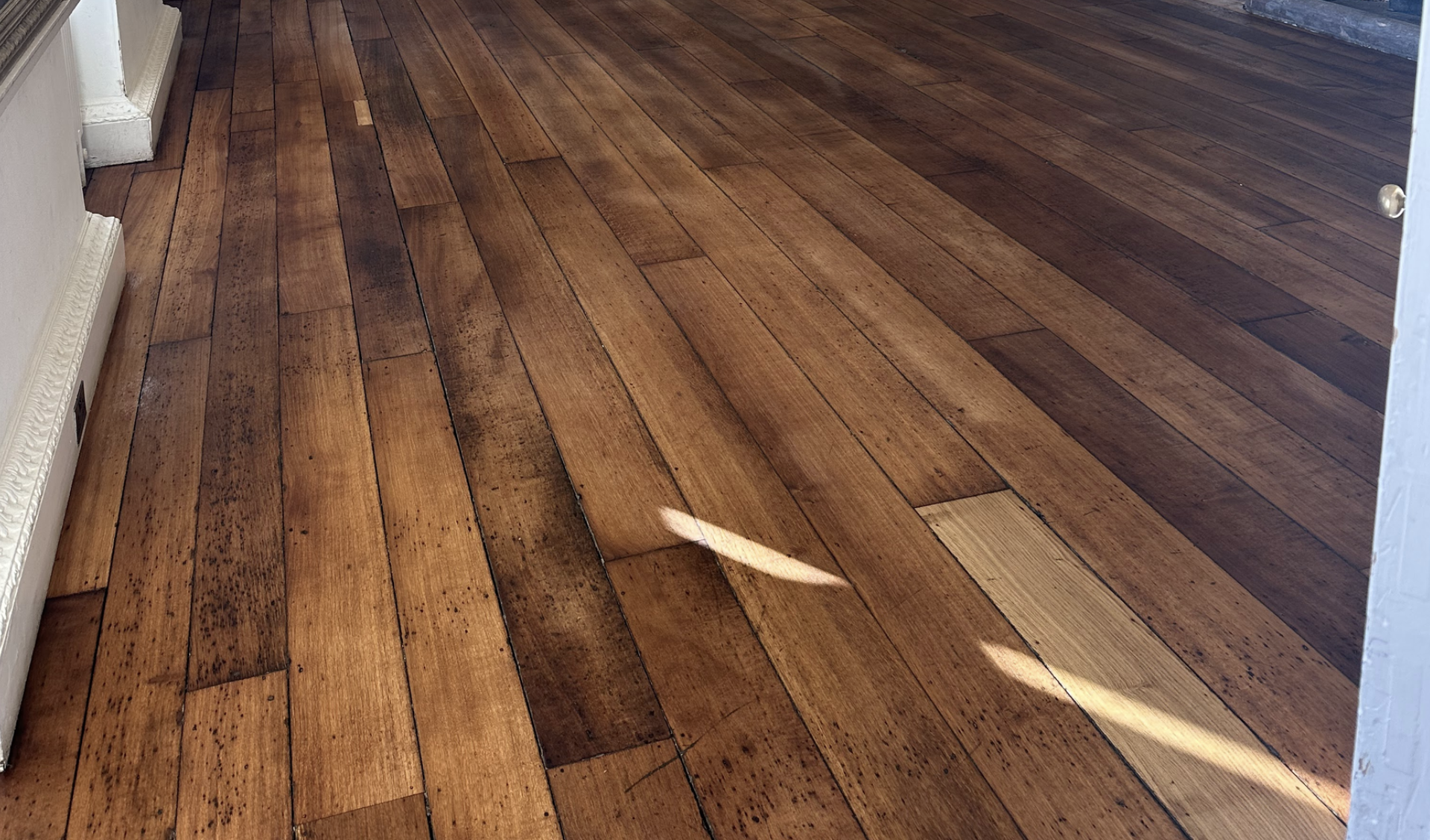
Table: Common Problems and The Best Professional Fix
Finish Choices That Change How Your Floor Lives
Hardwood floor refinishing is not just about shine. It is about how the floor behaves week to week.
- A durable lacquer system is often best for heavy traffic and family use
- An oil-based system can suit clients who want a more natural look and easy refresh
We help you choose based on your wooden flooring, your cleaning habits and the look you want, then we apply it consistently across the rest of the floor so the room reads as one surface.
Why Clients Choose Sussex Floor Restoration
Our process is designed to be predictable and thorough, from first contact to aftercare, including an enquiry, a quote and survey, the works, then guidance once the job is complete.
Book A Survey and Get The Right Plan
If your floor needs hardwood floor refinishing, wood floor repair, or both, we will assess the type of wood, the damage, and the finish options that fit your space. Then we’ll set out a clear plan with outcomes you can trust.
Visit our Floor Restoration Process page or call 01444 810505 to book!
And if you’re looking for another great read, you should check out: Cleaning Flagstone Floors with Professional Stone Tile Restoration.
FAQs
How much does hardwood floor refinishing cost in the UK?
Costs vary by room size, floor condition and finish choice. The biggest price drivers are how much repair work is needed, how many coats are applied and whether boards need replacing. A survey is the quickest way to get an accurate quote.
How long does hardwood floor refinishing take?
Most rooms take 1–2 days for sanding and coating, plus drying and curing time. Heavier repairs, extra coats, or larger areas can extend the schedule. We’ll confirm timings after assessing your floor.
Can you refinish hardwood floors without replacing boards?
Often, yes. Many floors only need sanding and refinishing plus targeted wood floor repair, such as fixing loose boards or filling gaps. Boards typically only need replacing if they’re split, rotten, badly warped, or too thin to sand safely.
What’s included in professional wood floor repair?
Wood floor repair can include fixing loose boards, re-securing with nails or screws where appropriate, replacing damaged sections, treating deep scratches, and gap filling with wood filler or timber slivers. The goal is a stable floor before refinishing begins.
Will sanding remove deep scratches and dents completely?
Many scratches and dents can be removed by sanding, but deeper scratches may still show slightly if they run below the sanding depth. In those cases, we use targeted repairs so the rest of the floor blends evenly after finishing.
Is hardwood floor refinishing messy or dusty?
Modern sanding systems can be dust-controlled, which keeps disruption low compared with older methods. There will still be some preparation involved, but professional equipment and clean working practices make a big difference.
Which finish is best after sanding and refinishing?
It depends on your lifestyle and the look you want. Durable lacquer systems suit busy homes, oils can offer a natural appearance and easier spot maintenance, and polyurethane finishes are often chosen for strong abrasion resistance. We recommend a system based on your floor and traffic.
Can you match repaired areas to the rest of the floor?
Yes, that’s the point of combining repair with refinishing. We repair first, then sand the full surface so repairs blend into the rest of the floor. Colour matching is guided by the type of wood and the finish selected.
How do I know if my floor is too thin to refinish?
Floors may be too thin if the tongue is exposed, edges crumble, or there’s excessive flex.
What should I do after my hardwood floors are refinished?
Follow curing guidance, use felt pads under furniture, avoid wet mopping, and use a suitable cleaner for your finish. Simple aftercare reduces scratches and extends the life of the coating, so your restored floor stays looking sharp for longer.
Updated January 2026