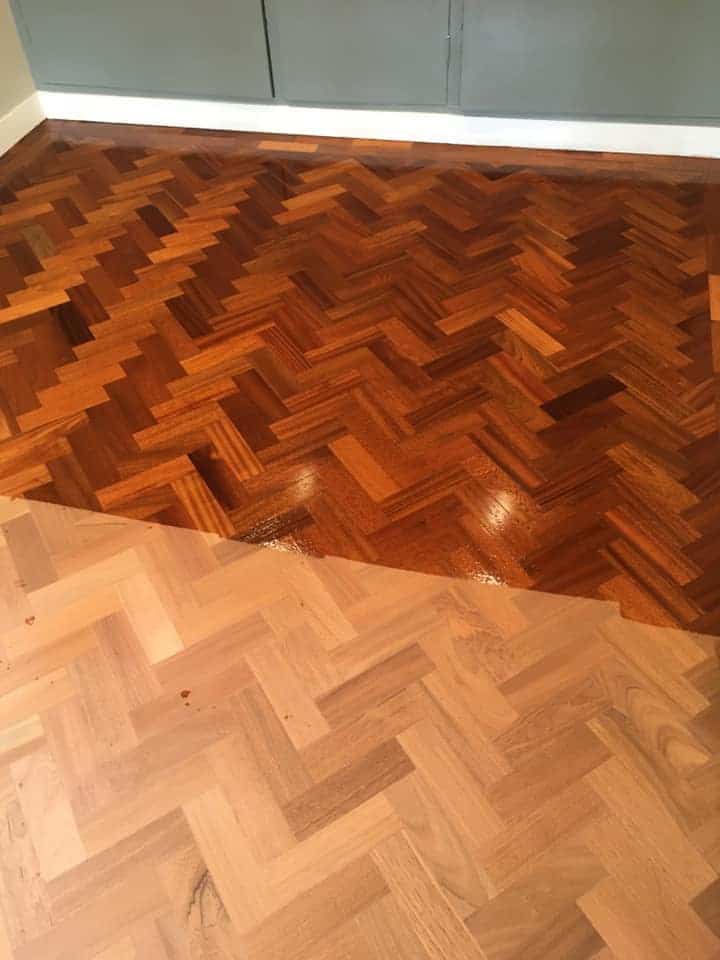
If you are asking “can you sand parquet flooring?”, the short answer is yes. In most cases, parquet can be sanded and restored back to a clean, consistent finish. The longer answer depends on the condition of the floor, the thickness of the wood, and how it has been treated over time. This is where experience matters, because parquet behaves very differently to standard wood floors.
Quick Summary
Wood parquet can usually be sanded and restored, but it requires a controlled sanding process due to the patterned layout and mixed grain directions. When handled correctly, it brings the floor back to life without replacement. Poor sanding can damage the pattern or remove too much material. A professional approach ensures the right balance between restoration and preservation.
What Makes Parquet Flooring Different To Sand?
Parquet flooring is made up of smaller wooden blocks arranged in patterns such as herringbone or basket weave. Unlike a straight wooden floor, the grain direction changes constantly across the surface. This directly affects how floor sanding needs to be carried out.
With traditional wood floors, sanding typically follows the grain. With parquet, that is not possible. Instead, the sanding process needs to be applied evenly across the entire surface to avoid patchiness or visible marks.
We also regularly see parquet floors that have been coated multiple times or partially repaired. This creates an inconsistent starting point, which needs to be corrected before the finer stages of sanding begin.
Can All Parquet Flooring Be Sanded?
Most parquet floors can be sanded, but not all should be.
The main factors we look at before starting any sanding process are:
- The remaining thickness of the wooden floor
- How many times it has been sanded previously
- Any movement or looseness in the blocks
- The condition of the current finish
If too much material has already been removed over the years, sanding again may not be the right option. In other cases, the structure of the floor needs stabilising first.
When Sanding Is Not The Right Option
Structural Condition Always Comes First
If the parquet blocks are heavily worn, loose across large areas, or previously over-sanded, further sanding can do more harm than good. In these situations, we would talk you through realistic options rather than pushing ahead with a process that will not last.
Our approach is always based on what is right for the floor long term, not just what is possible in the moment.
How We Approach Sanding Parquet Flooring
Sanding parquet flooring is a step-by-step process that requires control at every stage.
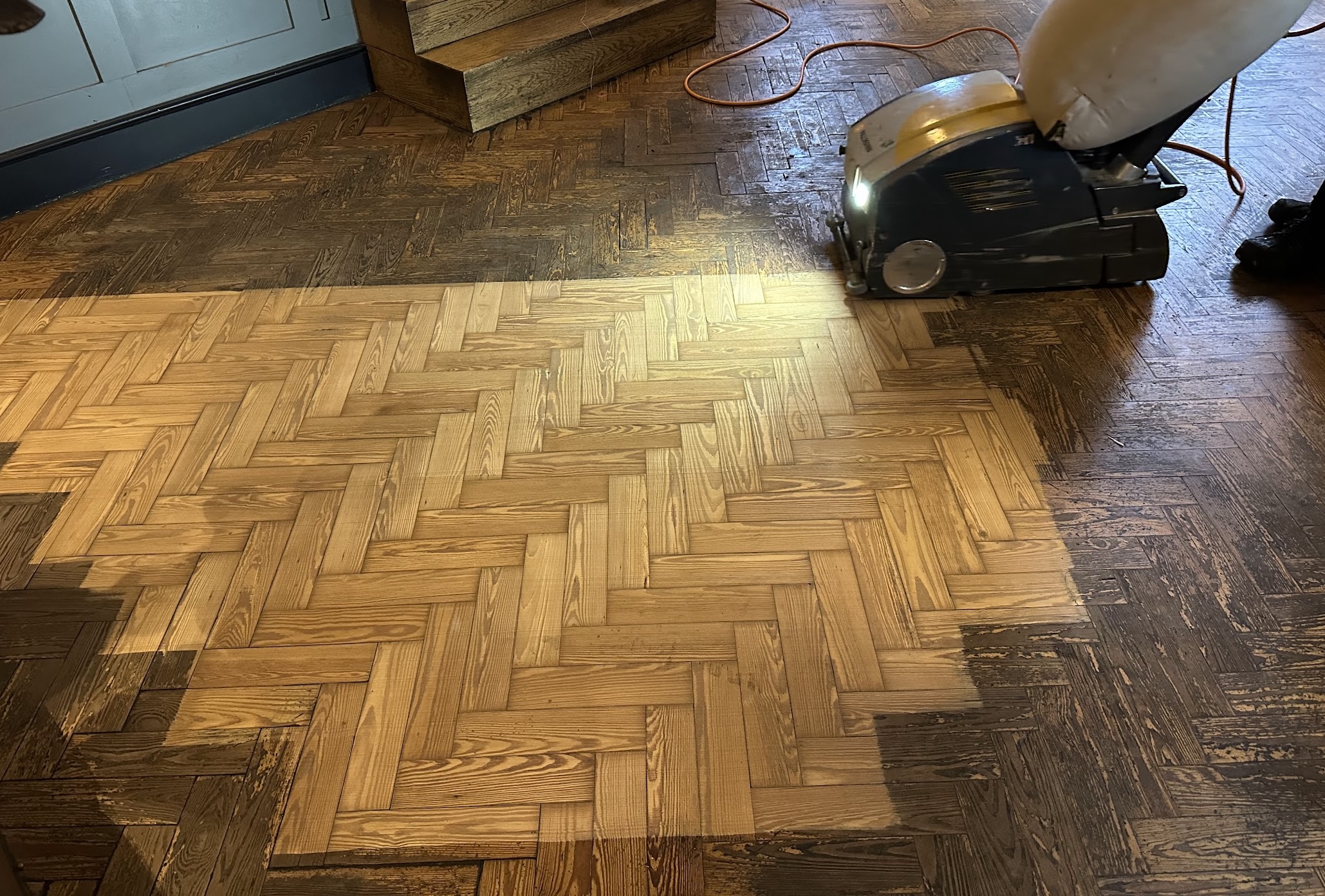
We begin with a coarse grit to remove old finishes, surface damage, and any unevenness. This stage sets the foundation, so it needs to be done carefully to avoid leaving heavy marks across the pattern.
From there, we move through progressively finer grits. Each stage removes the scratches left by the previous pass and smooths the surface further. The use of fine grit towards the end is what gives the floor its clean, consistent finish.
Edges and detailed sections are handled separately to ensure the entire wooden floor matches. Parquet patterns tend to highlight inconsistencies, so attention to detail is key.
Typical Sanding Process Overview
| Stage | Grit Type | Purpose |
| Initial Sand | Coarse Grit | Remove old finish and level the surface |
| Intermediate Sand | Medium Grit | Smooth out heavy sanding marks |
| Final Sand | Fine Grit | Refine surface and prepare for sealing |
| Edge Work | Mixed Grit | Ensure consistency across all areas |
Common Issues We See With Parquet Floors
Over time, parquet floors develop a range of issues that go beyond surface wear. Sanding is often part of the solution, but it sits within a wider restoration process.
Common problems include:
- Uneven wear in high traffic areas
- Discoloured or failing sealants
- Minor movement in individual blocks
- Surface scratches and dull patches
We address these as part of a full restoration, not as isolated fixes. That means stabilising the floor where needed, completing the sanding process properly, and finishing with a protective seal.
Why Professional Floor Sanding Matters
There is a clear difference between basic sanding and a full restoration approach, especially with parquet.
Incorrect sanding can lead to:
- Visible swirl marks across the pattern
- Uneven surfaces from inconsistent pressure
- Loss of definition in the parquet design
- Reduced lifespan of the wood floors
Our process is built around controlling each stage properly. From grit selection to machine handling, every step is aimed at preserving the integrity of the floor while improving its overall finish.
What Happens After The Sanding Process?
Once sanding is complete, sealing the floor is essential. This protects the surface and determines how the floor will look and perform over time.
We guide you through suitable finishes, whether that is an oil for a more natural appearance or a lacquer for added durability. The choice depends on how the space is used and the level of maintenance you are comfortable with.
Without proper sealing, even well-sanded wood floors will begin to wear quickly again.
Is Sanding Parquet Flooring Worth It?
In most cases, yes. A full restoration can completely transform a parquet floor without the need for replacement.
Wood is a durable material, even when it shows signs of age. The aim is to work with the existing floor, not against it. When the sanding process is carried out correctly and followed by proper sealing, the results are long lasting and consistent.
We do not carry out standalone repairs or replacements, but we regularly restore parquet floors as part of a complete process. If you are unsure about your floor, the best starting point is a proper assessment so we can advise on what will work and what will not.
If you found this interesting, you may also like: Parquet Flooring Restoration in 2025 – Your Wood Flooring Guide
Or, to find out more about our services and to discuss how we could help with your next commercial flooring project, call us on 01444 810505.
Frequently Asked Questions About Sanding Parquet Flooring
Can you sand parquet flooring without damaging it?
Yes, parquet flooring can be sanded without damage when the correct sanding process is followed. The key is using the right grit sequence and even pressure across the surface to protect the pattern and avoid uneven results.
How many times can parquet flooring be sanded?
This depends on the thickness of the wooden floor and how much material has already been removed. Most parquet floors can be sanded a few times over their lifespan, but this should always be assessed before starting work.
What grit should be used when sanding parquet flooring?
A combination of coarse grit, medium grit, and fine grit is used as part of a step by step sanding process. Each stage removes the marks from the previous pass and gradually refines the surface.
Is sanding parquet flooring different from standard floor sanding?
Yes, sanding parquet flooring is more complex because the grain direction changes throughout the pattern. This requires a more controlled and even sanding approach compared to standard wood floors.
How long does sanding parquet flooring take?
The timeframe depends on the size of the area and the condition of the floor. Most projects take a few days from start to finish, including sanding and sealing.
Do you need to remove furniture before floor sanding?
Yes, the room should be cleared before the sanding process begins. This allows full access to the wooden floor and ensures a consistent finish across the entire space.
Can damaged parquet flooring be restored through sanding?
In many cases, yes. Surface damage such as scratches, dull patches, and worn finishes can be removed through sanding. Structural issues may need to be addressed as part of a full restoration.
What happens after sanding parquet flooring?
After sanding, the floor is sealed to protect the surface and enhance its appearance. This could involve oil or lacquer, depending on the desired finish and how the space is used.
Is sanding parquet flooring worth it compared to replacing it?
In most cases, sanding and restoring parquet flooring is more cost effective than replacing it. It also preserves the original character of the floor while improving its condition.
Can you sand parquet flooring yourself?
It is possible, but parquet requires a more precise approach than standard floor sanding. Without the right equipment and experience, it is easy to create uneven results or damage the pattern.
Updated March 2026