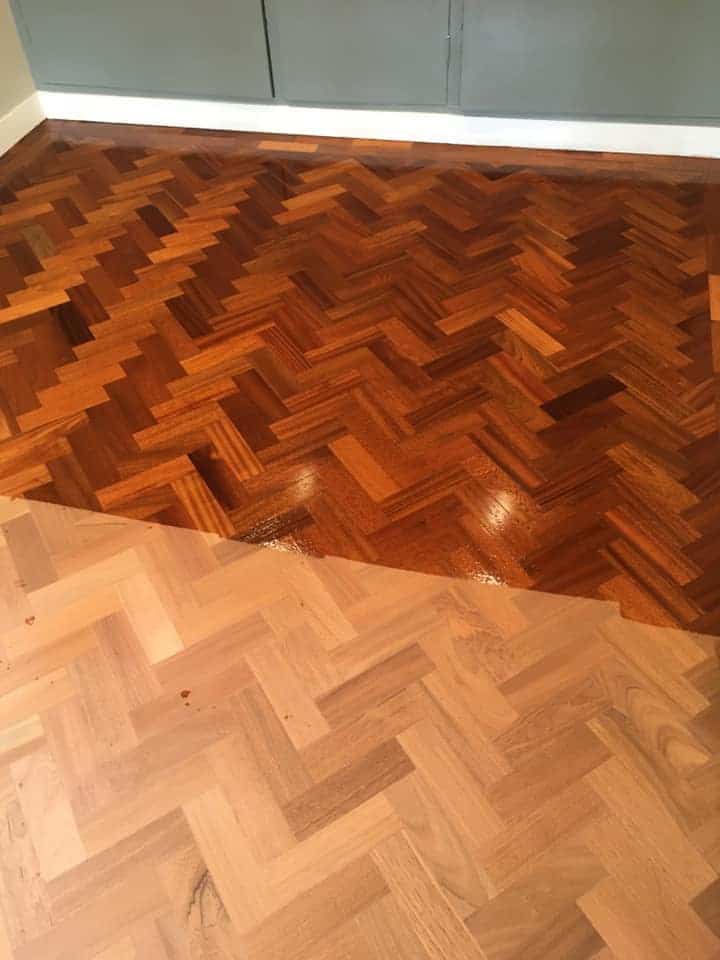
Finding the best wood floor restorer can make the difference between a floor that looks a little refreshed and one that feels properly revived. In this guide, we explain how to restore wood floors properly, and why the right process matters for hardwood floors, solid wood flooring, engineered wood flooring and parquet wood flooring.
Quick Summary
The best wood floor restorer should understand the floor type, wear and tear, finish condition, and how far the surface can safely be sanded. Good restoration means careful assessment, controlled sanding, sensible dust management, honest advice and a professional finish.
What Makes the Best Wood Floor Restorer?
A good wood floor restorer should start with the floor itself. Every floor has a different history. Others have old varnish, faded patches, water staining, scratches or dents, or worn walkways where the finish has broken down.
At Sussex Floor Restoration, we assess the floor before deciding what it needs. That means checking the type of wood, board thickness, previous finishes, damage levels and how the room is used day to day. Solid wood flooring can usually tolerate deeper sanding than many types of engineered wood flooring, while parquet wood flooring often needs careful handling because of the block pattern and grain direction.
How To Restore Wood Floors Properly
Understanding how to restore wood floors starts with knowing what should happen before sanding begins. A professional floor restoration process is measured, controlled and based on the condition of the wood.
A typical process may include:
- Assessing the wood type, surface damage and existing finish.
- Checking for loose blocks, movement, gaps or areas needing attention.
- Sanding through the correct grit stages.
- Using a fine grit near the end to prepare the surface.
- Cleaning the floor before applying oil, lacquer or another suitable finish.
- Allowing the finish to dry and cure before full use.
The temptation with DIY restoration is often to hire a sander, put on a dust mask and hope for the best. The issue with this though, is that wood floors are easy to mark if the machine is used unevenly. Edges, corners and transitions also need care, especially where old finishes are thick.
Why Floor Type Changes the Restoration Approach
Different wooden floors need different treatment, which is where experience becomes important:
| Floor Type | Restoration Consideration |
| Solid wood flooring | Can often be sanded more deeply, depending on condition and previous sanding history. |
| Engineered wood flooring | The top layer must be assessed carefully to avoid sanding too far. |
| Parquet wood flooring | Needs controlled sanding to protect the pattern, edges and block layout. |
| Older hardwood floors | May have stains, gaps, worn finish or historic movement that needs careful judgement. |
What We Look For Before Starting
Before any machine touches the floor, we look for signs that affect the final result. This includes deep staining, raised boards, loose parquet blocks, previous DIY sanding marks, worn lacquer, uneven colour and visible scratches or dents.
Why This First Check Matters
This check helps us explain what is realistic. Some marks can be fully removed whilst some deeper stains may soften rather than disappear completely. A good restorer should be honest from the start because the goal is a beautiful, durable result with no false promises.
The Difference a Professional Finish Makes
A professional finish is one of the most important parts of floor restoration. Sanding prepares the wood, but the finish protects it and shapes the final look. The right choice depends on the room, foot traffic, desired appearance and how the floor will be maintained.
A lacquered finish can provide a strong protective surface for busy family rooms, hallways and commercial spaces. An oiled finish can give a more natural feel and allow easier localised maintenance in some settings. A good finish should enhance the timber and support the way the room is used.
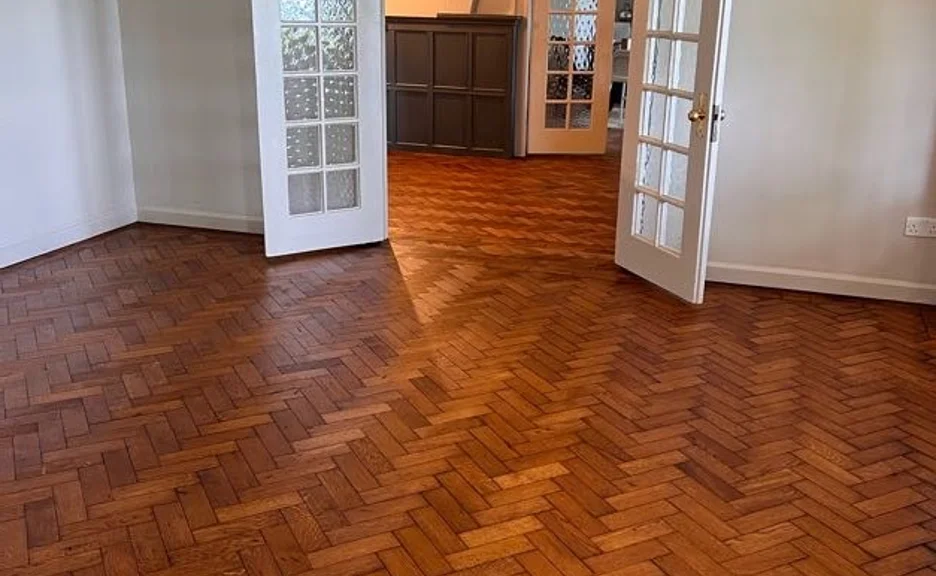
Signs Your Floor Needs Professional Restoration
Your floor may benefit from professional floor restoration if you notice:
- Grey, dull or faded areas where the surface has worn away.
- Scratches or dents that catch the light.
- Patchy colour around rugs, furniture or doorways.
- Old varnish that has yellowed, cracked or started to flake.
- Dirt sitting in the grain because the finish no longer protects the surface.
These are usually signs that the protective layer has broken down. Left too long, everyday wear and tear can start affecting the wood itself.
Choosing the Best Wood Floor Restorer Locally
When choosing the best wood floor restorer, look for someone who can explain the process clearly. They should be able to tell you what type of floor you have, what can realistically be improved, what finish may suit the space, and how long the room will need before normal use.
We restore tired wood floors across Sussex and surrounding areas. From hardwood floors in period homes to engineered wood flooring in modern spaces and parquet wood flooring in character properties, our approach is always based on the floor in front of us.
If you are unsure whether your floor can be restored, the best starting point is a proper assessment.
For advice on the best wood floor restorer for your project, contact Sussex Floor Restoration on 01444 810505 or email info@sussexfloorrestoration.co.uk.
If you liked this, you may also like: A Faded Wood Floor Can Still Be Revived Rather Than Replaced
Frequently Asked Questions about Finding the Best Wood Floor Restorer in 2026
A wood floor is usually worth restoring if the boards are structurally sound, secure underfoot and not heavily rotten or water damaged. Surface wear, dullness, scratches, old varnish and patchy colour can often be improved through sanding and refinishing.
Some engineered wood floors can be sanded, but it depends on the thickness of the real wood top layer. Thicker wear layers are more suitable for restoration, while very thin veneers may only allow light surface work or cleaning and recoating.
Most domestic wood floor restoration projects take between one and several days, depending on the room size, floor condition, finish type and drying times. Larger areas, parquet floors or floors needing extra preparation can take longer.
Lacquer usually suits busy areas where a tougher surface layer is helpful, while oil gives a more natural look and can be easier to maintain in small sections. The best option depends on the room, traffic level and the finish you want.
Some dark stains can be reduced through sanding, but deep staining from water, pet marks, metal reactions or long-term damage may not disappear completely. A professional assessment can show whether the stain is surface-level or deeper within the timber.
Yes, sanding can make a wooden floor look lighter and fresher because it removes old finishes, surface dirt and oxidised layers. The final colour will then depend on the natural timber species and the finish applied afterwards.
Yes, parquet can often be restored very successfully, but it needs careful sanding because the grain runs in different directions across the blocks. A controlled approach helps protect the pattern and avoid uneven sanding marks.
Light furniture can often go back once the finish has dried enough, but full curing can take longer. Heavy furniture, rugs and dragging items across the surface should usually be avoided until the finish has had proper time to harden.
Older varnishes can become amber over time, especially on pine, oak and other warm-toned woods. Sanding can remove the aged finish and reveal a cleaner surface, while modern finishes can help create a more natural or less yellowed appearance.
You can restore one room on its own if there is a clear doorway, threshold or natural stopping point. Open-plan areas are harder to blend in sections, so it is often better to treat the connected floor as one continuous space.
Updated June 2026