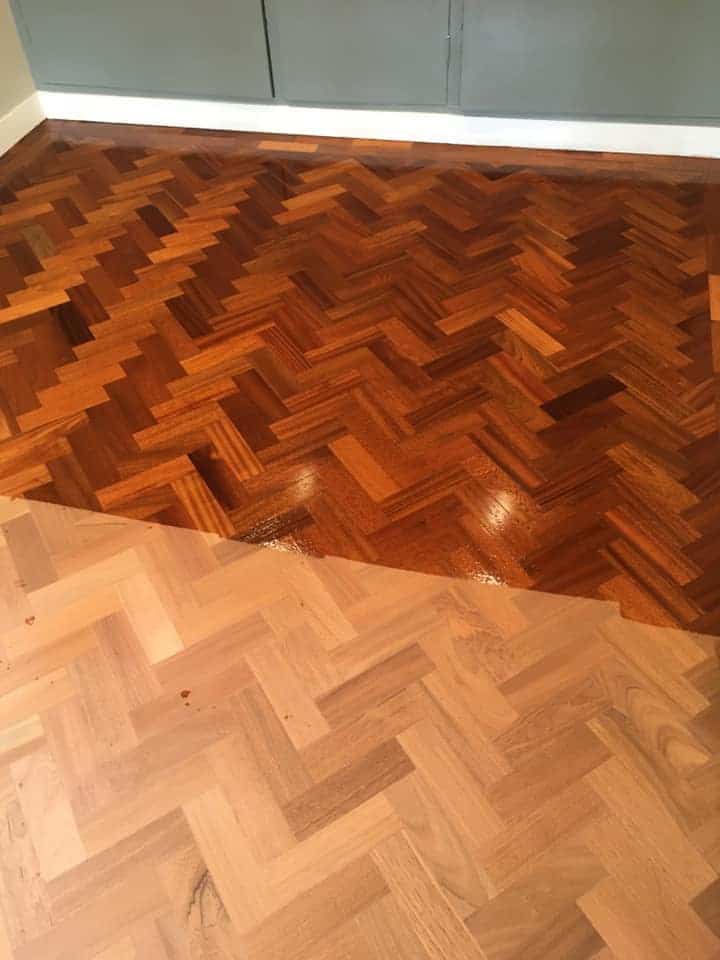
Wood floor scratch repair is one of the most common things people look into when a wooden floor starts to look tired, marked or uneven. Scratches can make an otherwise beautiful floor feel neglected, but the right solution depends on the depth of the damage, the existing finish and how much surrounding wear and tear has built up over time.
At Sussex Floor Restoration, our focus is on restoring wood flooring properly, especially where scratches, dull patches and traffic marks affect the wider look of a room.
Quick Summary
Scratched wood floors can sometimes be improved with careful cleaning or a small local repair, but this is not always the best long-term answer. If the surrounding floor has faded, yellowed, dulled or worn unevenly, a larger area restoration will usually look more uniform and last better. Sanding and refinishing can bring the whole floor back together, rather than leaving one repaired patch sitting awkwardly against an older finish.
Why Do Wood Floors Scratch So Easily?
A hardwood floor is strong, but the surface still deals with shoes, furniture, grit, pets, chairs and daily movement. The issue is usually worse in high traffic areas such as hallways, kitchens, entrances and living spaces where the same routes are used every day.
Most scratches happen because tiny particles of grit act like sandpaper underfoot, gradually dulling the finish and marking the surface.
Common causes include:
- Grit and stones brought in from outside
- Furniture legs without protective pads
- Office chairs or dining chairs moving repeatedly
- Pet claws on lacquered or oiled surfaces
- Dragged appliances, boxes, rugs or heavy items
Once the protective finish weakens, the timber underneath becomes more exposed. That is when light surface scratches can start to turn into more visible, uneven wear.
What Type of Scratch Are You Dealing With?
Before choosing the right approach, it helps to separate surface damage from deeper timber damage. A faint scuff in the finish is very different from a deep scratch that has cut into the wood itself.
The bigger question is not just “can this mark be improved?” It is also “will the repair blend with the rest of the floor?”
That is where many local repairs fall short. A single scratch may be treatable in theory, but if the surrounding floor has aged, darkened, faded or lost its protective coating, the repaired patch can look too clean, too fresh or slightly mismatched.
Can Wood Floor Scratch Repair Be Done Without Sanding?
Sometimes, yes. If the damage only affects the very top finish and the rest of the floor is in excellent condition, a local repair may be possible. This might involve cleaning, lightly abrading the affected area and applying a compatible finish.
However, local repairs come with clear limits. They can be difficult to blend on older lacquered floors, sun-faded timber, patchy finishes or rooms where high traffic areas have already worn unevenly. In those cases, treating one small section can draw more attention to the difference between the repaired area and the rest of the floor.
For a more consistent result, it is often better to restore the larger area. This gives the floor a cleaner, more balanced finish and helps the result stand the test of time.
| Option | When it may be suitable | Pros | Cons |
| Local scratch repair | One isolated mark on an otherwise excellent floor | Lower disruption and may improve a small cosmetic issue | Can be difficult to blend, especially on older or uneven finishes |
| Larger area restoration | Scratches, dull patches or traffic wear affecting part of a room | More uniform appearance and better long-term consistency | More involved than a small touch-up |
| Full sanding and refinishing | Widespread scratches, failed finish or heavy wear across the room | Best chance of a clean, even and durable result | Requires proper preparation and professional equipment |
| Cleaning and maintenance | Light scuffs, surface dirt or dullness without real timber damage | Helps protect the existing finish | Will not remove deeper scratches or failed coatings |
Why Larger Area Restoration Often Looks Better
A wooden floor changes over time. Sunlight, cleaning products, foot traffic and previous coatings can all affect its colour and appearance. This is why two sections of the same floor can react differently when treated.
A local repair might improve the scratch itself, but it may not solve the visual problem across the wider room. If the surrounding finish is tired, yellowed or patchy, the repaired section can look separate from the rest of the floor.
Larger area restoration helps avoid that problem by treating the floor more evenly. Rather than chasing individual scratches, the aim is to restore the overall surface so the room feels calmer, cleaner and more naturally finished.
When Is Sanding and Refinishing the Better Option?
Sanding and refinishing wood floors is usually the better option when scratches are spread across the room, when high traffic areas have gone dull, or when the existing finish has started to fail.
The process removes the damaged surface layer and prepares the floor for a fresh protective finish. This is often the most reliable way to get floors restored properly, especially when you want the final result to look intentional rather than patched.
A typical restoration process may include:
- Assessing the wood type, finish and depth of damage
- Preparing the room and protecting surrounding areas
- Sanding the wooden floor using suitable grit levels
- Refining the surface for a smooth, even appearance
- Applying a suitable lacquer, oil or hardwax oil finish
Why Finish Choice Matters
The final finish affects how the floor looks, feels and handles future use. Lacquer can offer a durable surface coating, while oil and hardwax oil can give a more natural appearance. The best option depends on the timber, room use, desired look and level of maintenance you are comfortable with.
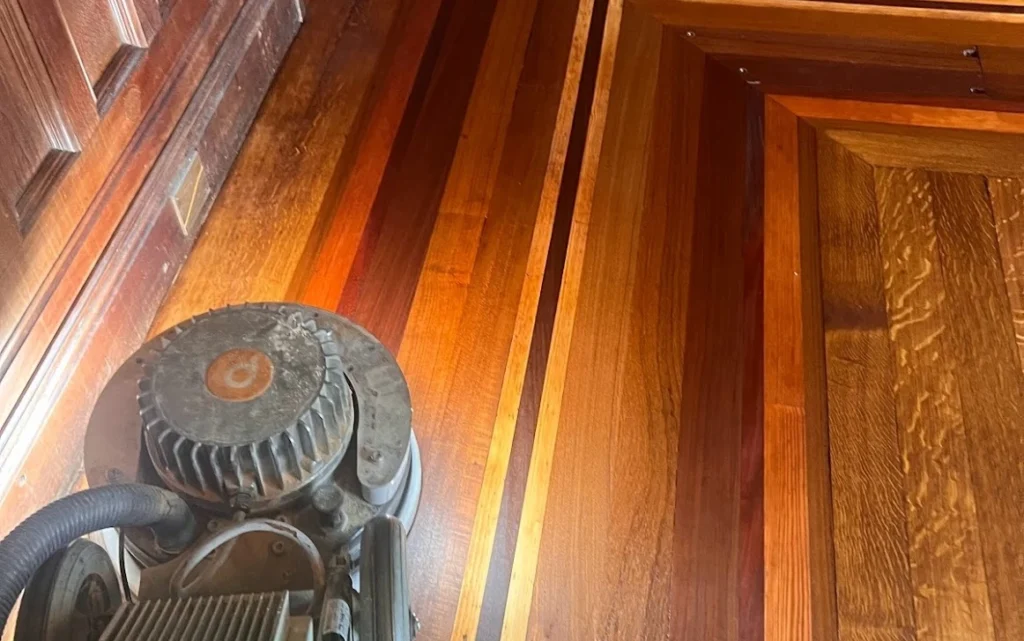
Why Hiring a Professional Often Saves the Floor
Hiring a professional for wood floor restoration is usually about control. Timber responds differently depending on age, species, thickness and previous coatings.
Engineered flooring has a real wood top layer, so sanding depth matters. Solid wood floors are generally more forgiving, but they still need the right method. Parquet floors need extra care because of grain direction, blocks, adhesives and older finishes.
Poor sanding can leave swirl marks, dips, uneven patches or an overworked surface. A professional assessment helps decide whether a larger area restoration or full floor sanding is the most sensible route.
How to Reduce Scratches After Restoration
Once the floor has been restored, small habits make a big difference. Good aftercare will not make a floor indestructible, but it will help protect the finish for longer.
Useful aftercare includes:
- Using entrance mats to catch grit before it reaches the floor
- Adding felt pads to chair and table legs
- Lifting furniture rather than dragging it
- Cleaning with products suited to the floor finish
- Avoiding steam mops and overly wet cleaning
- Checking high-use areas before the finish becomes badly worn
A restored floor should be lived on and enjoyed, but a few simple habits can help prevent scratches from building up too quickly again.
Wood Floor Scratch Repair With a Proper Finish
Good wood floor scratch repair starts with a proper understanding of the floor in front of you. Some scratches may only need light improvement, but many scratched wood floors benefit more from sanding, refinishing and restoring a larger area so the final result looks even.
If your wooden floor is covered in dull patches, scratches or general wear and tear, Sussex Floor Restoration can assess what is realistic and recommend the right route. The goal is not just to hide one mark. It is to help the whole floor look cleaner, calmer and properly finished again.
For wood floor scratch repair advice and wood floor restoration in Sussex, Surrey, Kent and the surrounding areas, call 01444 810505 or email info@sussexfloorrestoration.co.uk.
If you liked this, you may also like: Oiled vs Lacquered Wood Flooring: Which Finish Actually Suits Your Space?
Frequently Asked Questions About Wood Floor Scratch Repair
Some scratches can be removed completely, especially if they are only in the surface finish. Deeper scratches may be made far less visible through sanding, filling and refinishing, but the result depends on the timber, colour, age and depth of damage.
A scratch is usually too deep to polish out if you can feel it clearly with your fingernail. If the mark has cut through the finish and into the timber, it will usually need more than a simple clean or buff.
Oiled wood floors can often be easier to spot-repair because the finish soaks into the surface rather than sitting as a hard layer on top. Lacquered floors can be harder to blend locally, especially if the surrounding finish has aged or changed colour.
Dog scratches can often be improved, although the method depends on whether the claws have marked the finish or dug into the wood. Light claw marks may clean up well, while heavier scratching across a room may need sanding and refinishing.
A good repair should blend as naturally as possible, but an exact match is not always realistic on older floors. Sunlight, wear, cleaning products and previous finishes can all change the colour of the surrounding timber over time.
Repair pens can help disguise small marks temporarily, but they rarely solve the underlying issue. They can also create darker patches if the colour is wrong, so they are best used carefully and only on minor cosmetic marks.
Cleaning can make scratches more visible if dirt was previously sitting inside the marks or dulling the surrounding surface. Once the floor is cleaner, light can catch the scratches more clearly, especially near windows or under spotlights.
Rugs can protect floors, but grit trapped underneath can cause more scratching over time. It is worth lifting rugs regularly, cleaning underneath them and using a suitable rug underlay that will not react with the floor finish.
Yes, furniture scratches can usually be reduced with felt pads, careful lifting and regular checks under chair legs. Dining chairs are often the biggest culprit because they move in the same place every day.
It can be worth repairing scratched wood floors before selling, especially in entrance halls, living rooms and kitchens. A cleaner floor can make the room feel better cared for and may help buyers see the floor as a feature rather than another job to handle.
Updated June 2026