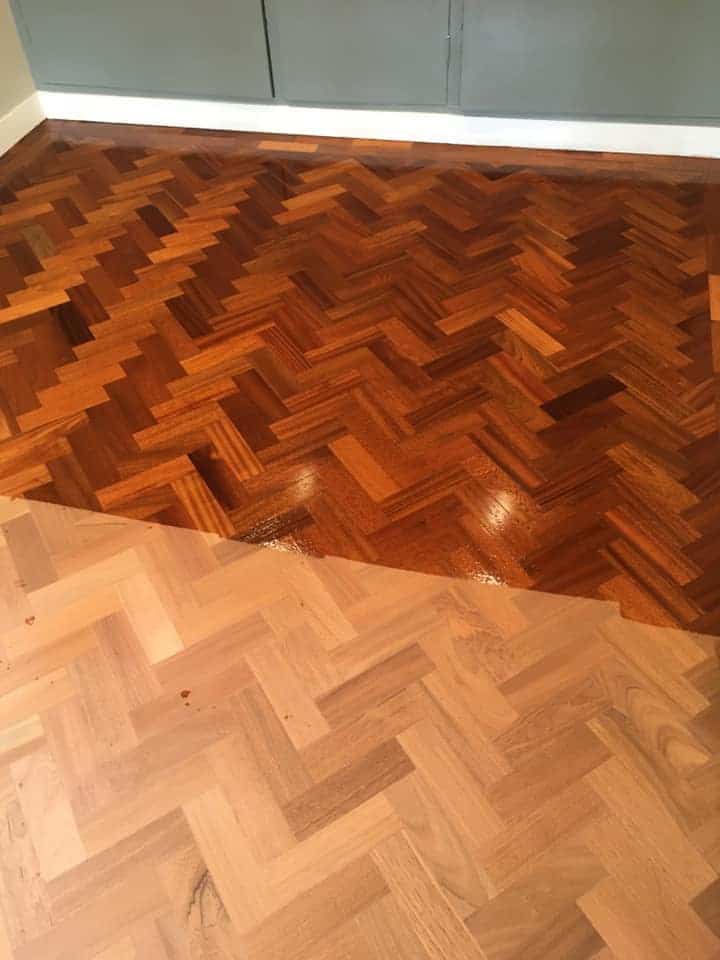
Oak floor restoration can completely change the way a room feels without removing the original flooring that gives it character. Oak is naturally strong, distinctive and full of variation, but years of foot traffic, fading finishes and everyday wear and tear can leave even a high-quality floor looking flat or tired.
With professional sanding and refinishing, that dull surface can be taken back to reveal the grain, colour and detail beneath. The aim is not to make an established oak floor look brand new. It is to help it look like the best version of itself again.
Quick Summary
Professional oak floor restoration removes worn finishes, surface marks and built-up discolouration before the entire floor is carefully refined and protected. The process can revive solid and engineered oak wood flooring, create a more consistent appearance across the room and provide a finish that suits the way the space is used.
Why Oak Floors Respond So Well to Restoration
Oak is a hard, strong timber that has long been used for flooring, furniture and construction. Its durability is one reason so many older homes still contain original oak floors that remain perfectly capable of being restored.
However, durable does not mean maintenance-free. Over time, an oak floor may develop:
- Scratches and marks from furniture or foot traffic
- Areas where the finish has worn thin
- Uneven colouring beneath rugs or furniture
- A dull or cloudy appearance
- Dirt embedded within the old surface coating
- Differences in appearance between busy and quieter areas
Cleaning can remove surface dirt, but it cannot undo a worn coating or expose fresh wood beneath it. When the finish itself has deteriorated, the floor normally needs to be professionally sanded and refinished.
What Happens During Oak Floor Restoration?
Every floor should be assessed individually before work begins. The age of the floor, its construction, its existing finish and the condition of the wood all influence the approach.
Our floor restoration process generally involves the following stages:
- Assessing the complete floor: We inspect the oak flooring, identify the existing finish and consider how the room is used.
- Preparing the area: Furniture and loose items are removed so the whole surface can be restored consistently.
- Sanding the old finish: Professional floor sanders gradually remove the worn coating and surface imperfections.
- Refining the wood: Progressively finer grit sandpaper is used to smooth the floor and prepare it for finishing.
- Applying the chosen finish: The floor is sealed with a suitable product selected for its appearance, protection and ongoing maintenance.
- Providing aftercare guidance: We explain how to look after the restored floor and keep the finish performing well.
Professional dust extraction is also important. The Health and Safety Executive’s guidance on sanding wood highlights the importance of controlling wood dust at its source. Our sanding equipment is designed to capture up to 98% of dust as the floor is worked on, helping to keep disruption to a minimum.
Can Engineered Oak Flooring Be Restored?
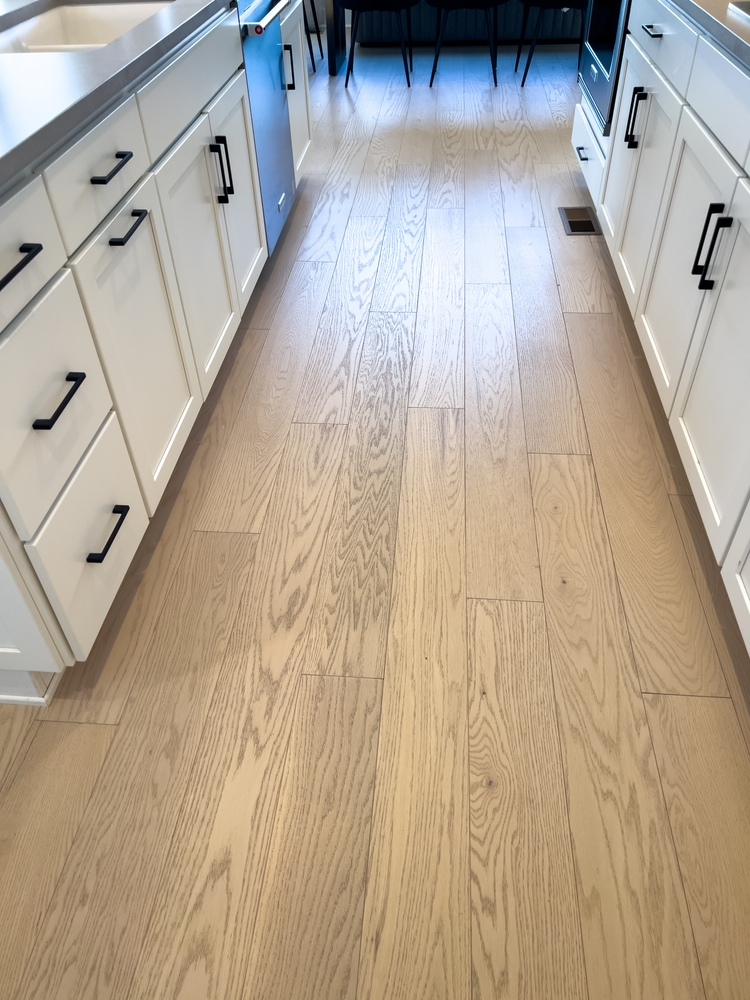
Some engineered oak wood flooring can be sanded, but the answer depends on the thickness and condition of the real oak wear layer.
Unlike solid wood, engineered flooring has a hardwood surface over a layered core. There must be enough usable oak above the tongue-and-groove system for the floor to be safely restored.
Assessing the Oak Wear Layer
A professional assessment is essential before attempting to sand an engineered floor. Previous sanding, deep damage or a particularly thin wear layer may limit what can be done.
Why Aggressive Sanding Is Not the Answer
Using coarse grit sandpaper unnecessarily or removing too much material can permanently damage an engineered floor. Professional floor sanding is controlled and progressive, taking away only what is required to remove the worn finish and refine the surface.
Choosing the Right Finish for an Oak Floor
The finishing stage affects both the appearance of the oak and how the floor performs afterwards.
| Finish Consideration | What It Influences |
| Sheen level | Whether the floor appears matt, satin or more reflective |
| Colour tone | How warm, pale or rich the natural oak appears |
| Room usage | The level of protection needed against regular foot traffic |
| Maintenance | How the floor should be cleaned and cared for |
| Existing character | Whether knots, grain and age variation remain prominent |
Oak does not have one fixed appearance. Depending on the finish, the same floor can look pale and contemporary, warm and traditional or deeper and more dramatic.
As Kew Gardens explains, oak is a strong and resilient hardwood widely used for flooring. A suitable finish protects that natural surface while still allowing its grain and variation to remain visible.
Why Restore the Whole Floor?
It can be tempting to focus only on the most visibly worn patch, particularly near a doorway or through the centre of a room. However, sanding and refinishing a small section can create noticeable differences in colour, sheen and texture.
Restoring the whole floor or complete connected area provides:
- A more uniform finish
- Consistent protection throughout the room
- A smoother transition between busy and quieter areas
- Better long-term results
- Greater control over the final colour and sheen
A professional floor restoration should feel deliberate and complete rather than leaving one refreshed section surrounded by an older finish.
Professional Home Floor Sanding Without Losing the Floor’s Character
Home floor sanding is not about erasing every indication that a floor has been lived on. Oak naturally contains grain changes, knots, tone variations and individual details that give it personality.
The skill lies in removing the tired surface while retaining the qualities that made the floor worth restoring in the first place. Correct machinery, suitable abrasives and careful finishing all help produce a high-quality result without unnecessarily removing material.
Our wood floor restoration services are designed around the complete floor, from the initial assessment through to the final finish and aftercare advice.
Is It Time to Restore Your Oak Floor?
An oak floor may need restoration when routine cleaning no longer improves its appearance, the protective coating has worn away or different parts of the room have become visibly uneven.
Before covering it up or assuming it needs to be removed, it is worth finding out what professional oak floor restoration could reveal. The colour and grain you want may already be there, sitting just beneath years of old finish.
For oak floor restoration and professional home floor sanding across Sussex, Surrey and the surrounding areas, speak to Sussex Floor Restoration.
📞 01444 810505
🌐 https://sussexfloorrestoration.co.uk/
If you liked this, you may also like: A Faded Wood Floor Can Still Be Revived Rather Than Replaced
Frequently Asked Questions About Oak Floor Restoration
An oak floor may need restoring if it looks dull even after cleaning, has worn patches or shows noticeable scratches and discolouration. When the protective finish has broken down, professional sanding and refinishing can reveal the healthier wood beneath.
Most solid oak floors can be sanded several times during their lifespan. Engineered oak flooring may also be suitable, but this depends on the thickness of the real wood wear layer and whether it has been sanded previously.
The timescale depends on the size of the floor, its condition and the finish being applied. Most domestic projects take several days, including preparation, sanding, finishing and the required drying or curing time.
Modern professional floor sanders use powerful extraction systems to collect dust as the floor is worked on. Our equipment captures up to 98% of the dust produced, making the process much cleaner than traditional floor sanding methods.
Many scratches and surface marks can be significantly reduced or removed during sanding. Very deep damage may remain slightly visible, but it will usually blend more naturally once the whole floor has been restored and refinished.
Restoring the whole floor usually gives a more consistent colour, texture and sheen. Sanding only one section can leave obvious differences between the newly finished area and the older surrounding surface.
The right finish depends on the appearance you want, the amount of foot traffic and how much maintenance you are comfortable with. Matt and satin finishes are popular because they protect the wood while keeping the grain and natural variation visible.
Sanding removes the old coating and exposes fresh wood, so the floor may initially appear lighter or cleaner. The final colour will depend on the selected seal, oil, lacquer or stain applied after sanding.
Engineered oak flooring can often be restored when the hardwood wear layer is thick enough. It should always be assessed before sanding because removing too much material can damage the floor permanently.
Use products recommended for the chosen finish and avoid soaking the floor with water. Regular vacuuming, felt pads beneath furniture and wiping up spills promptly will help protect the surface and reduce future wear.