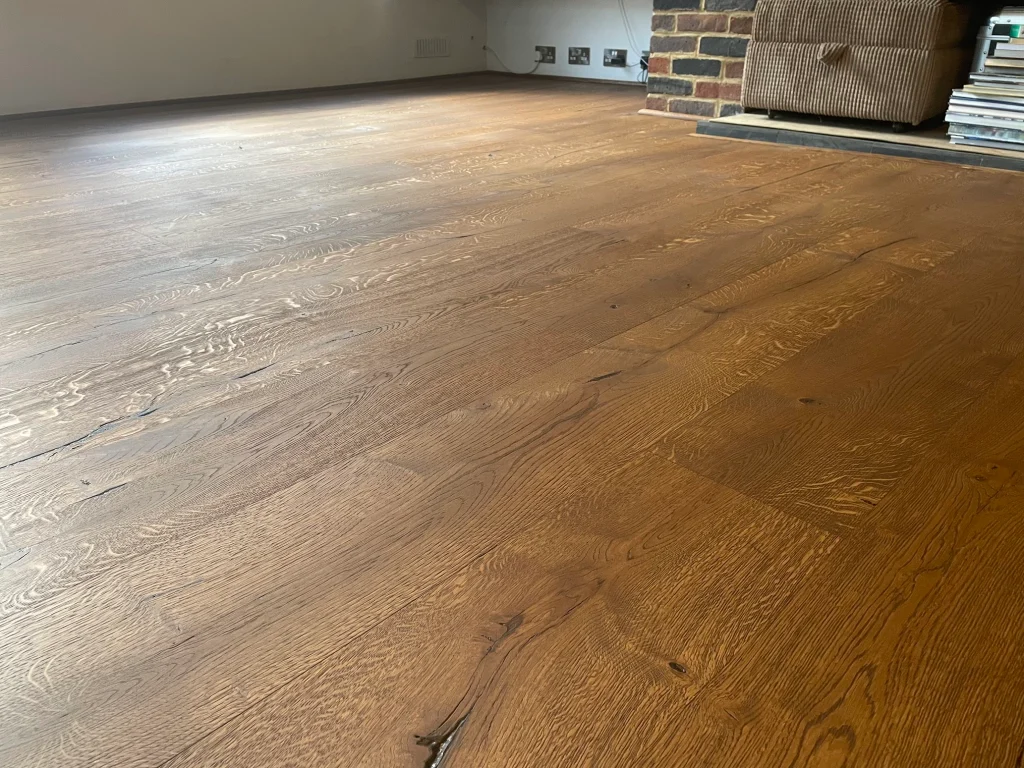
If you are looking at how to sand a wooden floor, it is easy to assume the job mostly comes down to hiring a large sanding machine and working across the room. In reality, that is only part of it. Edges, corners, skirting boards, detailed inlays, wood grain and final preparation all have a big influence on how the finished floor looks.
At Sussex Floor Restoration, we restore the complete floor. That means combining professional machinery with careful edging, hand sanding, dust extraction and thorough preparation before any new floor finish is applied.
Quick Summary
Sanding a wooden floor involves removing the existing coating with progressively finer abrasives, blending the main floor with its edges and corners, completing detailed areas by hand and thoroughly removing dust before finishing. Good results come from treating the floor as one complete surface rather than simply running a machine over the open areas.
How to Sand a Wooden Floor from Start to Finish
The aim is not to remove as much timber as possible. We want to take away worn coatings and surface imperfections while creating an even base for the new finish.
A typical restoration involves:
- Assessing and preparing the floor.
- Selecting the correct starting grit.
- Sanding the main floor area evenly.
- Moving through progressively finer grit sandpaper.
- Sanding edges and corners separately.
- Hand sanding detailed areas where required.
- Removing dust thoroughly before finishing.
The general floor sanding process shows how closely sanding and finishing are linked. If the surface is uneven before coating, that inconsistency can become much more noticeable afterwards.
The Machine Cannot Reach Everything
Large sanders are ideal for open floor areas, but they cannot reach every part of a room.
| Area | How We Approach It | Why It Matters |
| Main floor | Professional sanding machinery | Creates an even foundation |
| Edges | Specialist edging equipment | Prevents a visible border |
| Corners | Smaller tools and hand sanding | Reaches awkward sections |
| Inlays | Controlled hand sanding | Protects detail and grain direction |
| Final surface | Fine sanding and dust removal | Prepares the floor for finishing |
The transition between the centre and perimeter needs to be blended carefully. Over-sanding the edge can leave a visible dip, while under-sanding can leave old finish or darker areas around the room.
Working Around Skirting Boards and Corners
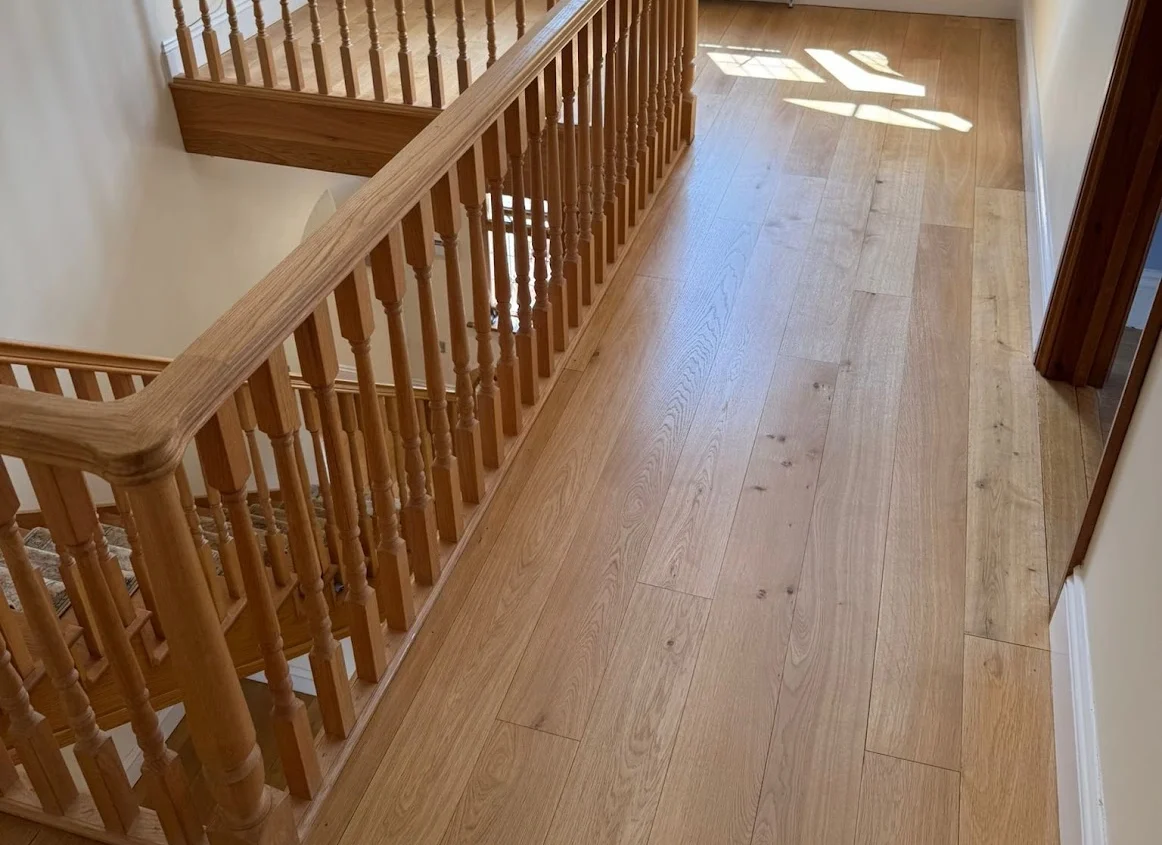
Sanding close to skirting boards takes more control than working through the middle of a room. Equipment needs to get close enough to remove the old finish without damaging surrounding surfaces.
Corners create another challenge because even edging machines cannot reach every last section cleanly.
Why We Still Hand Sand Floors
Hand sanding remains an important part of professional restoration.
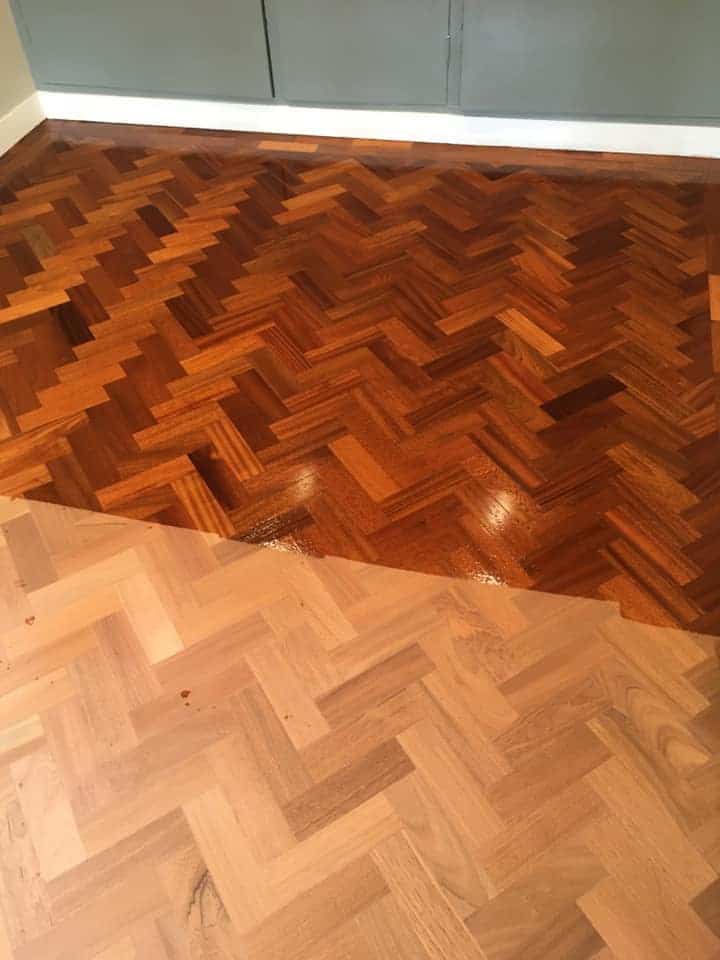
It is especially useful around decorative borders, parquet patterns and fine inlays where timber can run in several directions. Following the wood grain matters because scratches running across it may become far more visible once oil or lacquer is applied.
Our wood floor sanding service combines larger machinery with the detailed work needed around these smaller areas. The machine covers most of the square metres, but the finishing work helps the entire floor look consistent.
Dust-Free Sanding Makes a Real Difference
Sanding wood naturally produces fine dust, so extraction matters for more than simply keeping the room tidy.
The Health and Safety Executive guidance on sanding wood highlights the importance of controlling wood dust at source. Our equipment allows us to provide a 98% dustless sanding process, reducing both airborne and settled dust.
It also leaves us with a cleaner surface when it is time to apply the finish. Fine dust left behind can affect how evenly coatings settle, so thorough extraction forms part of the finishing process too.
Hiring a Floor Sander vs Using a Professional
Hiring a machine and sanding a floor yourself can seem like the cheaper option.
The challenge is controlling the machine consistently, choosing the correct abrasive sequence and knowing how much material can safely be removed. You also need to blend the edges and corners into the main floor without creating obvious changes in height or texture.
This is particularly important with engineered wood floors, where the usable hardwood layer can be more limited than on a solid hardwood floor.
If you are looking for the best wood floor restorer for your property, we recommend asking how they handle the detailed work as well as what machinery they use.
The Floor Finish Starts with the Sanding
Once sanding is complete, the floor needs to be thoroughly cleaned before the new coating is applied.
Different floors suit different finishes depending on how the room is used and the appearance you want. Professional systems from PALLMANN include oils and lacquers designed specifically for wooden flooring.
Whatever finish is chosen, it needs to dry completely and cure according to the product requirements before normal use resumes.
How to Sand a Wooden Floor Without Cutting Corners
The best results come from treating sanding as a complete restoration process. The main machine matters, but so do the edges, skirting boards, corners, inlays, hand sanding, dust extraction and preparation before finishing.
That is how we approach every project at Sussex Floor Restoration. If your wooden floor has lost its finish, we can restore it as one complete, consistent surface.
📞 01444 810505
🌐 https://sussexfloorrestoration.co.uk/
If you liked this, you may also enjoy: Oak Floor Restoration: Reviving Grain, Warmth and Character
Frequently Asked Questions About How to Sand a Wooden Floor
Can you sand a wooden floor yourself?
Yes, but there is more to it than hiring a floor sander and working across the room. The main challenges are keeping the sanding even, choosing the right grit sequence and handling edges, corners and detailed areas without leaving obvious differences in the surface.
How do I know which grit sandpaper to start with?
The right starting grit depends on the condition of the floor and the coating already on it. A heavily worn or strongly finished floor may need a coarser starting grit, while a floor in better condition may not need such an aggressive first pass.
Do you have to sand right up to the skirting boards?
Yes, the perimeter needs to be sanded so it blends properly with the rest of the floor. Larger machines cannot reach right up to skirting boards, so edging equipment and hand sanding are normally used to finish these areas carefully.
Why do floor edges sometimes look darker after sanding?
This often happens when the edges have not been sanded to the same level as the main floor. Old finish can remain around the perimeter, or a different sanding technique may leave the timber absorbing the new coating differently.
Is hand sanding really necessary on a wooden floor?
In many cases, yes. Hand sanding is particularly useful around corners, borders, inlays and detailed sections where larger equipment cannot work accurately without risking damage to the surrounding timber.
Can parquet and patterned floors be sanded safely?
Yes, but they usually need a more considered approach because the wood grain runs in different directions across the pattern. Careful machine control and hand sanding around detailed areas help prevent visible cross-grain scratches and preserve the character of the floor.
How dusty is professional floor sanding?
Modern professional equipment can dramatically reduce the amount of dust created during sanding. At Sussex Floor Restoration, we use a 98% dustless sanding system, which helps control fine wood dust at source and keeps the surrounding property considerably cleaner.
How many times can a wooden floor be sanded?
That depends on the type and thickness of the flooring. Solid hardwood floors can usually tolerate more sanding over their lifetime than engineered floors, which have a limited real-wood wear layer above the core.
How long should a floor dry after it has been finished?
Drying and curing times depend on the product used, so there is no single answer for every floor. It is important to follow the specific finish manufacturer’s guidance before walking on the floor, replacing furniture or returning the room to normal use.
What should I look for when choosing a wood floor restoration company?
Look beyond the size of the sanding machines they use. A good wood floor restorer should be able to explain how they handle edges, corners, detailed areas, dust extraction, different wood types and the final finish so the whole floor is treated consistently.