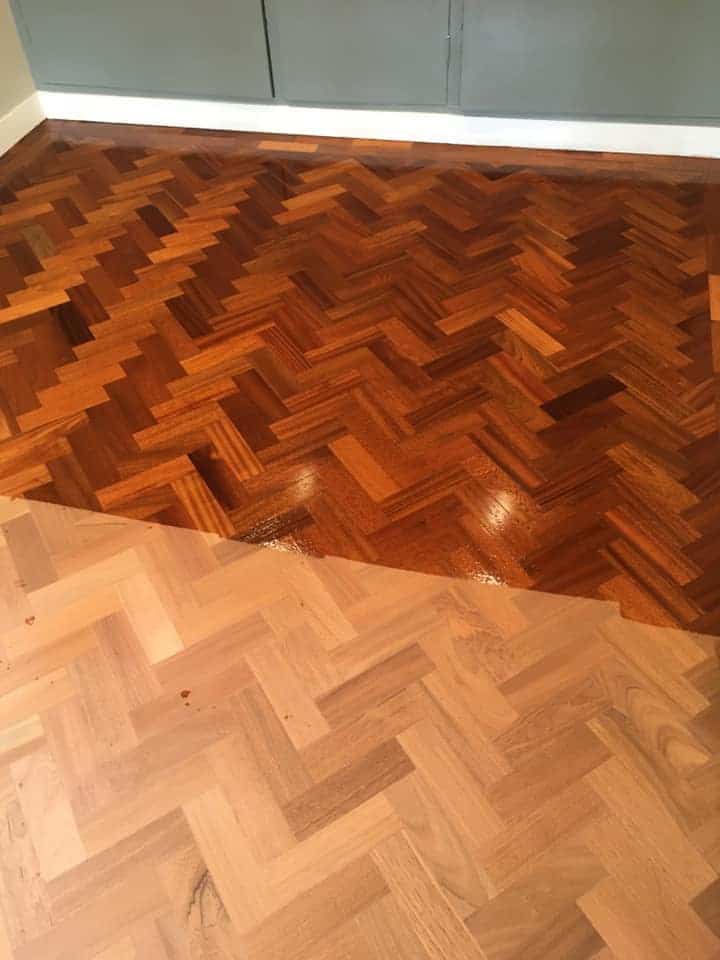
At Sussex Floor Restoration, attention to detail is at the heart of everything we do.
Restoring wooden floors isn’t just about removing the old finish; it’s about revealing the character of the wood and enhancing it with a flawless final touch. That’s why using a combination of a detail sander and a hand sander is ideal.
Whether it’s under radiators, tight corners, or tricky edges, our team uses the right tools, including hand sanders and detail sanders, to get into every nook and cranny and leave your floor with a perfect finish.
What is a Detail Sander and Why is it So Effective?
A detail sander, sometimes called a corner or delta sander, is a compact power tool with a triangular pad that vibrates in small, rapid motions. It’s perfect for accessing hard to reach places, from the awkward space behind doors to the edges beneath your radiators.
- Compact Design: Ideal for corners, curves, and mouldings
- Precision Sanding: Great for areas requiring a light but even touch
- Perfect for Detail Work: Especially suited for wooden floor refinishing
We use a detail sander on wooden floors where a large belt sander or random orbital sander can’t reach.
The result? A smooth surface from wall to wall, with no patchy bits or missed areas.
Is Hand Sanding Still Relevant?
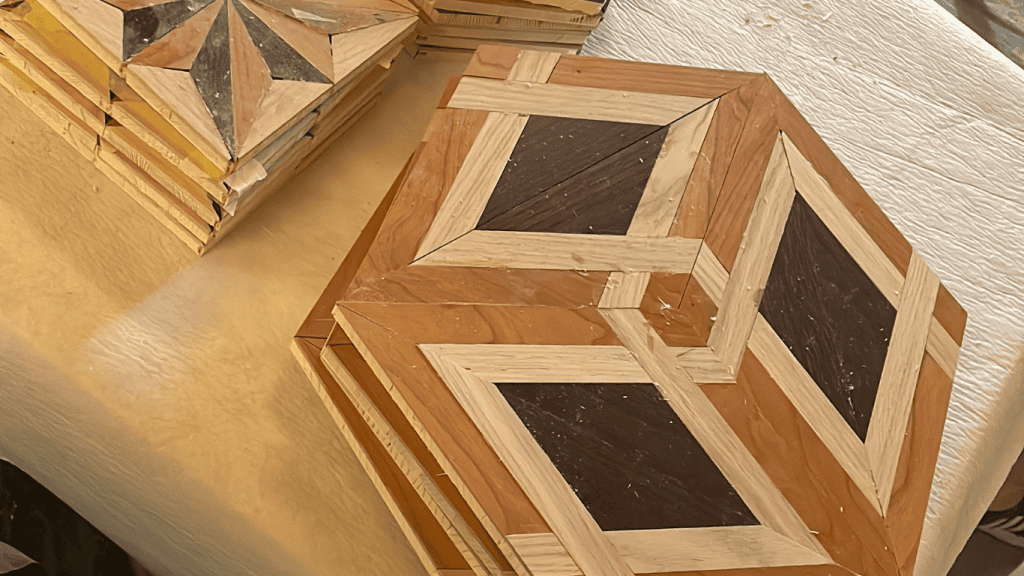
Yes! While machines are faster, there are times when only a hand sander will do. Certain timber types, like softer pine or intricate parquet flooring, require the care and attention that only manual sanding provides.
We also use it for:
- Smoothing minor imperfections
- Spot-checking after machine sanding
- Preparing for oil or varnish application
Detail Sander vs Hand Sander: What’s the Difference?
While they sound similar, a detail sander and a hand sander are actually quite different in how they operate and where they’re best used:
Detail Sander:
- Power Source: A detail sander is powered, either electric or battery-operated.
- Best For: Tight corners and intricate spaces where other tools can’t reach.
- Sanding Action: A detail sander operates with a rapid, vibrating motion, helping it work quickly and precisely.
- Surface Size: Detail sanders are perfect for small, angled, or curved sections that require extra precision.
Hand Sander:
- Power Source: A hand sander is completely manual, relying on physical effort.
- Best For: Hand sanders are ideal for delicate, finishing touches, especially on sensitive areas.
- Sanding Action: The hand sander uses slow, flat, controlled strokes.
- Surface Size: Hand sanders are best for small, flat areas.
At Sussex Floor Restoration, we often turn to hand sanders when working with delicate timber or applying those final touches where accuracy and control are crucial. They’re especially helpful on sensitive floorboards or when we need a seamless transition between different sections of the floor.
What About Palm Sanders?
A palm sander fits comfortably in the hand and uses a 1/4-sheet of sandpaper, making it another great choice for detail work. At Sussex Floor Restoration, we sometimes use palm sanders for light sanding or material removal in smaller zones before we move on to a finer grade using a detail sander or hand sander.
Tackling Tight Spaces in Floor Restoration
Every home is different. Some have curved skirting boards. Others feature fixed cabinetry, awkward angles, or low-clearance radiators. That’s where our professional tools shine.
Our Toolkit for Precision Work:
- Detail Sanders: Get right into corners and curves
- Hand Sanders: Apply gentle pressure for delicate surfaces
- Palm Sanders: Smooth transitions and edges
- Random Orbital Sanders: Used for broader, flat areas
- Belt Sanders: Tackle large sections and deep material removal
By using these tools correctly and in the right application, we ensure every floor gets the high-quality, smooth finish it deserves, from the centre of the room to the skirting boards.
Why You Shouldn’t Skip the Corners
Many DIYers focus on the middle of the room and forget the corners. But uneven sanding leaves your wooden floor looking patchy and poorly finished.
That’s where getting a professional in to do the jobs makes all the difference. Our team uses detail sanders to ensure uniformity and a consistent, professional-grade finish.
The Sussex Floor Restoration Promise
With years of experience restoring all types of wooden floors across Sussex, our promise is simple: to deliver a perfect finish, every time.
We combine traditional techniques with advanced technology to get your floor looking its absolute best, no corner left untouched.
Ready to restore your wooden floor?
Call the team on 01444 810505 for a free quote or consultation.
Let Sussex Floor Restoration bring your floors back to life, flawlessly.
If you’ve enjoyed this blog, you might want to read about sanding wood floors.
FAQs
1. Are detail sanders worth it for wooden floors?
Absolutely. They allow us to reach corners and intricate areas that larger machines can’t, ensuring a uniform, smooth finish.
2. What’s better for floor sanding: hand sander or detail sander?
Both are essential. A detail sander is faster and great for edges; a hand sander gives more control for fine work.
3. Can I use a palm sander to finish my floor?
Yes, but it’s best suited for smaller areas. For a full restoration, you’ll need professional-grade tools like belt sanders and random orbital sanders.
4. What areas are considered hard to reach during floor sanding?
Corners, edges, under radiators, around doorframes, and behind fixed furniture all fall into this category.
5. How do I get a perfect finish on my wooden floor?
Hire professionals like us! We use the right mix of tools, including detail sanders, hand sanders, and heavy-duty machines, to deliver a flawless result.