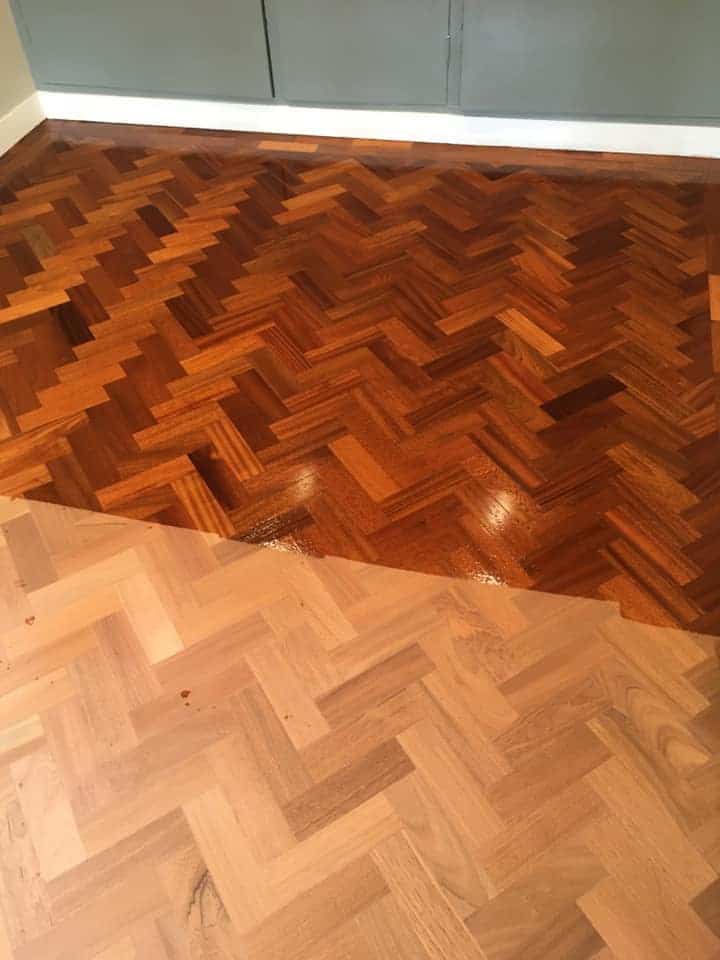
Floor sanding on a parquet floor can transform a tired surface, but parquet behaves very differently from a standard wooden floor.
It is made from small blocks laid in a pattern, so you face mixed grain directions, glue lines and borders every few inches. Good results come from control, not speed.
What Makes a Parquet Floor Tricky to Sand?
A plank floor lets you work with the grain for long runs. A parquet floor forces frequent grain changes, especially with parquet flooring patterns like herringbone, chevron and basketweave.
What We Check Before Any Sanding Starts
- Loose or hollow blocks that will chatter under a machine
- Previous finishes (wax, varnish, stain) that affect abrasive choice
- Moisture or movement that could lift blocks mid-job
- Remaining thickness, so we do not sand beyond what is safe
Takeaway: parquet needs a plan before the first pass.
When Is Floor Sanding the Right Next Step?
You do not always need full sanding. Sometimes a deep clean and recoat is enough. You usually need floor sanding when the protective finish has failed, and the timber is exposed.
Simple Signs Your Parquet Needs Sanding
- Water soaks in rather than beads
- Dark staining sits in the joints
- The surface feels rough or splintery underfoot
How Does the Sanding Process Work on Parquet?
The sanding process is about consistency. We tailor the approach to the parquet’s condition and structure. Updated for 2026, we also plan for dust-managed work and finishes that suit real cleaning routines.
Step-by-Step: How We Sand Parquet
- Inspect and protect: moisture checks, doorway sealing, loose block mapping
- Repair first: re-bond blocks, replace missing pieces, and set fixings
- Cut back the old coating: measured passes to avoid dips and stop marks
- Refine the surface: progressive grits to remove scratches across the full field
- Finish for real life: seal choice matched to traffic and cleaning habits
Drum Sander Basics That Matter on Parquet
A drum sander can level quickly, but it can also leave ripples if it is rushed. On parquet we use the drum sander for controlled cutting, then refine with finer machines so edges stay crisp.
Edges and Borders Are the “Tell” of a Good Job
Most disappointing results fail at the perimeter. We feather edges and blend thresholds so the pattern reads cleanly from every angle.

DIY vs Professional Parquet Floor Sanding
DIY hire kits can work on some plank floors, but parquet is unforgiving if you catch an edge or chase a low spot.
UK professional sanding rates are often quoted around £20 to £65* per square metre, depending on the floor and finish choice.
| Decision factor | DIY hire kit | Professional approach |
| Control on parquet blocks | Harder to keep flat | Pattern-aware technique |
| Dust and disruption | Varies by kit | Dust-managed systems |
| Repairs before sanding | Often missed | Included as standard |
Problems We Often Find Under the Old Finish
- Loose blocks from adhesive failure
- Bitumen residue that clogs abrasives
- Uneven colour where old stain hit end grain
Got Stone Floors Too?
Many homes have parquet in living areas and stone in hallways or kitchens.
We restore natural stone such as limestone, marble, travertine, sandstone, slate and Victorian tiles with cleaning, restoration and sealing to suit the material.
Why Our Approach Protects Your Wood Flooring
We are Parkett Profi accredited floor technicians and we provide a full dustless floor restoration service, so parquet is core work for our team.
In our experience, around one in three parquet floors needs some block stabilisation before sanding begins, even when the surface marks look minor.
Ready to sort your parquet floor with expert floor sanding, or tackle stone elsewhere at the same time? Visit our parquet restoration page or call the team on 01444 810505.
Looking for more expert insight? You should read Cleaning Flagstone Floors with Professional Stone Tile Restoration.
FAQs
How Do I Know If My Parquet Floor Needs Floor Sanding?
If water soaks in, the finish looks patchy, or the surface feels rough, floor sanding is usually the right next step. On a parquet floor, look closely at the joints: dark lines and embedded grit often mean the protective coat has worn through and the timber is taking the hit.
Can You Floor Sand A Parquet Floor Without Ruining The Pattern?
Yes, but the method matters. A parquet floor has frequent grain changes, so heavy cutting or uneven pressure can blur edges and leave chatter marks. A professional approach keeps passes controlled, then refines in stages so parquet flooring patterns stay crisp and even across the room.
What Is The Best Sanding Process For Parquet Flooring Patterns Like Herringbone?
A good sanding process starts with stability, not abrasives. Loose blocks are re-bonded first, then sanding follows a planned grit sequence to remove the old coating and refine the surface. With herringbone and chevron, the goal is a level finish without flattening the pattern definition.
Why Does A Drum Sander Matter On A Parquet Floor?
A drum sander levels quickly, which is useful on worn parquet, but it can also leave ripples if it is rushed or set too aggressively. The right setup and technique remove old finishes efficiently, then finer machines smooth the surface and blend edges so the floor reads cleanly.
Do You Repair Loose Parquet Blocks Before Floor Sanding?
Always. If blocks move, they can rattle under sanding, crack at the edges or lift after finishing. We re-bond loose sections, replace missing pieces and address squeaks before sanding begins. That groundwork protects the parquet floor, improves the final look and helps the finish last longer.
Is Dustless Floor Sanding Possible For A Wooden Floor Or Parquet Floor?
You can make it low-dust, but not truly dust-free. Professional systems use high-extraction sanding equipment and good sealing of work areas to reduce airborne dust dramatically. That matters on parquet because fine debris can lodge between blocks and compromise the final finish if it is not controlled.
How Long Does Floor Sanding Take On A Parquet Floor?
Most single rooms take one to three days, depending on condition, repairs needed and the chosen finish. The sanding itself is only part of the job: drying and curing time for lacquer or oil affects when you can move furniture back and return to normal cleaning routines.
How Much Does Floor Sanding Cost For A Parquet Floor In The UK?
Prices vary by access, repairs and finish choice. As a rough guide, professional sanding and refinishing is often quoted in the UK at around £25 to £70 per square metre*. Parquet may cost more if blocks are loose or missing and need repair first.
Which Finish Is Best After Floor Sanding On Parquet: Lacquer Or Oil?
Lacquer is usually chosen for high-traffic durability and simpler maintenance, while oils can give a warmer, more natural look and allow easier spot repairs. The best option depends on how you use the room, how you clean the wood flooring and whether you want a matte or more reflective finish.
When Can I Walk On My Parquet Floor After Sanding, And When Can Furniture Go Back?
Light foot traffic is often possible within hours, but curing takes longer. Many finishes allow careful use the next day, while rugs and heavy furniture may need several days to avoid marks or trapped solvents. We give a clear re-entry plan based on the exact products used.
*Approximate cost – this varies greatly depending on factors such as age, material and technique needed,
Updated December 2025