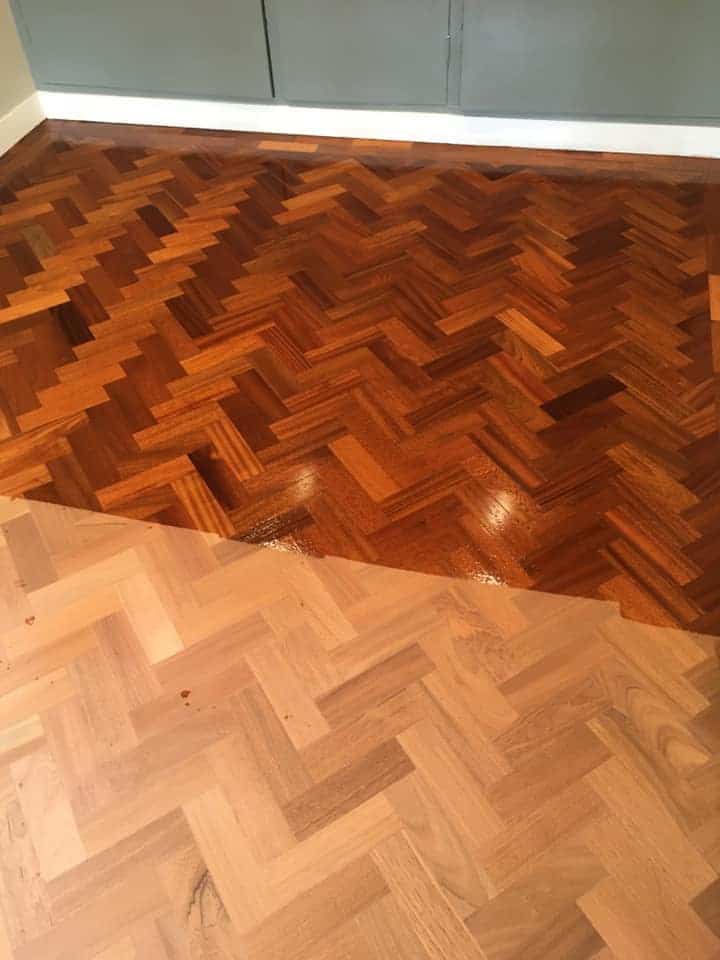
Dull wood floors are one of the most common things we get asked about, and the good news is they rarely mean the floor is beyond saving. In our experience, a tired-looking surface is usually a sign of built-up wear and tear, old finishes wearing thin, or the top layer losing its clarity rather than the floor being finished for good.
Quick Summary
If your wooden floors look flat, tired or lifeless, that does not automatically mean they need replacing. In many cases, the right restoration process can bring back colour, depth and character. We look at the condition of the surface, the level of wear, whether there are deep scratches, and how much of the existing finish remains before deciding the best route forward. Sometimes light sanding is enough. Sometimes a fuller sand and refinish is the better call.
Why Wood Floors Lose Their Spark
A lot of people assume a floor goes dull simply because it is old, but that is only part of the story. More often, it is the build-up of daily use that changes how the floor reflects light and how clean it appears.
The main causes we see are:
- foot traffic gradually wearing down the finish
- cleaning products leaving residue on the surface of the floors
- sunlight fading certain areas more than others
- minor scratches building up until the whole floor looks flat
- moisture, grit and general household traffic affecting busy walkways
Hardwood flooring and engineered wooden floors can both lose their shine in similar ways. What changes is how we approach the restoration process, not whether the floor deserves one.
What We Look At Before We Recommend Anything
Before we even think about sanding or staining, we look at the floor properly. That sounds obvious, but it matters. A floor can look tired for several different reasons, and the right fix depends on what is actually going on.
| What We See | What It Usually Means | What We Often Recommend |
| General dullness with no major damage | Finish has worn flat or become cloudy | Light sanding or screen and recoat |
| Dark traffic lanes | Finish has thinned in busy areas | Sanding and refinishing |
| Deep scratches and impact marks | Damage has gone beyond surface level | More involved sanding and repair |
| Uneven colour | Old stain, sun fade or patchy wear | Full restoration with new finish |
| Sticky or grimy look | Product build-up or trapped dirt | Professional clean and assessment |
This is why guessing can waste time. A floor that looks beyond help in a photo can often come up brilliantly once the old coating is removed and the timber underneath is allowed to breathe again.
How to Restore a Wood Floor Properly
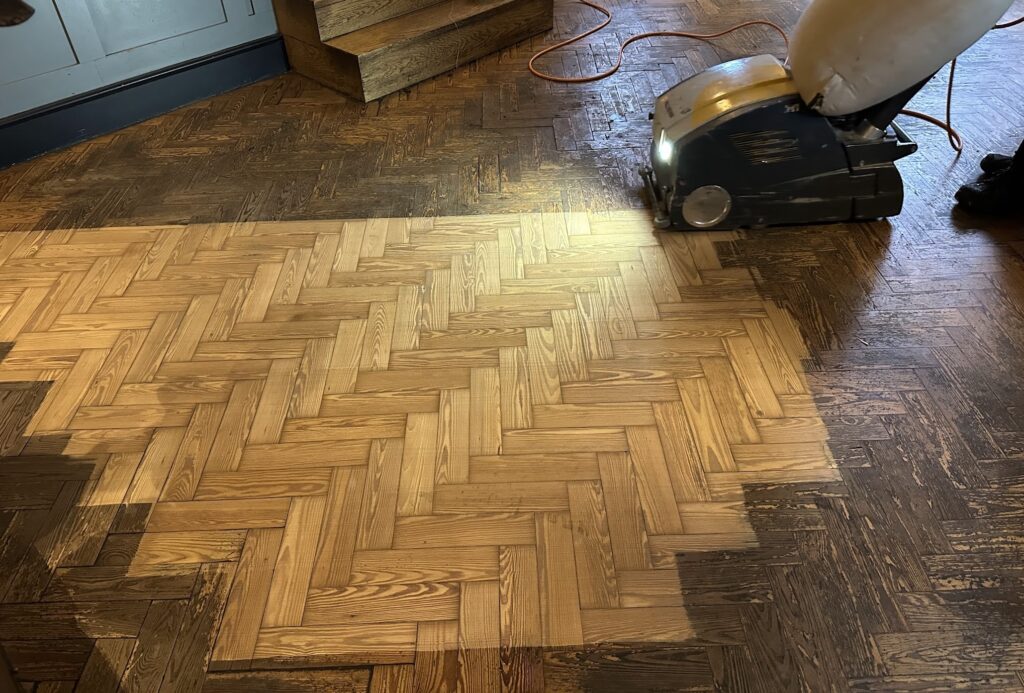
When people search how to restore a wood floor, they often imagine it is just a case of hiring a machine, giving it a quick pass and hoping for the best. In reality, good results come from reading the floor first and then matching the process to the condition of the timber.
Our approach usually follows a clear path:
- Inspect the floor and identify the real cause of the dullness.
- Decide whether light sanding or a more complete restoration is needed.
- Remove old coatings and prepare the surface evenly.
- Carry out staining and finishing where needed to bring back tone and protection.
When Light Sanding Can Be Enough
Not every dull floor needs a full reset. If the timber itself is still in good shape and the issue sits mainly in the finish, light sanding can sometimes freshen the floor up without taking off more than necessary.
Why The Finish Matters as Much as the Sanding
A lot of the final look comes from the finishing stage, not just the sanding itself. The sheen level, the way the product sits on the grain, and whether we apply stain or keep the natural tone all change the end result. Done properly, this is the point where a floor stops looking tired and starts looking intentional again.
When a Fuller Restoration Makes More Sense
If the floor has deep scratches, inconsistent colour, old sealers breaking down or years of neglect, a fuller sand is usually the better route. This gives us a clean, even base to work from and means the final finish is not just covering problems up.
It also gives us more control if the client wants to apply stain and shift the colour slightly, whether that is to warm it up, modernise it or better suit the rest of the room.
Why Professional Restoration Makes a Difference
There is a big difference between making a floor look slightly better and actually restoring it well. We use a 98% dust free sanding setup because it keeps the job cleaner, more controlled and far more practical in real homes and working spaces.
More importantly, we know what to leave alone and what to tackle properly. That comes from doing this every day. Some floors need a careful touch. Others need a more assertive refinish. The skill is knowing the difference.
A well-restored wood floor should not just be shinier. It should look balanced, feel smoother underfoot and have the kind of finish that lasts rather than fading again after a few months.
Bringing Life Back Into the Floor
If your floor looks flat, faded or just a bit lifeless, it is worth getting it looked at professionally before writing it off. Dull wood floors are often a surface issue, not a lost cause. With the right preparation, the right sanding method and the right finish, we can usually bring back a huge amount of character that people assumed had been gone for good.
We don’t make the floor look brand new in a fake or artificial way, but bring back the quality that was already there and give it the finish it deserves.
If you liked this, you may also like: Hardwood Floor Refinishing – Wood Floor Repair
Frequently Asked Questions About Dull Wood Floors
Why do my wood floors look dull even after cleaning?
In most cases, dull wood floors are not dirty so much as worn. Old finish, product build-up, fine scratches and general wear and tear can all stop the floor reflecting light properly. A normal clean may freshen the surface, but it will not restore a finish that has already broken down.
Can dull wood floors be restored without replacing them?
Yes, very often they can. A dull floor does not usually mean the timber itself has failed. If the top layer is still in workable condition, we can often restore the floor through light sanding, refinishing or a fuller restoration process depending on how worn the surface is.
How do I know if my wood floor needs sanding or just a new finish?
That depends on how deep the problem goes. If the floor is simply looking flat or cloudy, a lighter treatment may be enough. If there are deep scratches, uneven colour or visible wear through the old coating, sanding and finishing is usually the better route. The key is assessing whether the issue sits in the finish or in the timber surface itself.
What is the best way to restore a dull wood floor?
The best way is to first identify what is causing the dullness. From there, the restoration process might involve light sanding, removing old coatings, correcting surface wear and applying a new protective finish. A proper job is about more than making it shiny again. It is about creating an even, durable result that suits the floor.
Can you restore hardwood flooring with deep scratches?
Yes, although deeper damage usually calls for a more involved approach. Surface marks can often be improved fairly easily, but deep scratches tend to need proper sanding so the floor can be levelled and refinished evenly. The earlier this is dealt with, the more options there usually are.
Is light sanding enough to fix dull wooden floors?
Sometimes, yes. If the floor has lost its clarity but has not suffered major wear, light sanding can be a sensible option. It can refresh the surface of the floors without taking away more than necessary. That said, it only works when the underlying condition of the timber is still good.
Can I apply stain when restoring a wood floor?
Yes, if the floor is suitable for it. We can apply stain during the restoration process when a client wants to change or improve the colour as well as restore the surface. It is important that the floor is prepared evenly beforehand, otherwise the stain can take inconsistently.
How long does the wood floor restoration process usually take?
That depends on the size of the area, the condition of the floor and the finish being used. A smaller room with lighter wear may move along fairly quickly, while a larger floor with deep scratches or staining and finishing involved will take longer. Drying and curing time also matter, not just the sanding itself.
Is dust a big issue when restoring wooden floors?
It should be controlled properly, yes. Modern equipment makes a huge difference here. We use a 98% dust free sanding setup, which helps keep the process cleaner and more manageable in homes and commercial spaces. It does not just make things tidier, it makes the whole job more practical.
When should I get a professional to look at dull wood floors?
If the floor still looks tired after cleaning, if the finish is patchy, or if scratches and wear are becoming more noticeable, it is worth getting it assessed. People often leave it too long because they assume replacement is the only answer. In reality, a professional look at the floor can often show that restoration is still very much on the table.