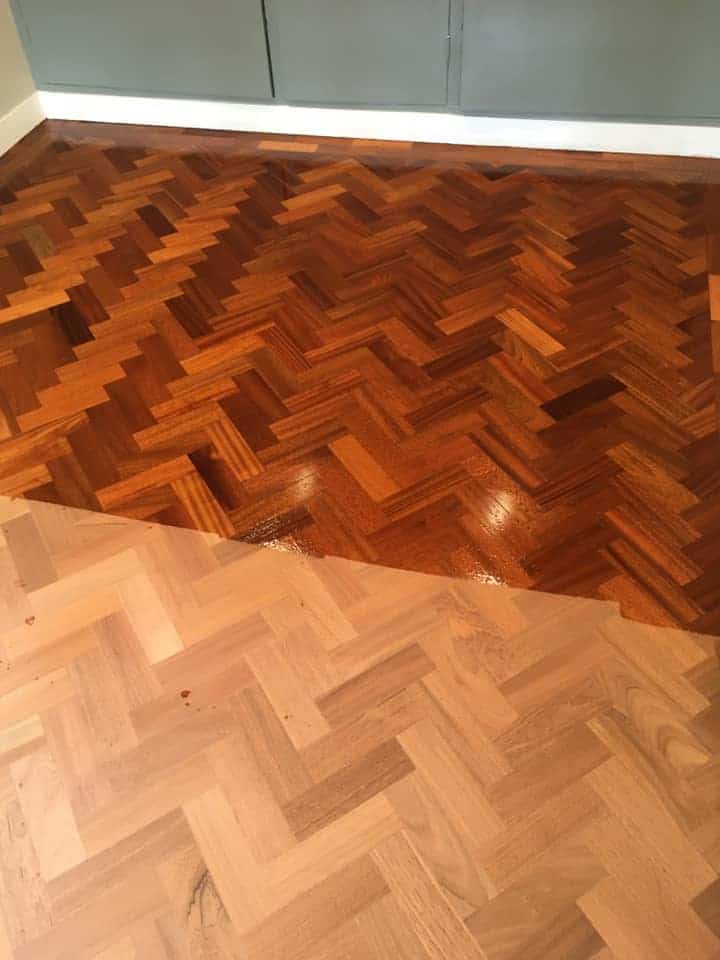
A school hall, community centre or large open-plan property presents a different restoration challenge from a single small room, including sanding floorboards. There is more surface to prepare, but also more to consider around access, fixed features and how the building is used.
Sanding floorboards across a substantial area requires a coordinated approach. At Sussex Floor Restoration, we look at the whole floor and its surroundings, helping us plan for a consistent finish while keeping disruption manageable.
Quick Summary
Large floor sanding projects need careful assessment, appropriate equipment and a clear programme. Consistent preparation helps create an even finish, while dust extraction and protection measures reduce the spread of dust. Access arrangements, coating requirements and the time needed before normal activities resume should all be agreed before work starts.
Why Sanding Floorboards Across a Large Area Needs Careful Planning
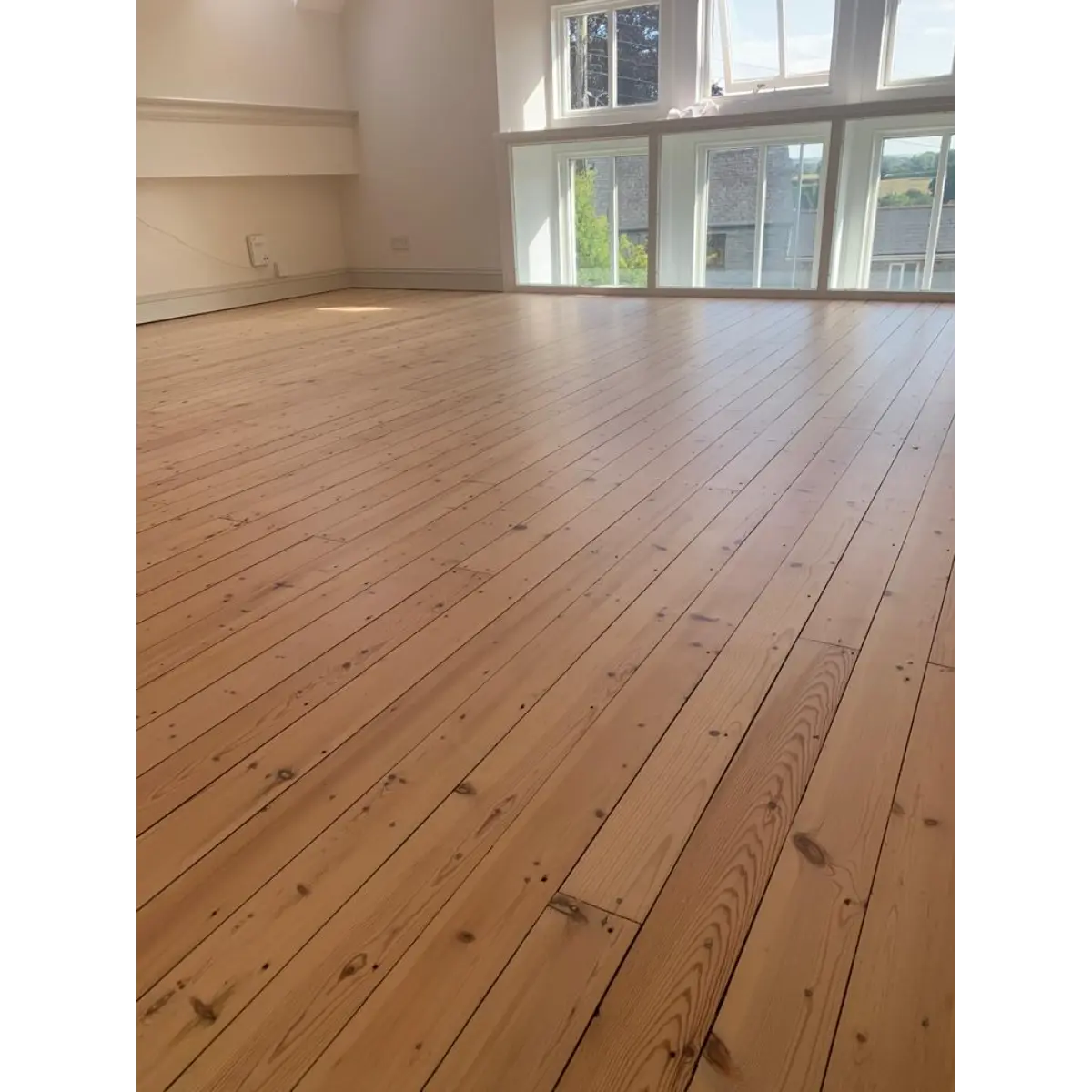
A large wooden floor rarely wears evenly. Entrances and main walkways may have lost much of their protective coating, while areas beneath furniture remain relatively untouched. Previous treatments or repairs can also vary across the space.
Before sanding floorboards, we need to understand these differences and identify anything that could affect the work.
That assessment can include:
- The timber’s condition and remaining usable thickness.
- Loose boards or areas requiring attention.
- Changes in level, unusual shapes and fixed obstacles.
- Existing coatings and differences in wear.
- Access for equipment and removal of furniture.
The square footage is only part of the picture. A clear rectangular hall and an auditorium with seating points may need very different approaches, even when their floor areas are similar.
Achieving a Consistent Finish Across the Whole Floor
Across a broad, open surface, differences in preparation can be particularly noticeable. The aim is to create a balanced appearance from one end of the room to the other, including edges and areas around permanent fittings.
Professional equipment needs to suit the floor’s shape and condition. Machines used across open sections must be complemented by appropriate equipment for corners, boundaries and detailed work.
Consistency also depends on how the equipment is used. Sanding stages must be coordinated across the area so that one section is not left with a different surface texture from another.
We retain the timber’s natural variation while preparing it for a uniform finishing treatment. Our wood floor sanding service brings the main floor and its detailed areas together as one complete project.
How Dustless Floor Sanding Floorboards Helps Protect Surrounding Spaces
In a large building, dust control involves more than keeping the room being restored tidy. Doorways, floor openings and adjoining spaces can provide routes for dust to travel.
Our dustless floor sanding equipment uses extraction to capture dust during the work, providing a 98% dustless service. This substantially reduces dust, although some fine material can remain.
Preparation therefore remains important. We assess what needs covering or isolating and identify openings that require protection before sanding begins.
Effective extraction helps reduce the amount of dust settling elsewhere and the cleaning required afterwards. It works alongside careful site preparation, rather than replacing it. On more complex projects, small details in that preparation can make a considerable difference to the surrounding building.
Large Wooden Floor Restoration at Glyndebourne
Our work at Glyndebourne Opera House shows why larger projects need an approach tailored to the building.
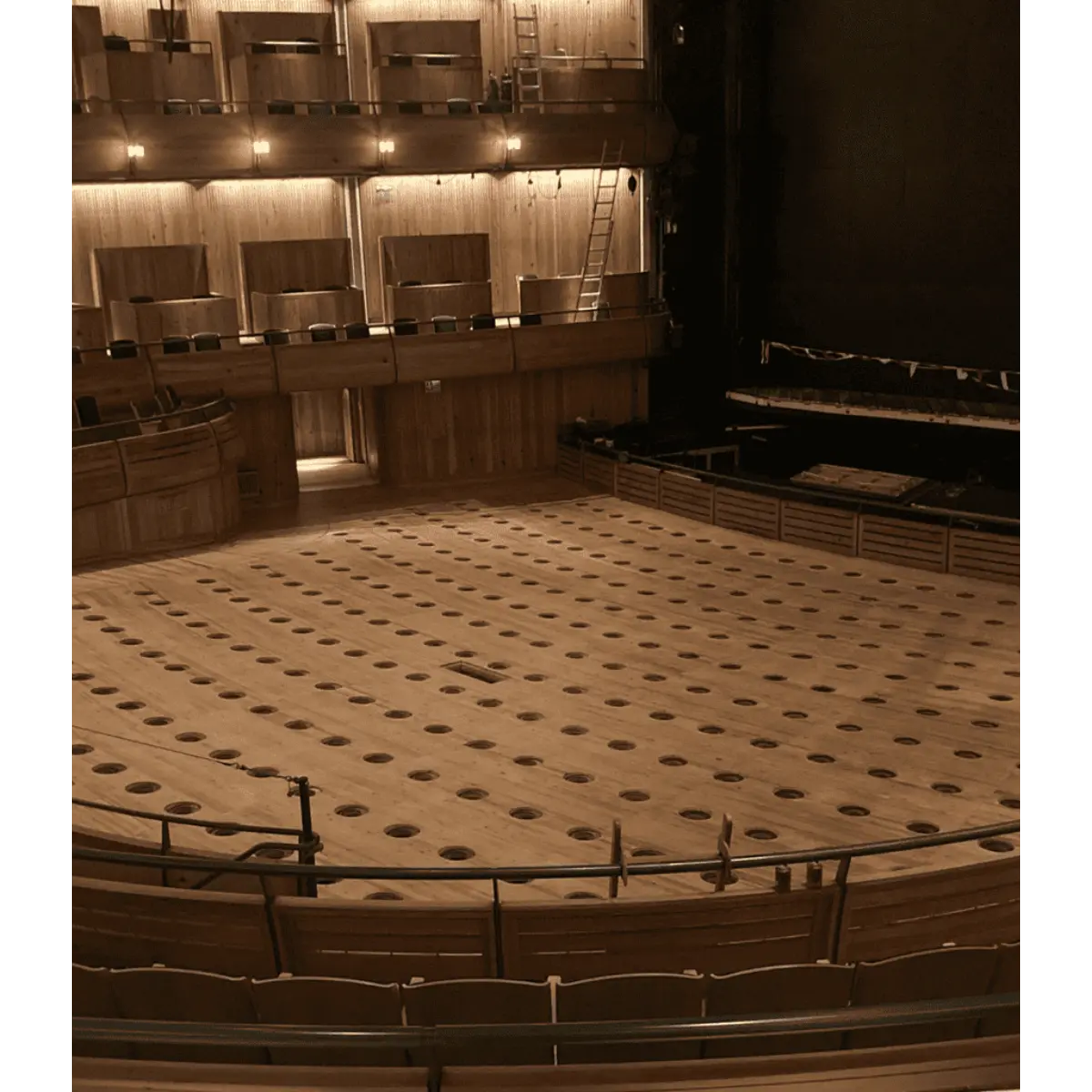
The auditorium floor was dome-shaped, creating changing angles across the surface. A conventional belt sander would have risked producing uneven results, so we used equipment suited to navigating those contours.
With seating removed, there were approximately 200 holes in the floor. We plugged these to prevent airborne dust from travelling into the hall underneath. Service points also needed covering and careful sanding around their edges.
The programme was restricted to the time available between performances. We completed the work within that window and applied a two-component commercial lacquer.
The project brought together equipment selection, detailed protection and scheduling within an active venue. You can read more in our Glyndebourne Opera House case study.
Planning Access and Returning the Floor to Use
A village hall may host several groups each week, while a school hall could serve assemblies, lunches and evening activities. A sizeable domestic space may connect several rooms that the household normally uses throughout the day.
Planning needs to account for those routines.
Before work begins, agree where furniture will be stored, how the team will reach the floor and which routes must remain clear. Anyone using the building needs to know which areas are unavailable.
Allow for the Finish, Not Just the Sanding
The programme must include coating application and the necessary waiting periods afterwards. A surface ready for light foot traffic may not yet be ready for stacked chairs, heavy equipment or normal activities.
Return-to-use timings should follow the chosen finishing system and conditions on site.
Choosing a Finish for the Activities Ahead
The size of a floor does not determine its finishing requirements on its own. What happens on it matters just as much.
A busy community hall needs protection suited to frequent use and regular cleaning. A sports hall or dance studio may have particular surface-performance requirements that need discussing before a coating is selected.
We consider the timber, appearance, expected activities and maintenance arrangements together. The aim is a suitable finishing system with clear aftercare instructions, so the people responsible for the building understand how to look after the restored surface.
Could Your Existing Large Wooden Floor Be Restored?
Restoring a suitable existing floor can retain a substantial amount of usable timber and preserve the appearance of a familiar space. It may also avoid the removal and installation work involved in replacement, although the practical options depend on the floor’s condition.
An assessment should establish what can safely be achieved and whether repairs or other work are needed first.
If you need professional floor sanding in Sussex, we can discuss your building, its flooring and the available programme. Our floor restoration process starts with understanding those requirements.
From open halls to more complex layouts, careful planning helps sanding floorboards deliver a consistent result with disruption kept under control.
Call: 01444 810505
Email: info@sussexfloorrestoration.co.uk
Website: sussexfloorrestoration.co.uk
If you enjoyed this one, try How to Sand a Wooden Floor Without Skipping the Details
Frequently Asked Questions About Sanding Floorboards in Large Spaces
Can a large wooden floor be sanded and restored?
Many large wooden floors can be restored if their construction, condition and remaining timber thickness allow it. We assess previous sanding, wear and any damaged or unstable areas before recommending the appropriate work.
Does the entire floor need sanding at the same time?
Treating a continuous floor together can help achieve a consistent appearance. Separate rooms may offer opportunities for phased work, but dividing an open surface requires careful consideration of boundaries, access and potential differences in the finish.
How do you achieve a consistent finish across a large area?
Consistent preparation is essential, including the main floor, edges and areas around fittings. Appropriate equipment, coordinated sanding stages and controlled coating application help create a balanced result while retaining the wood’s natural variation.
Is dustless floor sanding completely dust-free?
No. Our extraction equipment provides a 98% dustless service, significantly reducing dust during sanding. Some fine dust can remain, so covering, isolation and cleaning measures still form part of the work.
How are floor openings and fixed features protected?
Protection depends on the building and its fittings. Openings may need plugging or covering, while fixed features require suitable protection and careful work around their edges. At Glyndebourne, seating holes were plugged to prevent dust reaching the space below.
How long does sanding floorboards in a large hall take?
The floor area, condition, layout and finishing system all affect the programme. Detailed work around obstacles can add time, as can repairs and coating requirements. We can discuss a realistic schedule after surveying the floor.
Can other parts of the building remain in use?
Sometimes, provided they can be suitably separated and accessed without crossing the work area. Dust control, noise, access and the needs of other building users must be considered. Continued use should be agreed as part of the project plan.
When can furniture and regular activities return?
This depends on the coating system and drying conditions. Light access, furniture replacement and full use may have different waiting periods. Follow the specific guidance provided before moving items back or restarting activities.
Do sports halls and dance studios need different finishes?
They can do. Their activities may require particular friction and performance characteristics, alongside durability and maintenance considerations. The intended use needs to be discussed so the finishing system is suitable for the space.
Is restoring a large wooden floor preferable to replacing it?
Where the existing floor remains suitable, restoration can retain its timber and character while improving its surface and protection. Replacement may be necessary in some circumstances, so the decision should follow an assessment of the floor and project requirements.